Taliban morality police in Herat have detained at least 21 women and girls, including a nurse, for allegedly failing to comply with their dress code, local sources said on Sunday.
The detentions follow a recent directive issued by the Taliban’s Directorate for the Promotion of Virtue and Prevention of Vice in Herat, which called on male family members to prevent women from appearing in public without what the authorities describe as proper hijab.
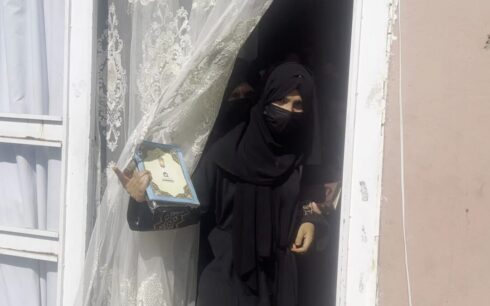
Under the directive, a copy of which was previously obtained by Amu TV, women seen in public without a prayer veil, with uncovered faces, wearing tight clothing or makeup could be detained and transferred to a women’s detention facility.
The document also places responsibility on male relatives for ensuring women’s compliance with the Taliban’s dress requirements.
According to local sources, the women and girls were detained in several areas of Herat, including the city’s southern road, Almas Market and the Qasr area.
Sources said Taliban officials warned detainees that a first violation could result in a one-week detention, while repeat offenders could face up to one month in Herat’s central prison.
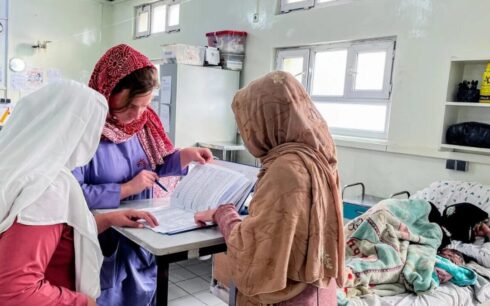
Among those detained was a nurse employed at Herat Regional Hospital, sources said. The nurse, who works with the medical charity Doctors Without Borders, was reportedly detained during a night shift despite being accompanied by her husband.
Sources also said Taliban morality officers detained several male doctors and nurses at Herat Regional Hospital on Saturday for allegedly failing to comply with their grooming requirements.
According to the sources, Taliban authorities issued a written order requiring all male hospital employees to grow beards. Those whose beards are deemed shorter than the prescribed length could face detention, the sources said.
Taliban have not commented on the arrests.
The incident comes amid reports of increased enforcement of the Taliban’s morality law since it was formally enacted last year. Human rights groups say the law has expanded restrictions on women and intensified oversight of their dress, movement and participation in public life.
Since returning to power in 2021, the Taliban have imposed sweeping restrictions on women and girls, including bans on secondary and higher education, limits on employment and restrictions on access to public spaces. The United Nations and rights organizations have repeatedly called on the Taliban to reverse the measures and uphold the rights of women and girls.