A new survey has found that Taliban restrictions on women, coupled with shrinking international funding, are placing humanitarian organizations in Afghanistan under mounting pressure. The survey found that 75 percent of aid organizations have accepted Taliban-imposed conditions in order to continue operating and keep women employed.
The survey, conducted by the Gender Coordination Group and the Humanitarian Access Working Group, gathered responses from 122 humanitarian organizations operating in all 34 provinces, including 102 Afghan NGOs, 14 international NGOs and six UN agencies.
While 45 percent of organizations said they continue to operate fully with both women and men, 28 percent reported operating only partially with mixed-gender teams. Another 14 percent said they now operate entirely or mostly with male staff, reflecting growing restrictions on women’s participation in humanitarian work.
The most commonly reported restriction was the requirement for women aid workers to travel with a mahram, or male guardian. Sixty-one percent of organizations said women now need a male escort in situations where they previously traveled independently, an eight-percentage-point increase from the previous survey.
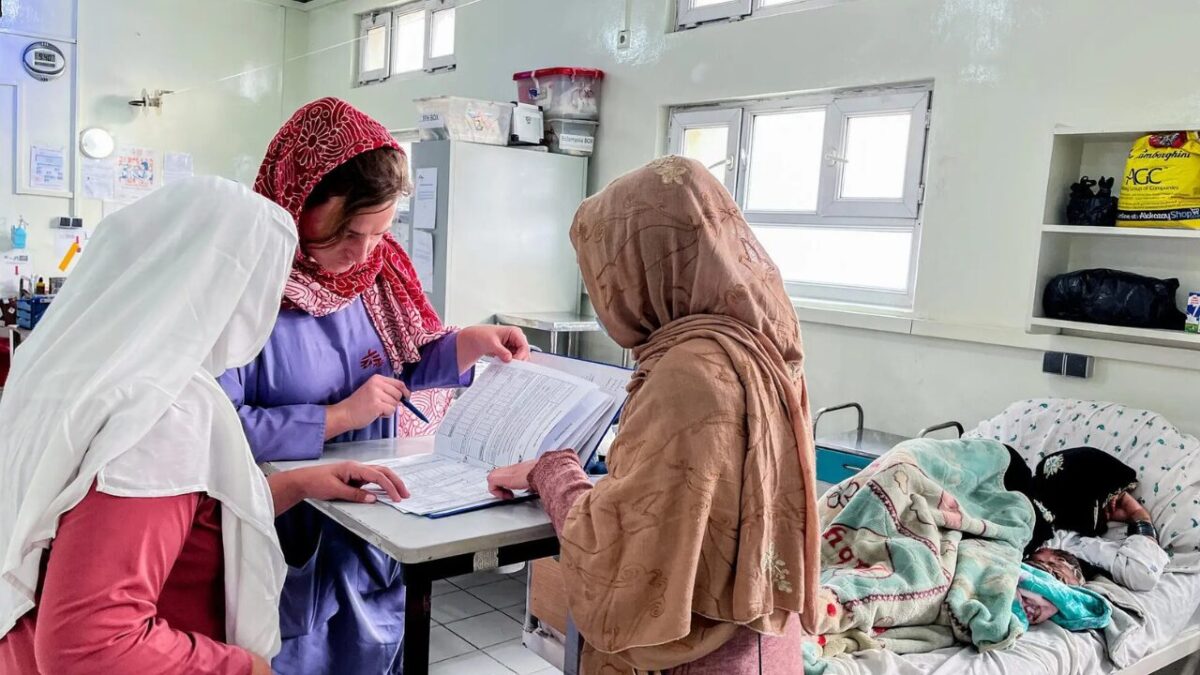
Nearly half (49 percent) of respondents said female staff face growing anxiety over movement restrictions and dress-code requirements. Forty-six percent reported women being unable to report to offices in some provinces, 39 percent said women could no longer participate in official field missions, and 30 percent said women were no longer permitted to conduct community awareness activities, reducing organizations’ ability to reach women beneficiaries.
The survey found that 16 percent of women aid workers are now working from home, up from 14 percent in the previous survey. Of those working remotely, 81 percent are UN employees, 11 percent work for Afghan NGOs and civil society organizations, and 8 percent for international NGOs.
At the same time, organizations reported a sharp increase in women working directly in the field rather than from offices. The share of women commuting from home to field locations rose from 36 percent in the previous survey to 66 percent, reflecting operational changes adopted to comply with Taliban restrictions.
Gender-related restrictions were reported most frequently in Herat, where 36 percent of organizations cited access challenges, followed by Kabul (31 percent), Nangarhar (22 percent), Kandahar (20 percent) and Kunar (17 percent).
The survey also documented growing interference by Taliban.
Twenty-eight percent of organizations said female staff had been stopped by officials from the Taliban Ministry for the Propagation of Virtue and Prevention of Vice while traveling to or from work. Twenty-five percent reported visits by Taliban to inspect offices and monitor compliance with Taliban directives.
Meanwhile, 36 percent said new restrictions were disrupting project registration and implementation, while 29 percent reported interference by local Taliban authorities outside agreed coordination mechanisms. Forty-five percent said authorities granted exemptions only for specific activities.
The survey also identified a new trend. Fifteen percent of organizations reported that Taliban authorities suspending activities delivered by women for women in women-only spaces, while 26 percent said they had received no new instructions or operational impediments.
Aid agencies reported mounting administrative obstacles.
Thirty-eight percent said they faced difficulties obtaining work permits for women staff. Sixty-seven percent reported problems registering or implementing awareness-raising and psychosocial support projects. Twenty-seven percent experienced difficulties registering projects with “women” in the title, while 25 percent said projects employing Afghan women staff faced registration challenges. Another 23 percent reported direct threats against women for working or participating in humanitarian activities.
Overall, 48 percent of organizations said the restrictions had reduced their ability to reach women and girls in need.
Funding shortages have compounded those challenges.
More than half (54 percent) of organizations said they had laid off Afghan staff because of donor funding cuts. Forty-six percent reported projects ending after existing funding expired, while 44 percent said they had reduced salaries and benefits. Another 44 percent said they could no longer cover additional costs associated with employing women, including transportation and expenses linked to the male-guardian requirement.
Restrictions themselves have also forced women out of humanitarian work. Twelve percent of organizations said women employees had resigned because of Taliban restrictions, while 13 percent reported laying off women staff directly because of those restrictions.
Overall, 83 percent of organizations said funding cuts had affected staffing, project implementation or their ability to support women and girls. Only 17 percent reported no impact.
Women-led organizations have been particularly affected. Only 35 percent reported receiving new project funding since December 2025, an 11-percentage-point decline from the previous survey.
To continue operating, humanitarian agencies have increasingly adapted to Taliban requirements. Sixty-eight percent have established separate workplaces for male and female staff, 65 percent provide transportation or financial support for women traveling with a male guardian, and 58 percent deploy women only to field assignments rather than office-based work.
The survey found that 75 percent of organizations had accepted Taliban conditions—including gender segregation, male-guardian requirements and restrictions on where women may work—to keep female staff employed. Fifty-seven percent said they relied on community leaders to negotiate access with local Taliban authorities.
Despite those efforts, organizations warned that the operating environment continues to deteriorate. Funding shortages remain the greatest long-term obstacle to women’s participation in humanitarian work, while Taliban restrictions continue to limit women’s mobility, employment and humanitarian access.
The report concludes that the combination of tighter Taliban controls and shrinking international funding is making it increasingly difficult for humanitarian organizations to sustain assistance for Afghan women and girls across Afghanistan.