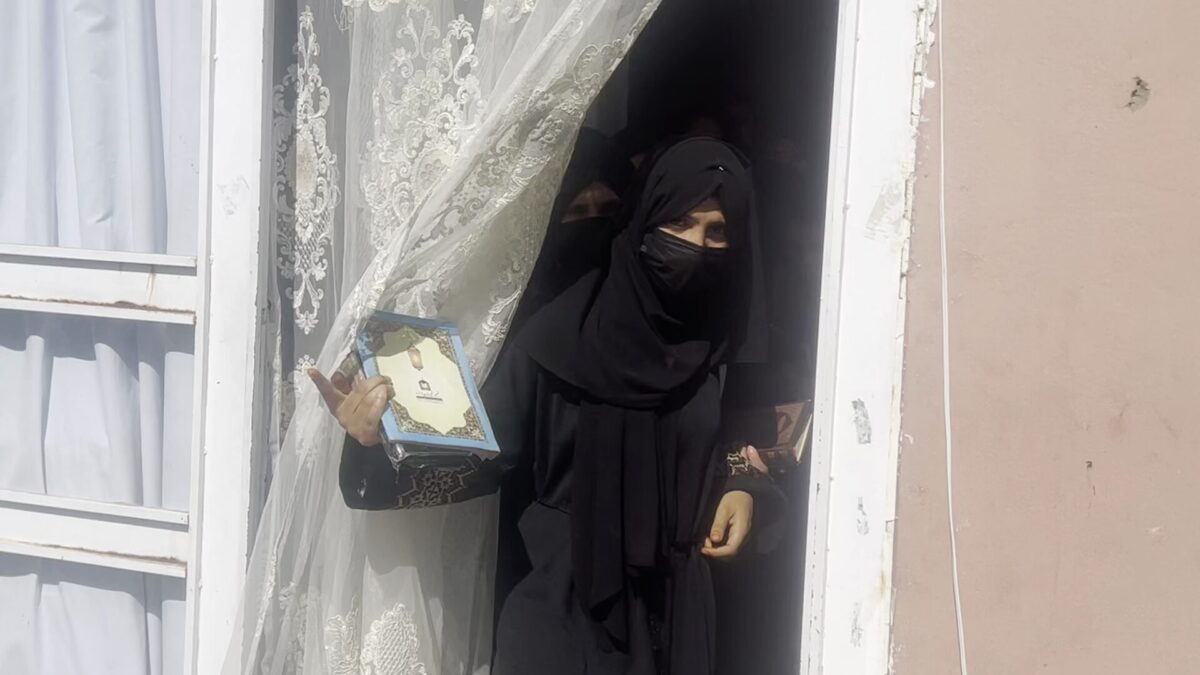
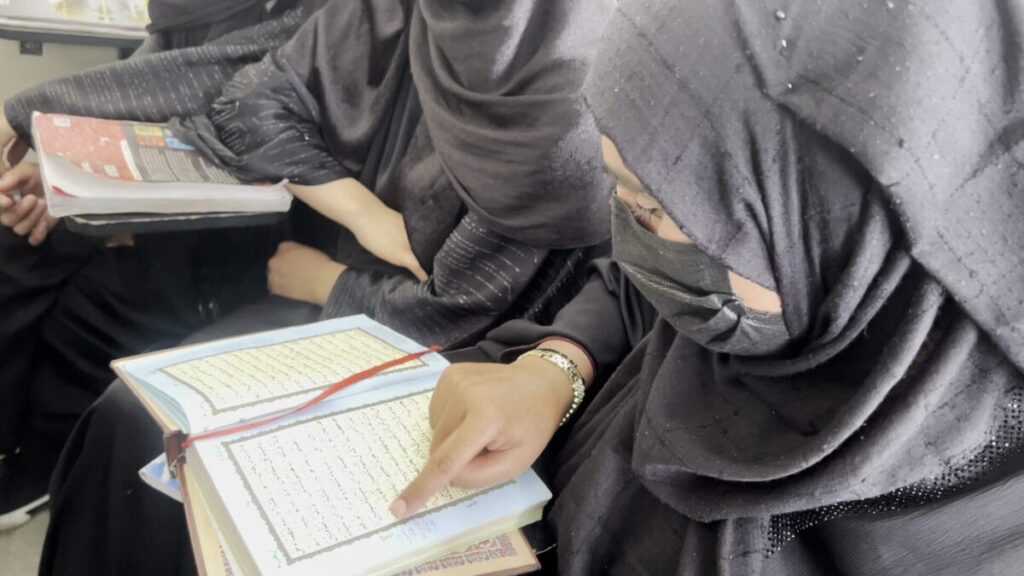
Nearly five years after the Taliban barred girls from attending school beyond the sixth grade, religious schools in Kabul are seeing a growing number of female students seeking an alternative to formal education.
Teachers at several religious schools say enrollment has increased as families look for ways to keep their daughters in classrooms despite the continued closure of secondary schools for girls.
Saadia, a teacher at one religious school in Kabul, said demand has risen steadily in recent months.
“Since the schools were closed, more girls have come to religious schools,” she said. “Families want their daughters to be educated, so many have enrolled them here.”
Many students say attending a religious school has become their only option, although they do not see it as a substitute for mainstream education.
“I hope our schools will reopen so we can continue our studies,” said Zainab, one of the students.
Another student, Maryam, said the prolonged closure of girls’ schools was depriving half of Afghanistan’s population of education.
“Women make up half of society,” she said. “With schools remaining closed, half the country is being left without education.”
The Taliban have kept secondary schools closed to girls since returning to power in August 2021 and later extended the restrictions to universities, making Afghanistan the only country in the world where girls are officially barred from secondary and higher education.
Although no recent nationwide figures on religious schools have been released, the Taliban said in 2025 that they had established nearly 23,000 madrassas across Afghanistan during the previous three years. According to Taliban figures, those schools enrolled more than 216,000 boys and nearly 91,000 girls.
For many Afghan families, religious schools have become one of the few remaining opportunities for girls to continue learning. But students and teachers alike say they cannot replace access to formal primary, secondary and higher education.