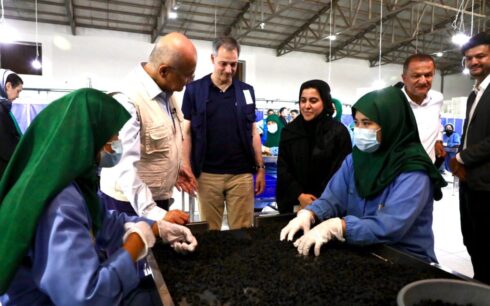
Farmers in the outskirts of Herat say rising agricultural costs, particularly for fertilizer, have forced them to reduce strawberry cultivation this year, despite growing demand for the crop.
Strawberries have become an increasingly valuable crop in the province in recent years, but growers say a lack of support and mounting expenses are limiting production.
Ghulam Rasool, a farmer working near Herat city, said he had significantly reduced the size of his strawberry fields compared with previous years.
“Today I bought a sack of fertilizer for 7,000 afghanis ($108),” he said. “If we don’t use fertilizer, our crops won’t grow — but at the same time, we cannot afford it.”
He added that high input costs, combined with weak market access, have made it difficult to expand cultivation. “In past years I planted several jeribs of strawberries, but this year I have planted only one,” he said.
Other farmers echoed similar concerns, saying that without support for agricultural inputs such as fertilizer, pesticides and financing, the sector cannot grow sustainably.
Abdul Rahim, another farmer in Herat, said better organization and investment could turn strawberry farming into a significant source of employment.
“This crop can provide jobs for many people,” he said. “But farmers need support in fertilizer, disease control and financial assistance.”
Interest in strawberry cultivation has increased in parts of Herat in recent years, with some farmers investing substantial sums in production. Still, growers say the lack of coordinated support and rising costs threaten to slow that growth.
The challenges reflect broader pressures facing Afghanistan’s agricultural sector, where farmers are contending with high input costs, limited infrastructure and uncertain market conditions.