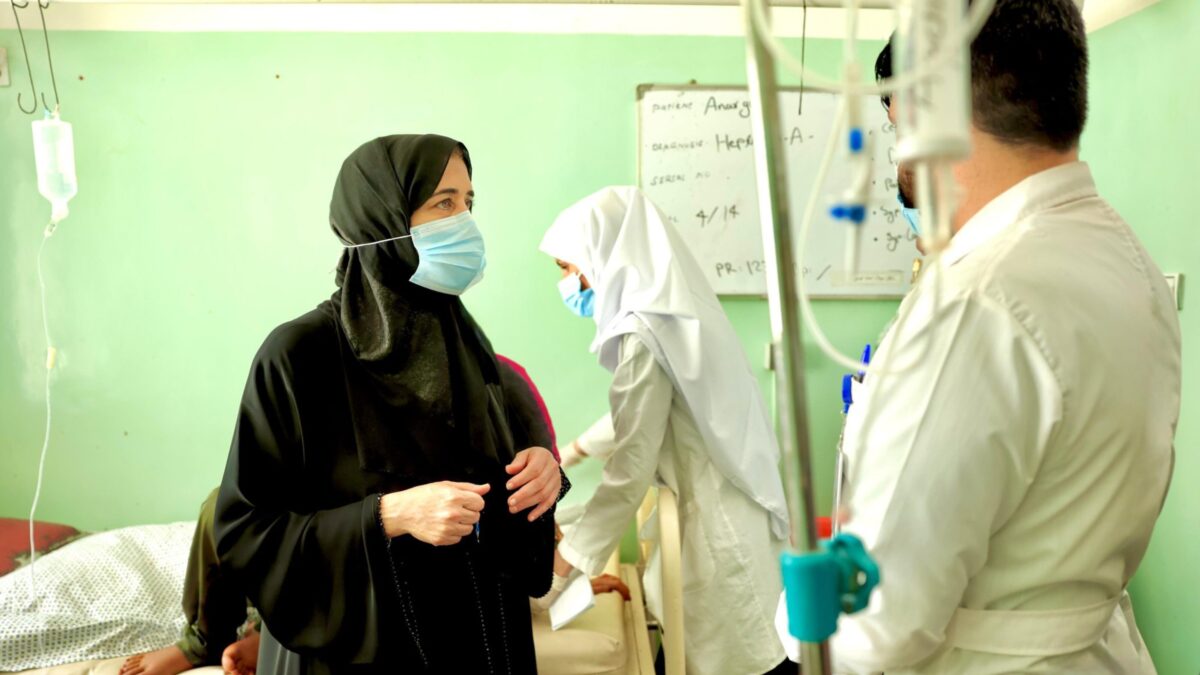
Afghanistan could end the transmission of the poliovirus within the next 12 months, a senior World Health Organization official said, but only if vaccination campaigns are paired with stronger basic health services and a more resilient health system.
Hanan Balkhy, the World Health Organization’s regional director for the Eastern Mediterranean, said after meetings with Taliban officials and health partners that eradicating polio required more than delivering vaccines during periodic campaigns.
“Reaching every child with lifesaving vaccines must go hand in hand with strengthening routine immunization, sustaining essential health services and building a more resilient health system,” Balkhy said.
She said greater coordination among health authorities and international partners could put Afghanistan on a path to interrupting transmission of the virus within the coming year.
Afghanistan and Pakistan are the only countries where wild poliovirus remains endemic, making the region the final frontier of a global eradication campaign that has eliminated the disease from most of the world.
Afghanistan recorded 25 polio cases in 2025, according to figures cited by the World Health Organization, while six cases have been reported so far in 2026. Health experts caution that as long as the virus continues to circulate, even a small number of confirmed cases poses a risk of wider transmission.
Balkhy’s remarks followed a meeting attended by Abdul Salam Hanafi, the Taliban’s deputy prime minister for administrative affairs; Christopher Elias, president of global development at the Gates Foundation; representatives of WHO and UNICEF; and Qatar’s ambassador to Afghanistan.
WHO said improved security conditions in parts of Afghanistan had created opportunities to expand vaccination efforts. But the agency said eradication would depend on coordination among all parties and ensuring that every child could receive health services and vaccines.
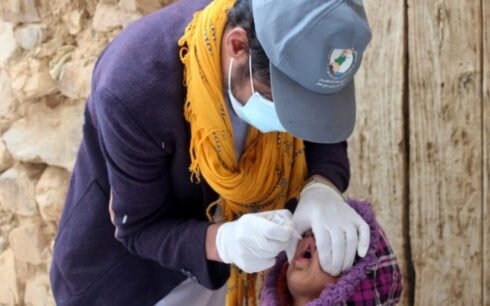
Taliban have restricted door-to-door polio vaccination campaigns in parts of Afghanistan, shifting vaccination efforts toward mosques and other fixed locations. Public health experts have warned that such an approach risks missing children whose families cannot or do not bring them to vaccination sites.
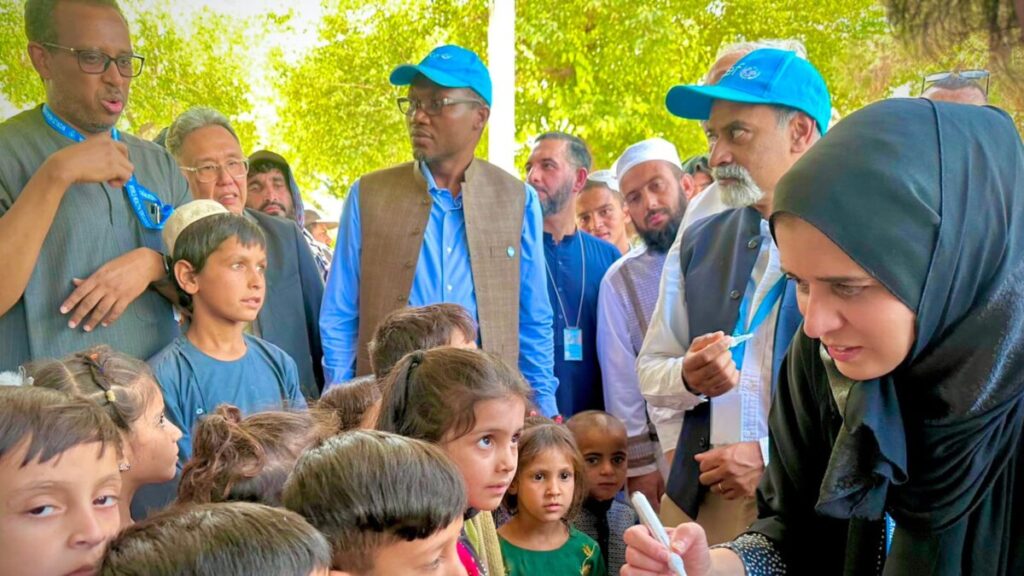
Door-to-door campaigns have historically been a central part of polio eradication efforts because vaccinators can identify and reach children who might otherwise be missed.
The challenge is compounded by large-scale population movements, including the return of millions of Afghans from neighboring countries. Weak primary health services, difficult access to remote communities and gaps in public awareness have also complicated eradication efforts.
Polio is a highly infectious viral disease that primarily affects children under 5. The virus can spread through contaminated food and water and, in severe cases, can cause irreversible paralysis.
There is no cure for polio, but vaccination can prevent the disease. Global eradication efforts therefore depend on repeatedly reaching enough children to stop the virus from circulating.
A cross-border challenge
Eradicating polio in Afghanistan is closely linked to efforts in neighboring Pakistan, where the wild virus also continues to circulate.
Frequent population movements across the border allow the virus to travel between the two countries, making coordinated vaccination campaigns particularly important in border communities and areas with highly mobile populations.
Pakistan has conducted campaigns aimed at vaccinating more than 45 million children under 5, while officials in both countries have emphasized the need for coordination to interrupt cross-border transmission.
Vaccination campaigns in Pakistan, however, continue to face serious security threats. Police have reported repeated attacks on security personnel assigned to protect vaccination teams, including a recent attack in Khyber Pakhtunkhwa.
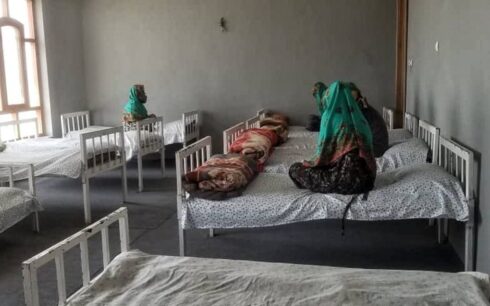
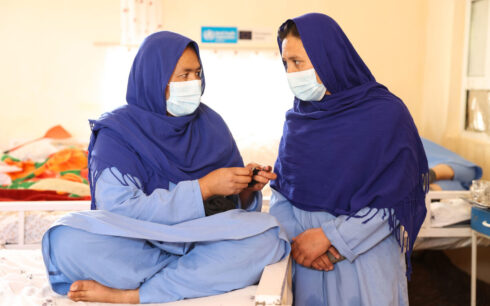
Afghanistan’s health system faces a different but overlapping set of challenges. Years of conflict, poverty, declining international funding and shortages of health workers and facilities have left many families with limited access to basic care.
WHO officials argue that strengthening routine childhood immunization and primary health services could help build public trust while ensuring that children receive vaccines consistently, rather than relying solely on emergency campaigns.
The agency has emphasized that the final stage of eradication requires uninterrupted vaccination efforts. A decline in reported cases can indicate progress, health experts say, but the presence of even one infected child means the virus can continue spreading undetected in communities.
For Afghanistan, Balkhy said, the goal of eliminating polio is inseparable from the broader challenge of rebuilding a health system capable of reaching families consistently.
The next year could offer an opportunity to interrupt transmission, according to WHO, but doing so will require reaching children who have repeatedly been missed, and ensuring that the health services around them remain functioning after vaccination campaigns end.