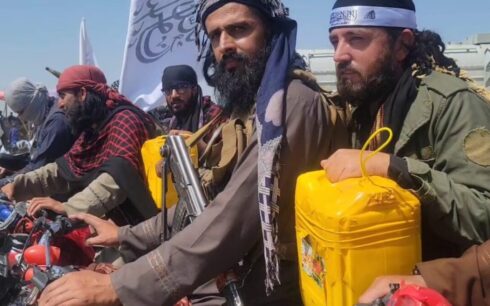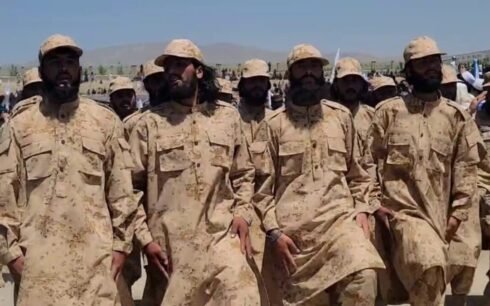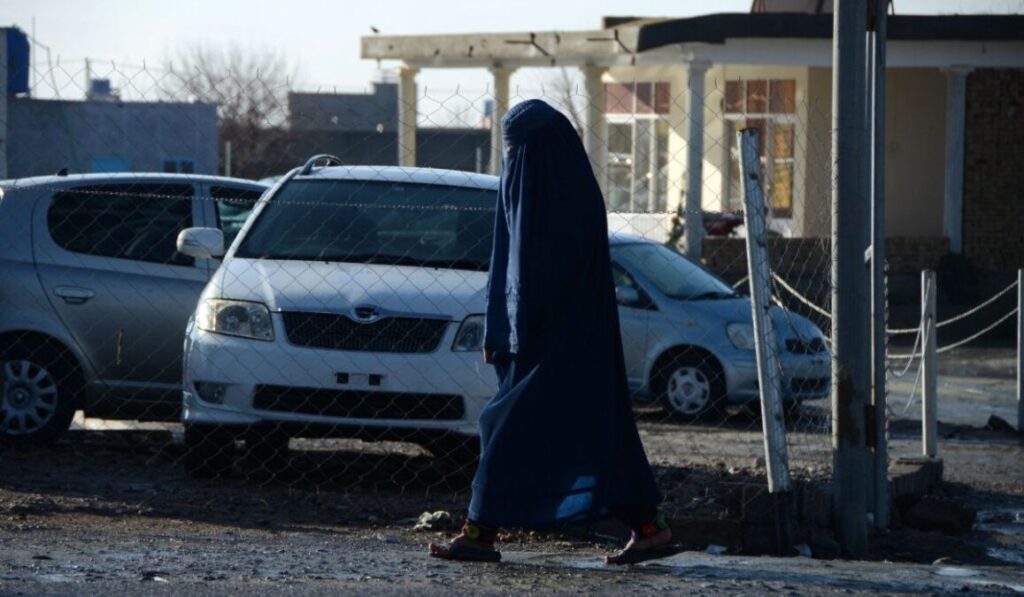
In 1996, when the Taliban entered Herat, the city quickly changed. A few months earlier there had been celebrations of victory, and the provincial governor’s office was lit with decorations. On many nights women and men celebrated in the streets, eating food and sweets, telling stories and walking in safety.
For Herat and its people, celebration at every occasion was tied to dancing and joy. It was the custom of the people to organize festivities for various reasons and repeat them the following year on the same day, until they eventually became annual celebrations.
When the Taliban arrived, they not only closed schools and universities, but also locked the doors to every form of joy and gathering among people.
For my uncle, Bashir Ahmad—who had once been a cheerful and lively young man—life in Taliban-ruled Herat became unbearable.
His friends were leaving Herat one by one for foreign borders, the Friday gatherings had disappeared, and day by day he lost his interest in the Faculty of Agriculture.
I understood my uncle’s state of mind. Just as we girls felt imprisoned at home, the boys experienced loneliness and humiliation in the streets.
The Taliban had interfered with people’s identity, and from home to street everything had collapsed.
The city, with all its people, fell into such isolation that even during the years of war it had never experienced anything like it.
The winter cold had crept into our bones when one morning my uncle announced in a muffled voice that he wanted to go to Iran illegally.
He had wrapped himself in his brown blanket, his head near his knees; I did not know whether he was staring at the ground or at his toes. My father placed a piece of bread on the tablecloth and said, “You will make yourself a stranger in another country!”
I said, “What about the university?”
My uncle looked at me and said, “I wanted to have a large farm, to go to Shada and buy a lot of land.” His dreams had been buried in the past tense, and I had not realized it.
I, Aunt Aziza and Uncle Bashir Ahmad had a good relationship. During Eid we arranged the table together, and at night we talked until late. Whenever music played, his shoulders began to move. He used to say he was no less than Amitabh Bachchan. Just that previous winter we had cracked watermelon and melon seeds around the brazier and ended up wrestling over the last handful. In those days we were a family; the city and the homes had not yet been divided between men and women.
Two days later my uncle was not at the breakfast table. My father cried all day into the corner of his handkerchief, and I stood by the window staring at sparrows pecking at the snow on the walls. Eleven days later he returned, covered in dust. The smuggler had abandoned them at the border. They had endured three days in the mountains and then all of them had walked back toward Herat.
That year and the year after, my uncle tried twice more. Once he crossed the border after four months, and another time he was caught in gunfire from Iranian border guards. With every departure and return, a piece of the uncle I knew disappeared. We no longer saw him dance, nor did he sit with us by the brazier to talk.
There was no money for Eid tables anymore. My uncle was not only silent but also grim. Although he was only a year away from graduating, he never returned to the Faculty of Agriculture. He was as broken and ruined as my aunt and I.
Perhaps it was 1999. When I woke in the morning, on the earthen wall of the hall—where my father used to place his pillow and listen to the BBC radio—someone had written in neat, beautiful handwriting with white chalk: “Surely the best among you is the most pious among you.” Pink color had been used to shade the white writing. Who did not recognize Uncle Bashir Ahmad’s beautiful handwriting?
The next day he turned to me and Aunt Aziza and said: “Your laughter reaches every stranger in the alley. When a woman of the family walks, the sound of her shoes should not be heard by anyone. When she speaks with someone, she should place a pebble under her tongue so that even the tone of her voice changes.”
My uncle had prayed five times a day even before the Taliban, and he attended Friday prayers, but he had never turned religion into a sword over our heads. He had survived the Soviet war and the civil war, yet Taliban ideology finally killed him.
I turned away from him as well. One prayer for the dead—and that was it. As if the Bashir Ahmad who had been my uncle no longer existed.
Now, when I look back after twenty-six years, I ask myself why I did not try to grow close to him again. What did he go through in those lonely years in the streets?
And what about those three days in the snow-covered mountains? Why did he leave me to the Taliban? Why did I leave him?
Years later, during the republic era, our relationship was good. He had become the father of a daughter and a son, and I had become the mother of a child. We both lived for our children, and our memories of the lost past had faded.
But the past did not leave us. My uncle Bashir Ahmad’s daughter was in the ninth grade when the Taliban returned. She should have been in the first or second year of university by now.
Not long ago my uncle said: “The girl has grown up. It is better for her to marry than to cry all day about schoolwork. She has become skin and bone.”
Last night I asked my cousin, “How is my uncle?” She said: “I don’t understand why, but my father seems seventy years older.”
I know why. Because once again, in the cruel repetition of history, we have abandoned one another to the sorrow of the Taliban—
a father to his daughter, a daughter to her father.
Humaira Qaderi is a university professor and a prominent Afghan writer known for her novels Eqlima and Silver Girl of the Kabul River.
The writings published in this section do not necessarily reflect the views of Amu TV.