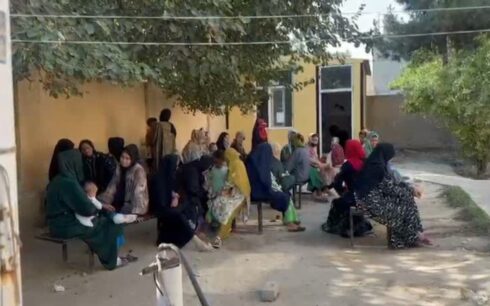
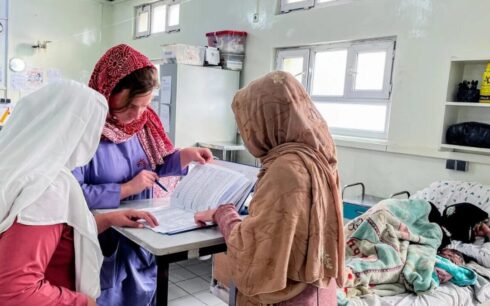
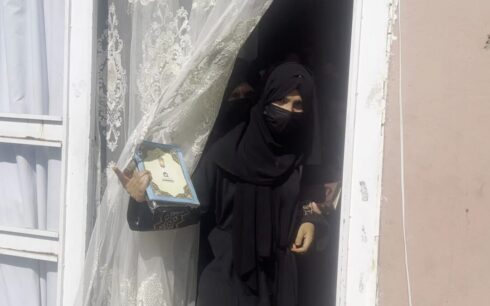
Taliban morality police detained five women in Herat over the past two days, according to local sources, in what residents describe as an escalation in the enforcement of the Taliban’s dress code and public conduct rules for women.
The sources told Amu TV that the women remain in custody. They said the women were wearing the hijab at the time of their arrest but did not specify what prompted the detentions.
Taliban have not publicly commented on the reported arrests.
Residents of Herat say patrols by Taliban morality enforcers have increased in recent days, with women facing more frequent questioning and inspections in public.
One woman, in a text message to Amu TV, said she witnessed the arrest of two women who, she said, were detained because they were not wearing a full-body prayer covering, commonly known as a chador namaz.
Another resident alleged that Taliban had demanded 13,000 afghanis from families seeking the release of detained women and required a male guardian to guarantee that they would not leave home again without the garment.
Two other women interviewed by Amu TV said they feared speaking publicly because of possible reprisals from the Taliban.
“Women are being detained from different parts of Herat,” one resident said, speaking on condition of anonymity for security reasons. “No one knows how long they are held or why they are released. The arrests themselves have created fear.”
Another resident described an incident involving a recently married woman who was detained by Taliban morality enforcers. According to the resident, the woman’s husband waited outside the local morality ministry office overnight for her release. After returning home, the woman set herself on fire following pressure from those around her, the resident alleged.
Tarannom Saeedi, a women’s rights activist, said the reported arrests reflected what she described as a broader effort to exclude women from public life.
“These arbitrary detentions and restrictions are part of a systematic campaign against women,” she said. “Afghan women deserve to live normal lives without fear.”
The reports come as Saif-ul-Islam Khyber, spokesman for the Taliban’s Ministry for the Propagation of Virtue and the Prevention of Vice, has reiterated that the ministry will continue enforcing its morality law.
Some religious scholars have also criticized parts of the law, arguing that certain provisions conflict with Islamic principles, citizens’ fundamental rights and individual freedoms.
In June, the United Nations Assistance Mission in Afghanistan (UNAMA) confirmed that nearly 30 women had been detained in Herat by Taliban morality officers for allegedly failing to comply with their interpretation of the Islamic dress code.
The latest reported detentions come as enforcement of the Taliban’s morality law has intensified across Afghanistan, with increased monitoring of women’s dress and movement in public since the law took effect last year.