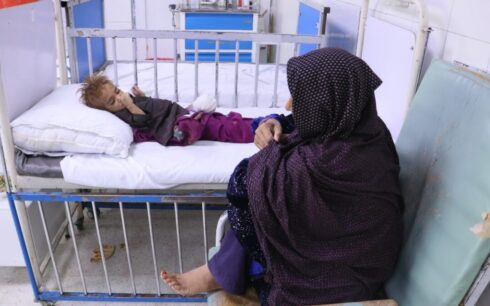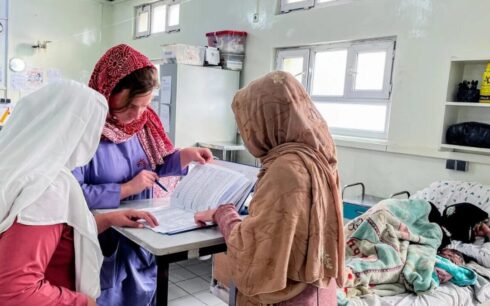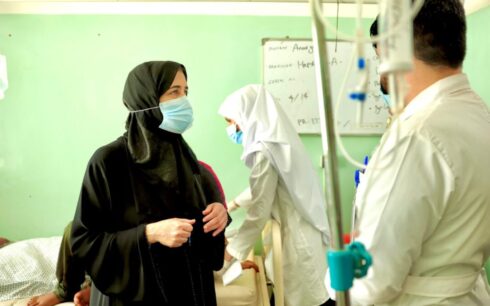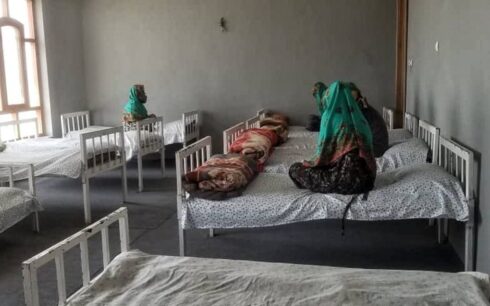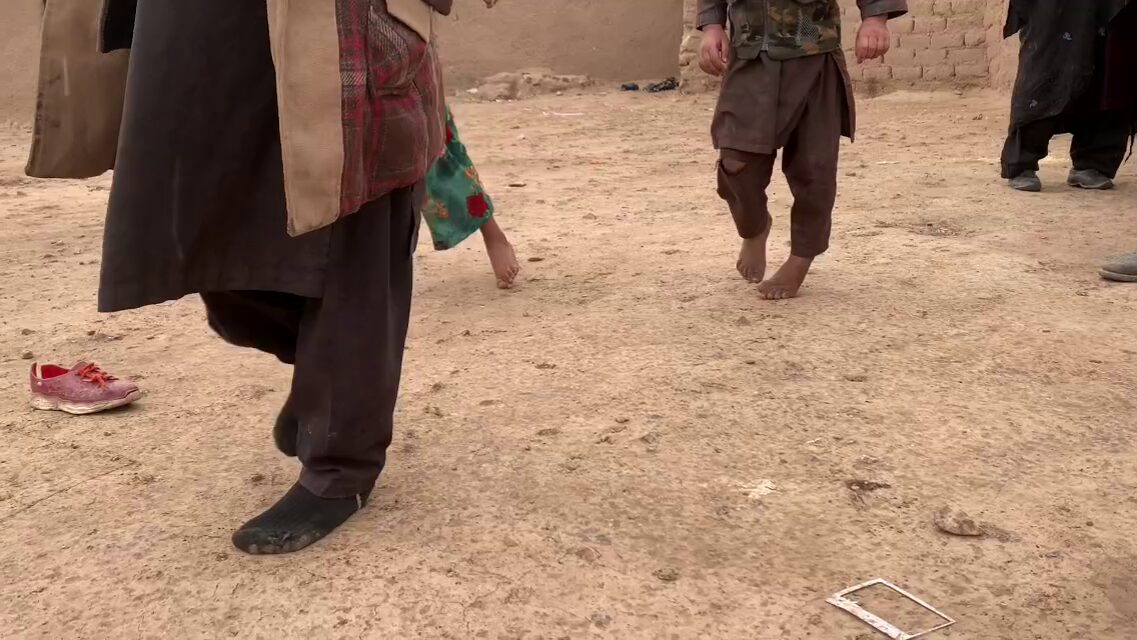
Residents of Nad Ali district in the southern province of Helmand say poverty, limited access to healthcare and the high cost of medical treatment have left children and adults with physical disabilities unable to receive the care they need.
The residents say many people in their communities live with mobility impairments, limb deformities and spinal conditions but cannot afford treatment or travel to specialized medical centers.
Among them is Noor Mohammad, who said all of his children have physical disabilities affecting their arms and legs. He said his family’s financial situation has prevented them from seeking treatment.
“Look at these prescriptions,” he said. “My children have problems with their arms and legs, but I cannot afford their treatment. We don’t even have a free government clinic in our area.”
Other residents say the shortage of healthcare facilities has forced many families to live for years without access to rehabilitation or specialized medical care.
Shah Bibi, another resident of Nad Ali, said her husband, the family’s sole breadwinner, is living with paralysis and is unable to work.
“My husband is paralyzed and cannot do any work,” she said. “My children are also very sick, and we don’t know what to do.”
Families say their health challenges are compounded by severe economic hardship.
“Our situation is very bad,” said Iqlima, another resident of Helmand. “We don’t even have enough food to eat. Come and see how we live.”
Doctors say many physical disabilities—including certain limb deformities and some spinal conditions—can be treated or their effects reduced if patients receive timely diagnosis, surgery or rehabilitation.
Residents of Nad Ali say, however, that specialized healthcare services remain largely out of reach because of poverty, high treatment costs and the lack of adequately equipped medical facilities in the district.
They residents calling on Taliban authorities and humanitarian organizations to establish diagnostic, rehabilitation and treatment services closer to their communities so patients no longer have to forgo medical care because of cost or distance.