Hannah Neumann, a German lawmaker in the European Parliament, has once again warned that the European Commission’s engagement with Taliban representatives risks evolving beyond cooperation on deportations and could pave the way for Taliban-appointed diplomats to assume control of Afghan consular services across Europe.
She said that such a move would amount to the Taliban’s political normalization without accountability and questioned whether the Commission was expanding its engagement with the Taliban beyond its stated objective of returning Afghan nationals ordered to leave Europe.
“There is no such thing as technical engagement with the Taliban,” Neumann wrote on X after Magnus Brunner, the European commissioner for internal affairs and migration, briefed the European Parliament’s Committee on Civil Liberties, Justice and Home Affairs (LIBE) on last month’s meeting with a Taliban delegation in Brussels.
According to Neumann, the European Commission maintains that its talks with the Taliban concern only the return of Afghans convicted of serious crimes, including terrorism, murder and rape.
However, she questioned whether the discussions could ultimately lead to broader cooperation.
Neumann noted that the Taliban have said deportations require functioning Afghan consular services abroad and asked whether the Commission was preparing the ground for Taliban-appointed diplomats to take over Afghan consular services across Europe.
“If that happens,” she said, “it would go far beyond facilitating returns.”
She said the issue has direct implications for Afghans living in Europe.
“For Afghans who fled the Taliban, this is not an abstract diplomatic question,” Neumann wrote. “Imagine having to register your child’s birth, renew your passport or obtain official documents through Taliban officials in Berlin, Brussels or Barcelona.”
She argued that engagement with the Taliban cannot be separated from its political consequences.
“It is political normalization without accountability,” she wrote.
Neumann also called on the European Commission to explain who would be returned to Afghanistan, how Afghans in Europe would be protected from what she described as transnational repression, and what the Taliban expected in return for cooperating on deportations.
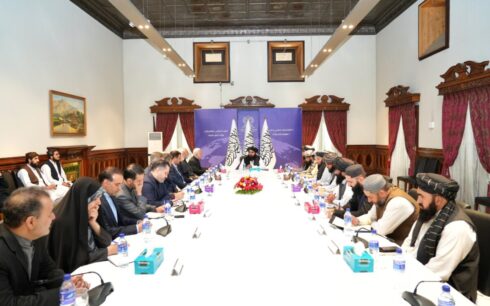
Last month, the European Commission and several member states hosted a five-member Taliban delegation in Brussels. European officials said the talks focused on the return of Afghan nationals who have no legal right to remain in Europe.
The Commission’s engagement with the Taliban has drawn criticism from Afghan rights advocates and refugee groups.
Mobaraka Akbari, an Afghan human rights activist, said forced returns to Afghanistan would violate the international legal principle of non-refoulement, which prohibits returning people to countries where they face threats to their lives, freedom or safety.
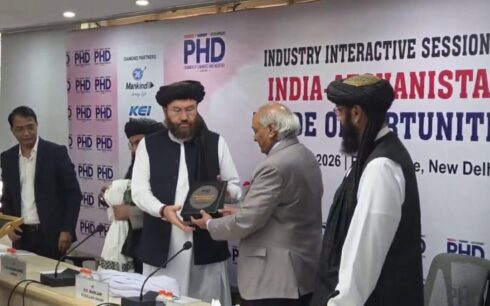
Following the Brussels meeting, the Taliban said they had discussed expanding their presence in Europe and restoring consular services for Afghan citizens. European officials have not said whether additional Taliban-appointed diplomats will be accepted to staff Afghan diplomatic missions or whether new arrangements have been reached to facilitate deportations.
Ghulam Farooq Aleem, a legal analyst, said European governments could seek Taliban cooperation on deportations in exchange for allowing additional Taliban-appointed diplomats to work at Afghan diplomatic missions.
“European governments want cooperation on deportations, while the Taliban seek broader diplomatic engagement,” he said.
Germany has led direct engagement with the Taliban on deportations. Berlin accepted two Taliban-appointed diplomats at Afghanistan’s embassy and consulate and, according to previous reports, is expected to accredit four more. Norway has also accepted a Taliban-appointed diplomat, while Afghanistan’s embassies in Spain and the Netherlands have acknowledged contacts with the Taliban’s Foreign Ministry.