When Pakistan’s intelligence delegation quietly arrived in Kabul on May 10, the visit barely registered in public discourse. Yet behind closed doors, it marked a strategic inflection point in South Asia’s evolving security architecture. The meeting reportedly involving senior officials from Pakistan’s Inter‑Services Intelligence (ISI) and Military Intelligence (MI) was not a routine exchange. It was a message delivered in silence, a recalibration of Pakistan’s regional posture amid rising tensions between Iran and the United States and the enduring specter of militancy along the Durand Line.
The timing was deliberate. While the Pakistani Embassy commemorated the anniversary of the “Bunyan al‑Marsous” operations against India, senior ISI and MI figures were said to be meeting Taliban officials from the Ministries of Defense and Interior, as well as the General Directorate of Intelligence. The juxtaposition of public diplomacy and covert engagement underscores Islamabad’s dual‑track approach, symbolic reassurance above the surface, strategic maneuvering beneath it.
The message from Rawalpindi
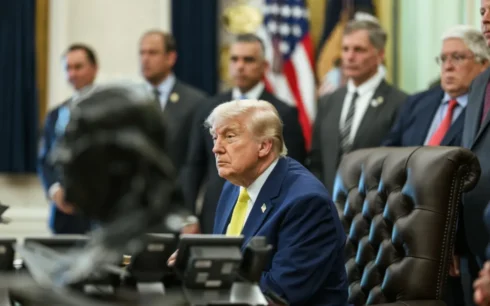
According to reports, Pakistan’s Chief of Army Staff, General Asim Munir, conveyed a pointed message to the Taliban leadership: act decisively against Tehrik‑i‑Taliban Pakistan (TTP) and the Balochistan Liberation Army (BLA), halt military construction near zero‑point areas, and align with Pakistan’s intelligence operations directed against India. The subtext was unmistakable, cooperation or confrontation.
Pakistan’s insistence on transferring remaining U.S. military equipment from Afghanistan to its own custody adds another layer of complexity. Whether this claim reflects genuine security concerns or a bid to consolidate military advantage, it signals Islamabad’s intent to reassert control over the post‑Doha security vacuum.
Over recent months, Pakistan has reportedly redeployed militants affiliated with Lashkar‑e‑Taiba, Jaish‑e‑Mohammed, and Al‑Badr Mujahideen into Afghan border districts. These groups, long used as instruments of strategic depth are being repositioned under the guise of counter‑terrorism cooperation. In exchange for financial and logistical support, local tribal elders in Nuristan and Kunar have allegedly agreed to host these networks, effectively reviving the proxy infrastructure that once defined Pakistan’s regional influence.
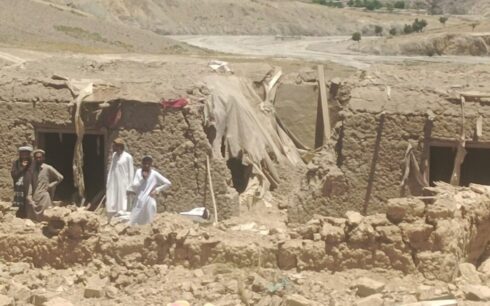
The closure of key routes between Nuristan and Pakistan, publicly attributed to border clashes, appears to have served a deeper purpose: coercing local populations into compliance. By restricting food and medicine supplies, Islamabad has weaponized humanitarian access, a tactic reminiscent of its counterinsurgency playbook in the former Federally Administered Tribal Areas (FATA).
Strategic implications
Pakistan’s covert diplomacy in Kabul reflects a three‑tiered strategy:
- Contain the TTP threat through coercive intelligence engagement.
- Rebuild proxy networks to maintain leverage over Afghanistan’s eastern frontier.
- Reposition itself as a regional broker amid U.S., Iran tensions and Indo‑Pak rivalry.
For the Taliban, acquiescing to Pakistan’s demands risks undermining their sovereignty and alienating nationalist factions within their own ranks. For India, the reactivation of Pakistan’s militant proxies near the Durand Line signals a potential re‑escalation of intelligence confrontation. And for the broader region, it raises the specter of renewed instability just as diplomatic channels struggle to contain multiple crises.
The road ahead
Pakistan’s covert visit to Kabul may not make headlines, but its implications will reverberate across South Asia. The line between cooperation and coercion is narrowing, and the Durand frontier, long a symbol of contested sovereignty is once again becoming a laboratory for proxy politics. If Islamabad continues to pursue influence through militant intermediaries, it risks reigniting the very instability it seeks to control.
Ajmal Sohail is a graduate in terrorism and extremism studies from both Leiden University in the Netherlands and Maryland University in the United States. He works in the meantime as an intelligence analyst and Counter-terrorism expert. He is the co-founder and co-president of the Counter Narco-Terrorism Alliance Germany, directing its intelligence and counter-terrorism portfolios.
This article reflects the author’s views and not necessarily those of Amu TV.