Residents of a large housing complex in Kabul say they are facing an uncertain future after Taliban declared the property state-owned and ordered occupants to leave within 10 days, prompting protests and confusion over what comes next.
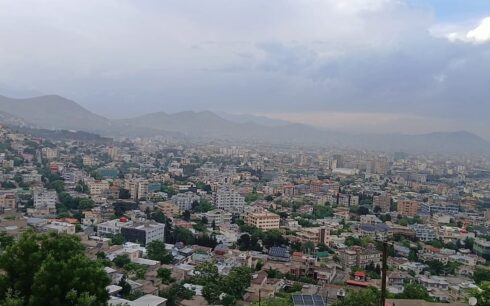
The decision affects the Omar Gulistan residential complex, a development in the capital’s ninth district that includes about 700 apartments and is home to thousands of people. Residents said the order, issued by a special Taliban court, was delivered last week without prior consultation.
“We don’t know what will happen after the 10-day deadline,” said one resident, who spoke on the condition of anonymity for fear of reprisals. “They first told people that everyone would be evicted and all homes must be vacated.”
He said that after residents raised concerns, local officials softened their tone but offered little clarity. “Representatives from each block met with the district chief,” he said. “He did not say that all would be expelled, but he asked people to cooperate and identify which apartments belong to the original owners.”
Another resident described the economic shock many families now face. “I have no money left to find another place,” he said. “People invested everything in these apartments. Now we are being told to leave without any clear explanation.”
The compound spans about 11 jeribs of land and includes eight residential blocks, along with shops and other facilities. Most apartments are occupied, residents said, with monthly rents ranging from 20,000 to 30,000 afghanis ($300 to $480). Units had previously sold for between $90,000 and $130,000.
Residents said Taliban have already begun sealing parts of the complex. “So far, they have locked four property dealer offices and a gym,” one resident said. Others said some apartments had also been marked or sealed.
Protests broke out over the weekend, with residents gathering to oppose the order. One participant said the stress had immediate consequences. “After hearing the decision, one resident suffered a heart attack,” he said. The account could not be independently verified.
Documents reviewed by Amu TV indicate that the land was recognized as private property during the 1980s and that ownership was later affirmed by Kabul municipality and the Ministry of Urban Development in 2012. Construction of the complex proceeded under the previous government, with official approvals.
Residents say the complex has three owners, including at least one who is currently outside Afghanistan. Nearly all of the apartments are residential, and about 95 percent are occupied, according to those familiar with the property.
Taliban have defended the move as lawful. In a statement, Kabul municipality said a designated committee had taken control of the land “after completing legal procedures” and in the presence of the occupants’ legal representatives, before transferring it to city authorities.
Residents dispute that characterization, saying they were not meaningfully included in any legal process. Some said they have been instructed to take their complaints directly to Taliban leadership in Kandahar.
“They told us if we have objections, we should send our message to Kandahar,” one resident said. “We are trying to do that.”
The case underscores broader uncertainty over property rights in Afghanistan since the Taliban returned to power in 2021. In several instances, residents and landowners have reported disputes over ownership, with limited legal recourse and unclear enforcement mechanisms.
For families in Gulistan, the uncertainty is immediate and personal.
“We built our lives here,” one resident said. “Now, in just a few days, everything could be gone.”