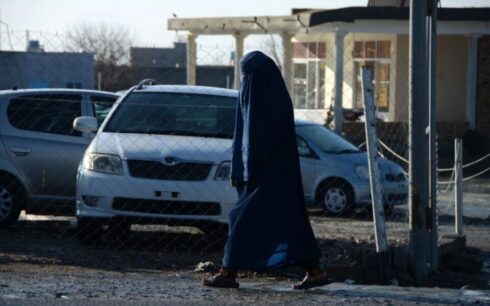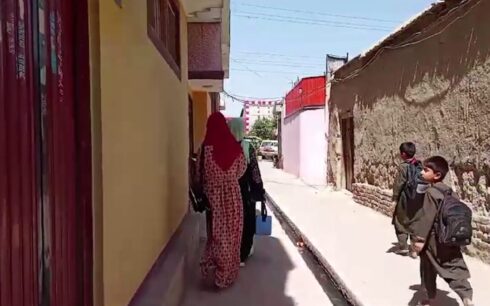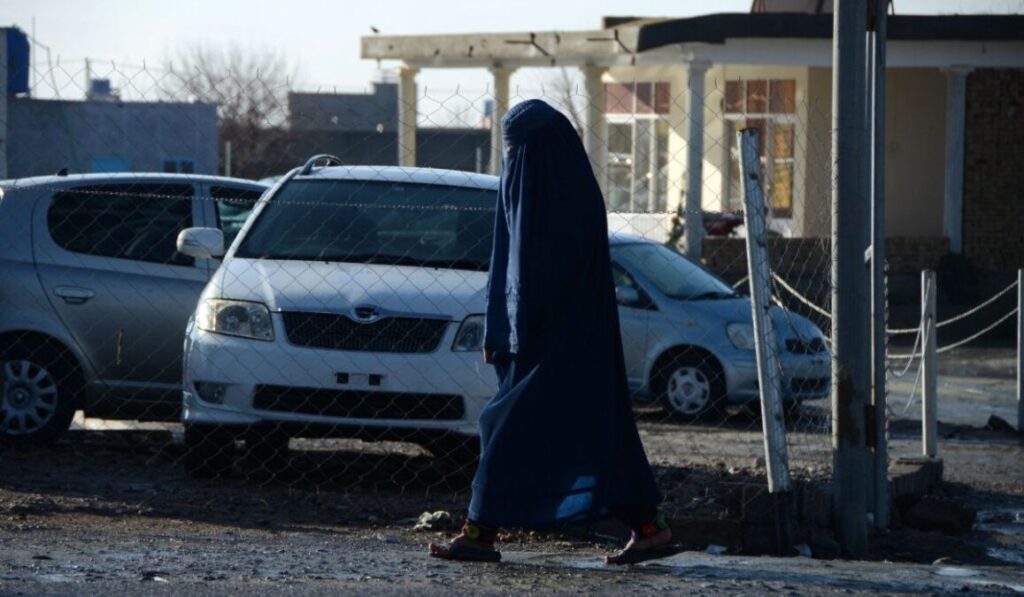
In a world where women’s rights are buried each day beneath the weight of politics, religion and power, Afghan women have not only endured — they have remained standing.
To stand in a land where a woman’s very breath can be treated as a crime is itself a form of courage. It is a courage that does not play out on battlefields, but in silent alleys, shuttered classrooms, confined homes and hearths that have not surrendered.
Nooria is one of these women.
She was forced to conceal her identity, to wear men’s clothing and to work under the name “Noor Ahmad” simply to provide for her family. She did this not to deceive or to protest, but to survive. Yet in a forbidden geography, even survival can be treated as a crime.

Today, Afghan women are rarely media heroes or headline subjects in major news organizations. They exist on the margins. Yet it is often the margins that form the true center of resistance. Nooria lived there, too — where remaining unseen is the price of staying alive.
Living under pressure, yet not without choice
After the Taliban’s return to power, the structure of women’s lives collapsed. Education was banned. Work was restricted. Women’s social presence was criminalized. The female body became a site of political control.
But what did not collapse was will.
Nooria chose to work because her family’s survival depended on her labor. She chose to hide her identity because visibility meant danger. She chose to become “Noor Ahmad” because being “Nooria” no longer had a place in the labor market.
Contrary to the image often imposed on her as a passive victim, the Afghan woman makes choices even under extreme pressure: the choice to study in secrecy; the choice to earn bread without a name; the choice to write, even if the words are never published; the choice to live with dignity.
These choices may seem small. In systems of repression, they are not.
Courage without a stage
In El Salvador, women have challenged prisons through the courts. In Russia, colors have become a language of protest. In Rojava, women have sought to reshape structures of power. In Iran, silence has turned into defiance. In Sudan, women have stood on the front lines of resistance. In Palestine, existence itself is an act of resistance.
But in Afghanistan, courage has no stage.
There are no protests. No strikes. Not even silent gatherings.
The courage of Afghan women has no audience.
Nooria worked quietly — no slogans, no protest signs. Yet when she was arrested, she was treated like a dangerous criminal, though her only offense was trying to stay alive.
The Female Body as the Last Stronghold of Power
Repressive systems often begin with the same target: the woman’s body.
Dress, movement, voice, education, reproduction — all are turned into instruments of control.
In Afghanistan, the female body is not merely private; it is a politicized battleground. Nooria’s body entered this equation through the clothes she wore, the name she used and the identity she concealed. Each became grounds for interrogation.
Yet even here, Afghan women have not fully retreated. They hide their bodies, but not their identities. They fall silent, but they are not erased. They remain at home, but not without thought.
Hope is not naivete. Hope is a conscious decision to continue when all evidence seems to argue against the future.
Nooria hoped — not for immediate freedom, but for her family’s survival.
A global question
What Afghan women endure is not a local matter. Nooria’s story is the story of thousands whose names will never be recorded.
It is a test of global conscience: Are women’s rights truly universal? Or do they matter only in safe geographies?
Afghanistan’s experience suggests that when the world grows tired, women are forced to grow stronger.
Conclusion
The Afghan woman is neither an object of pity nor an unreachable myth. She is a human being — with fear, exhaustion, hope and determination.
Nooria is one of them: not a legendary heroine, but an ordinary woman carrying an extraordinary burden.
And that humanity, sustained under inhumane conditions, is itself resistance.
Perhaps Nooria’s voice is not heard today. History has repeatedly shown that no force can withstand a woman who has decided to stand.
Jahanzeb Wesa is a human rights activist based in Australia.
This article reflects the author’s views and not those of Amu TV.