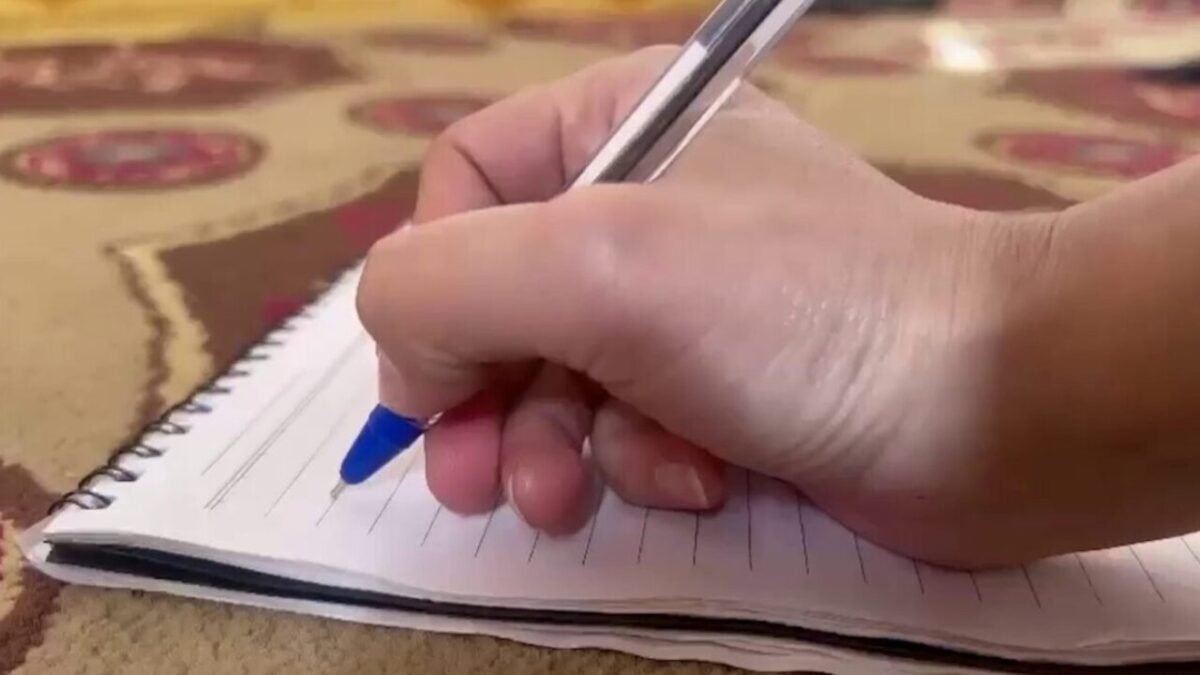
I was truly exhausted. So exhausted that at times I even disliked being a woman. I told myself that perhaps I should accept that everything is exactly as they say it is: that there should be no school, no work, no presence outside the home, no place for us in society. Perhaps all of this is what the Almighty God has written for us, and in the story of creation this is the role assigned to us.
Then why shouldn’t we play our role exactly as it is written? Does an actor on a theater stage or in a film have the right to say or do anything contrary to what is written in the script? An actor must say exactly what is written and do exactly what is assigned.
Perhaps the world itself is the theater stage of the Almighty God. He has written a story and assigned a role in it to every being. The role must therefore be played exactly as written in the script—nothing more, nothing less, without question.
I had told myself this out of anger and exhaustion: that perhaps this narrative of being a woman is correct. Perhaps this is destiny, and it must be accepted.
I had said that from now on I would lower my head and play my role. Without question, without protest—like an actor who knows she did not write the script and has no choice but to perform it.
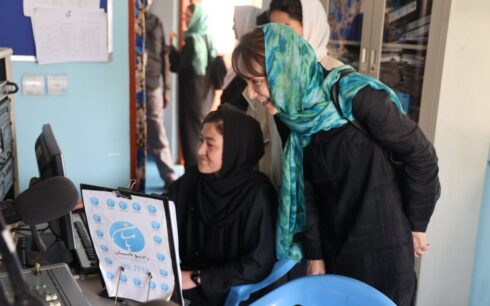
But since last night, when I saw on Amu TV that they were speaking about March 8, something suddenly ran beneath my skin. It felt as if a vein that had been silent for some time had begun to pulse again. Something stirred in my mind—a restlessness in the head, just as the Turkish writer Orhan Pamuk has written about. A restlessness that suddenly wakes a person from sleep.
All at once I saw that the beliefs I had forced myself to accept over the past few months had all turned to smoke and vanished into the air. It was as if they had never belonged to me in the first place. I once again liked the feeling of being a woman—liked that I am a woman, that something inside me is still alive.
My mother, who in recent months had grown fearful of my silence and obedience—a fear I could read unspoken in her eyes—looked at me differently today. I saw her eyes shining with the energy and excitement she saw in me. There was a question in her gaze, as if she wanted to ask: What happened, my daughter? Have you returned to your old self? Have you become again the person you were before these past few months?
A lively girl, noisy and spirited, curious, a reader of books, argumentative; a girl who was never afraid of debate and dispute about anything and anyone.
Today I decided to go outside. To look directly into the eyes of men—through the two eyes that appear beneath the mask on my face—and look at them. Not out of hostility, but so that I remember that I still have the right to walk in this city, to look, and to be seen.
I decided to go and find flowers—red roses. And to give a red rose to every girl I see, to every woman I see in the streets and alleys of my city. To the daughters of my city, the daughters of my land.
Perhaps it is a small act. Perhaps no one will even notice it. But for me, for my own heart, it is a sign that something in me is still alive—something that does not want to simply play the role that has been written.
Perhaps the world truly is a stage. But today I realized that sometimes the actor, too, can write a new script within her heart.
Baran Mohammadi is a woman based in Afghanistan who asked that only her name be used.
The writings published in this section do not necessarily reflect the views of Amu TV.