Afghanistan’s population has surpassed 43 million, according to United Nations estimates, making it one of the world’s youngest countries. But as the population continues to grow, many Afghans say economic hardship is changing attitudes toward family size.
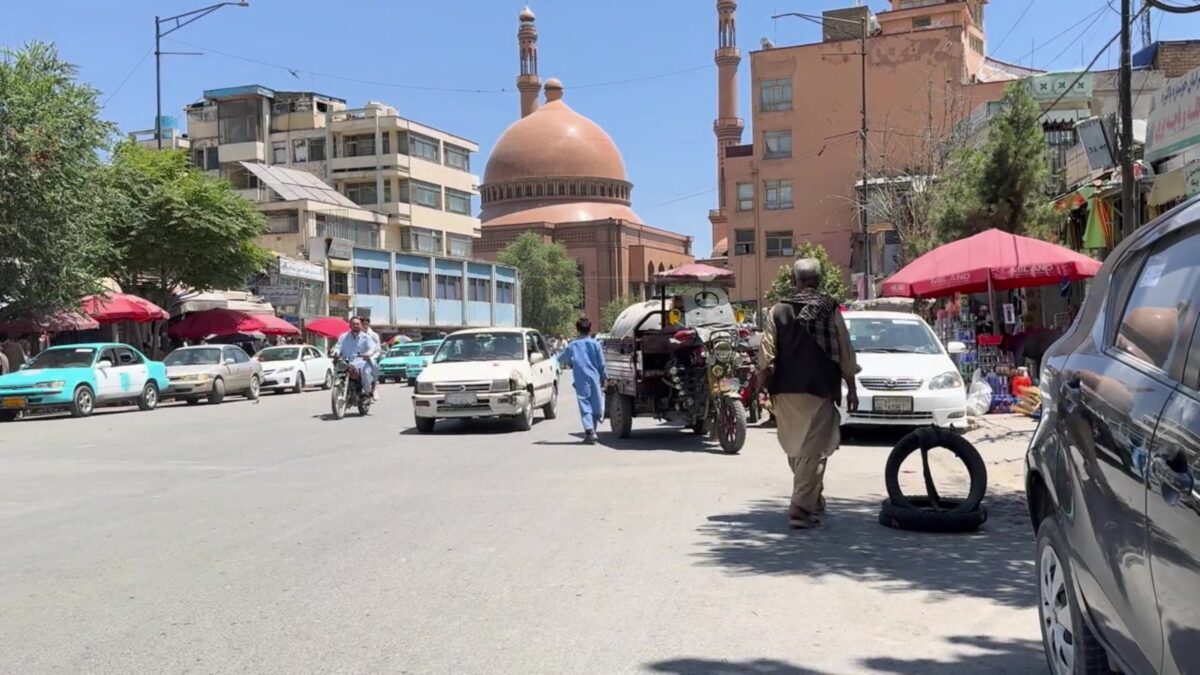
Residents in Kabul say rising living costs, unemployment and limited access to education and health care are making it increasingly difficult to support large families.
“As technology advances, people’s expectations also increase,” said Abdul Hamid, a Kabul resident. “Children and adults today have greater needs than before.”
According to the World Bank, Afghanistan’s fertility rate stood at 4.66 births per woman in 2025. Although the rate has declined over the past two decades, it remains well above the global average and continues to contribute to the country’s youthful population.
Some residents said families should have fewer children to improve their quality of life.
“Parents should think about their children’s future and be able to raise them properly,” said Salim, a Kabul resident. “Personally, I think having three children is better.”
Another resident, Hamed, echoed that view.
“Having many children brings its own challenges,” he said. “There’s a saying: fewer children, a better life.”
Others said raising children has become significantly more expensive than it was in previous generations.
“I raised eight children — four daughters and four sons,” said Rasul Dad, another Kabul resident. “I don’t even know whether they grew up on their own or whether I raised them.”
For younger Afghans, economic pressures are affecting even the decision to marry.
“I want to get married,” said Tabish, a Kabul resident. “But under the current circumstances, I can’t because of the economic difficulties.”
Economists say population growth is neither inherently an advantage nor a burden. Its impact depends largely on whether governments can create jobs, expand education and strengthen public services.
“In some situations, a smaller population is better, especially when the economy is weak,” said Sayed Massoud, an economist. “If the economy is stronger, a larger population can become an advantage. Traditionally, Afghans have lived in large extended families.”
Afghanistan continues to face widespread poverty, high unemployment and one of the world’s youngest demographic profiles. International organizations have repeatedly warned that without sustained investment in education, health care and employment, the country’s growing youth population could place increasing pressure on limited public resources.
According to global population estimates, India is the world’s most populous country, followed by China. The United States, Indonesia and Pakistan complete the top five. Afghanistan’s population is far smaller, but its rapid growth and youthful demographics present a distinct set of economic and social challenges.