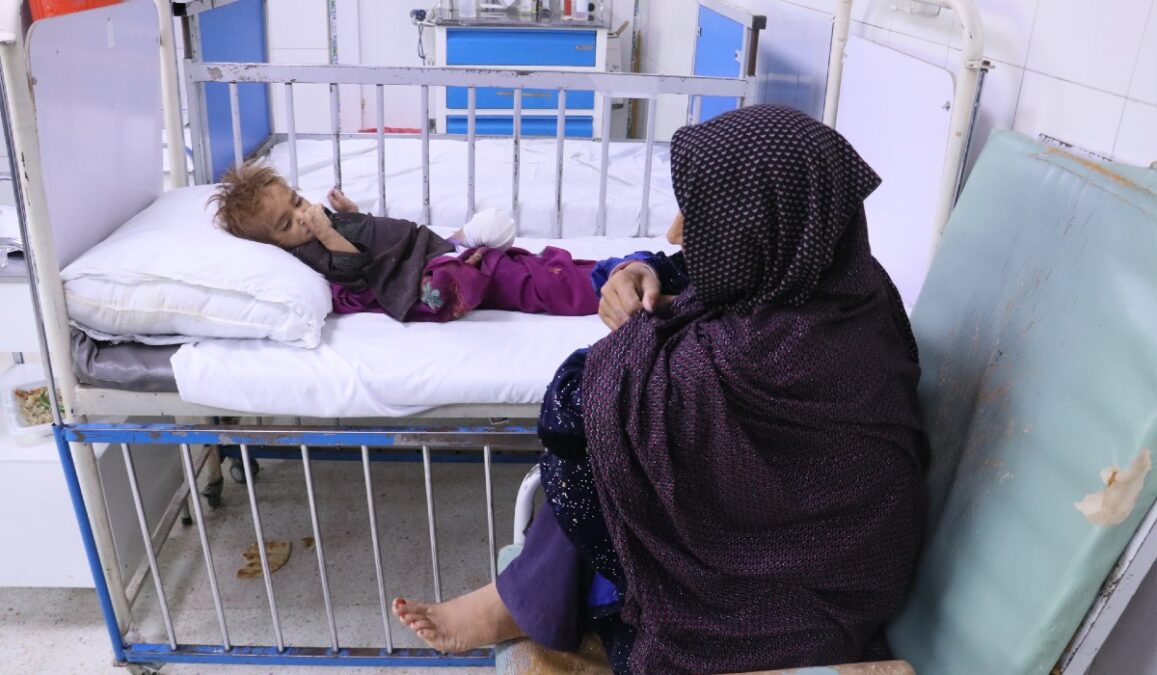
The UK has provided £8 million to UN agencies to help prevent and treat rising child malnutrition in Afghanistan, UNICEF said, as millions of children face acute food shortages.
The funding will support programmes run by UNICEF, the World Food Programme (WFP) and the Food and Agriculture Organization (FAO) aimed at addressing malnutrition among vulnerable children and pregnant and breastfeeding women, UNICEF said in a statement.
The support comes as the latest Integrated Food Security Phase Classification (IPC) report projects that nearly 3.7 million children under the age of five in Afghanistan will suffer from acute malnutrition in 2026. That figure includes about 942,000 children expected to face severe acute malnutrition and roughly 700,000 at high risk of moderate acute malnutrition. An estimated 1.2 million pregnant and breastfeeding women are also projected to be acutely malnourished.
UNICEF said the UK funding will support the “First Foods Initiative Afghanistan”, a joint programme designed to improve access to diverse, safe and affordable complementary foods for children aged six to 23 months — a critical period for growth and development.
The initiative is expected to directly benefit more than 150,000 children under the age of two and reach over 640,000 caregivers and community members through interventions spanning health, nutrition, food systems, water and sanitation, social protection and skills development.
“Too many children in Afghanistan are being pushed into malnutrition, nearly 80% of them under the age of two — the critical stage when children need nutritious complementary foods alongside breastfeeding,” said Tajudeen Oyewale, UNICEF’s representative in Afghanistan.
Under the programme, UNICEF will work to improve the affordability of nutritious food, expand community-based counselling on infant feeding practices and promote locally developed complementary feeding recipes. It will also support water and sanitation services to ensure food safety and work with partners to regulate baby food production and imports, the agency said.
WFP said it will focus on strengthening local food systems by supporting women-led food processing businesses, improving cold storage to reduce post-harvest losses, expanding irrigation and providing business skills training to households.
“In Afghanistan, WFP not only delivers lifesaving nutrition products but also works closely with communities to strengthen local food systems that support better diets,” said John Aylieff, WFP’s country director in Afghanistan.
FAO said it will provide nutrition-sensitive household production packages, including homestead gardening, backyard poultry and livestock support, as well as training to reduce food losses and contamination and protect animal health.
The UK contribution aligns with the United Nations’ Joint Strategic Call to Action on Nutrition in Afghanistan for 2025–2030, which calls for coordinated efforts to address child wasting and malnutrition through health, food, agriculture, education and social protection systems, UNICEF said.
Afghanistan has faced worsening food insecurity since the Taliban returned to power in 2021, amid economic collapse, widespread poverty and reduced international funding.