The death penalty, as the harshest form of punishment, is regarded by many scholars of criminal law and criminology — as well as by its opponents — as the most extreme and violent form of punishment.
In recent decades, particularly since the mid-20th century, opposition to capital punishment has grown worldwide. As a result, a large number of states have abolished the death penalty from their legal systems altogether, while others retain it in law but do not carry out executions in practice. A third group of countries still recognizes capital punishment and actively enforces it.
Based on the application of the death penalty, countries can be broadly divided into four categories:
Countries that have completely abolished the death penalty, numbering 113;
Countries that retain capital punishment in law but do not carry out executions, numbering 23;
Countries that have abolished the death penalty for ordinary crimes but retain it for the most serious offences, numbering 9; and
Countries that retain and actively implement the death penalty, numbering 54.
Among this fourth group are states whose judicial systems issue death sentences frequently and whose authorities carry them out regularly. These include China, Iran, Saudi Arabia, Vietnam, North Korea and the United States. Some of these countries — notably China, Vietnam and North Korea — carry out executions in secrecy, without publishing official data, creating serious challenges for international reporting and monitoring.
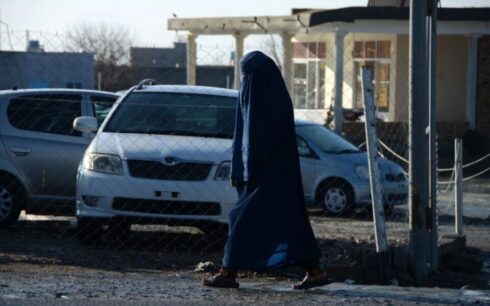
Across countries that still apply the death penalty, one common trend is clear: executions are carried out far less frequently against women than against men. For example, in Afghanistan, despite courts issuing death sentences against women in some cases over the past 25 years, no execution of a woman has been recorded.
However, some countries — including Iran — show little regard for gender distinctions in the application of capital punishment and enforce it with particular severity. Over the past year alone, Iran has executed 52 women, setting a global record. By comparison, during the same period Saudi Arabia executed nine women, Egypt and Yemen each executed two women, and Iraq executed one. (As noted earlier, figures for China, Vietnam and North Korea are not publicly available.)
It should also be noted that until around 2010, most judicial authorities in the Islamic Republic of Iran did not publish execution data. As a result, comprehensive statistics on executions — including of women — between 1979 and 2010 are unavailable. However, between 2010 and 2024, at least 241 women were executed. In 2024 alone, the number stood at 31, while from 2024 to the present it has risen to 52. This figure is not only a global record, but also the highest number of women executed in Iran in at least the past decade.
Most of these executions were carried out for crimes such as murder, drug-related offences, espionage, and rebellion or uprising against the Islamic Republic.
From a legal perspective, courts in many jurisdictions apply judicial leniency, particularly toward women, even when offences are comparable to those committed by men. This leniency is often justified on the basis of women’s social status, motherhood, or broader societal considerations.
However, the figures outlined above demonstrate that Iran’s judicial system operates with exceptional harshness and shows little reliance on judicial leniency — even in cases involving women.
Nasrullah Stanekzai is a political and international affairs analyst and a former professor at the Faculty of Law and Political Science at Kabul University. The views expressed are his own.