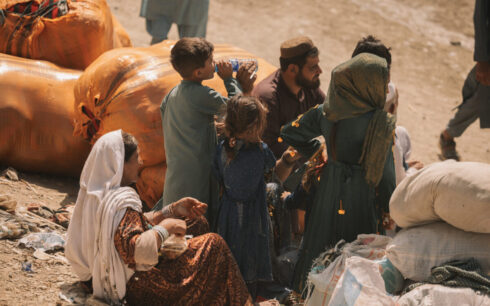
Local sources in Nimroz Province say that 100 to 150 unaccompanied children are being deported through the Milak border crossing from Iran each day. Some say their families are not aware of their deportation.
Many of deportees report mistreatment by Iranian authorities and civilians, particularly in Sistan and Baluchestan Province, which borders Afghanistan.
Among those recently returned is Naser, a 13-year-old boy who said he was detained while working in Iran. His family, he added, remains unaware of his status.
“They arrested me while I was working and took me to a camp. They didn’t give us food or water. Then they deported us,” he told Amu.
Now en route to his home province of Farah, Naser is one of a growing number of Afghan minors who are being expelled from Iran without adult supervision or formal documentation.
Other deportees arriving in Zaranj, the provincial capital of Nimroz, described harsh treatment by Iranian police and civilians during their detention and return journey. Many said they were expelled without money, food or support, and were extorted repeatedly along the route back to Afghanistan.
“On the way back, we were stopped constantly. They demanded money at every checkpoint—three and a half million tomans from each person,” said Azizullah, another deportee. “There was no difference between children and adults. Everyone had to pay.”
Another returnee, Habibullah, said he and others had been stripped of what little money they had.
“We had 50 million tomans when we left. By the time we reached here, we were left with only 20 million,” he said. “You can see the condition we’re in.”
According to sources in Nimruz, between 3,000 and 7,000 people—including women, men, children, and adolescents—are crossing back into Afghanistan each day through the Milak–Zaranj corridor, a rate that has intensified in recent months amid Iran’s crackdown on undocumented migrants.
The increasing number of unaccompanied children among the deportees has raised alarm among humanitarian agencies and Afghan officials, who say there are few mechanisms in place to protect minors or ensure their safe return to families. The broader wave of deportations comes as Afghanistan continues to grapple with deepening poverty, food insecurity, and displacement, leaving many returnees with nowhere to go.
Iran hosts one of the largest Afghan populations abroad, but tensions over migration have escalated as Tehran accelerates removals amid economic strain and political pressure. Afghan returnees continue to report abuse, including arbitrary detention and denial of basic rights during their expulsion.