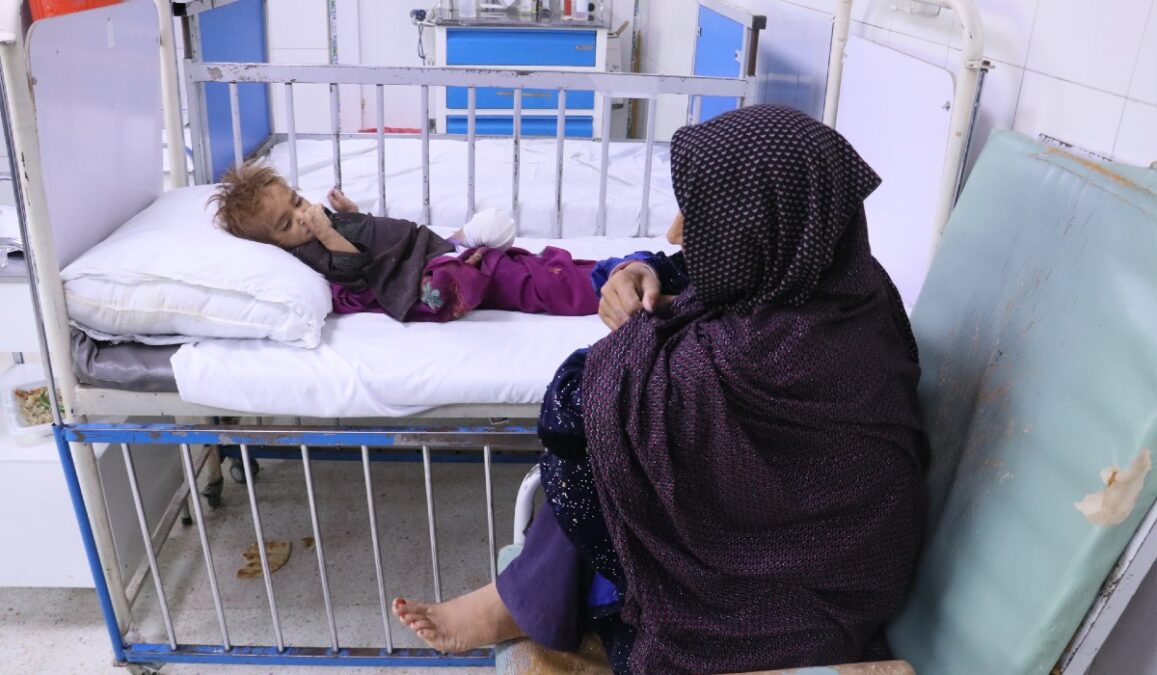
Nearly 3.7 million children under the age of 5 are at heightened risk of malnutrition as Afghanistan enters its annual peak wasting season, the UN Children’s Fund warned, citing worsening food insecurity, inadequate diets and limited access to basic health services.
The warning comes in a new UNICEF report, “Too Little, Too Late: The Diet Crisis Facing Young Children in Afghanistan,” which found that child food and nutrition insecurity remains one of the main drivers of undernutrition across the country.
The report says malnutrition indicators have worsened in 26 of Afghanistan’s 34 provinces compared with 2025, signaling what UNICEF described as an early and deepening crisis.
For the first time in Afghanistan, UNICEF assessed child malnutrition alongside the food and nutrition conditions experienced by the same households nationwide, allowing researchers to identify warning signs before children require emergency treatment.
The agency said children under the age of 2 are the most vulnerable, accounting for 83 percent of severe acute malnutrition cases and 77 percent of moderate acute malnutrition cases.
“Young children in Afghanistan are being pushed closer to malnutrition before the peak season has even begun,” said Tajudeen Oyewale, UNICEF’s representative in Afghanistan.
“When families begin reducing meals or cutting back on nutritious foods, it is not only a sign of hardship,” he said. “It is a warning that a child may soon become dangerously wasted.”
Wasting—the most severe and life-threatening form of malnutrition—is caused by acute food deprivation, illness or both, UNICEF said. Children suffering from the condition are dangerously underweight for their height and face a significantly higher risk of disease, developmental delays and death.
UNICEF said children living in severely food-insecure households are up to six times more likely to suffer from wasting during the July-to-September peak season.
The agency also linked the worsening crisis to disease outbreaks, declining vaccination coverage, inadequate water and sanitation services, and growing funding shortfalls that have weakened health and nutrition programs across the country.
The report comes as humanitarian agencies continue to warn that reductions in international aid are placing increasing pressure on Afghanistan’s health system, where hundreds of clinics have closed or scaled back operations because of funding shortages.
UNICEF called for urgent investment to improve children’s diets, expand preventive nutrition services and strengthen support for pregnant women and young children before conditions worsen.
“The window to act is narrowing,” the agency said. “The warning signs are appearing earlier, and the response must come earlier too.”
UNICEF urged donors to provide flexible funding to help prevent more Afghan children from falling into severe malnutrition during the months ahead.