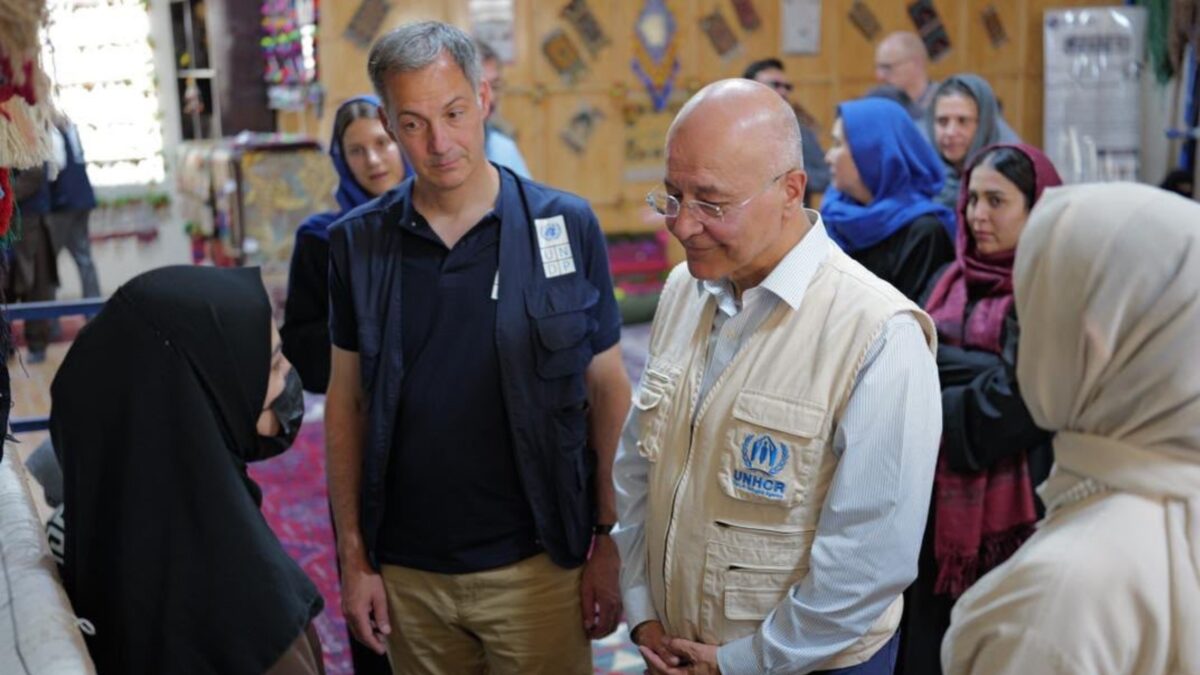
The heads of two UN agencies called on the Taliban to allow women to participate fully in Afghanistan’s social and economic life, warning that the country’s recovery from a deepening humanitarian and displacement crisis depends on the inclusion of women and girls.
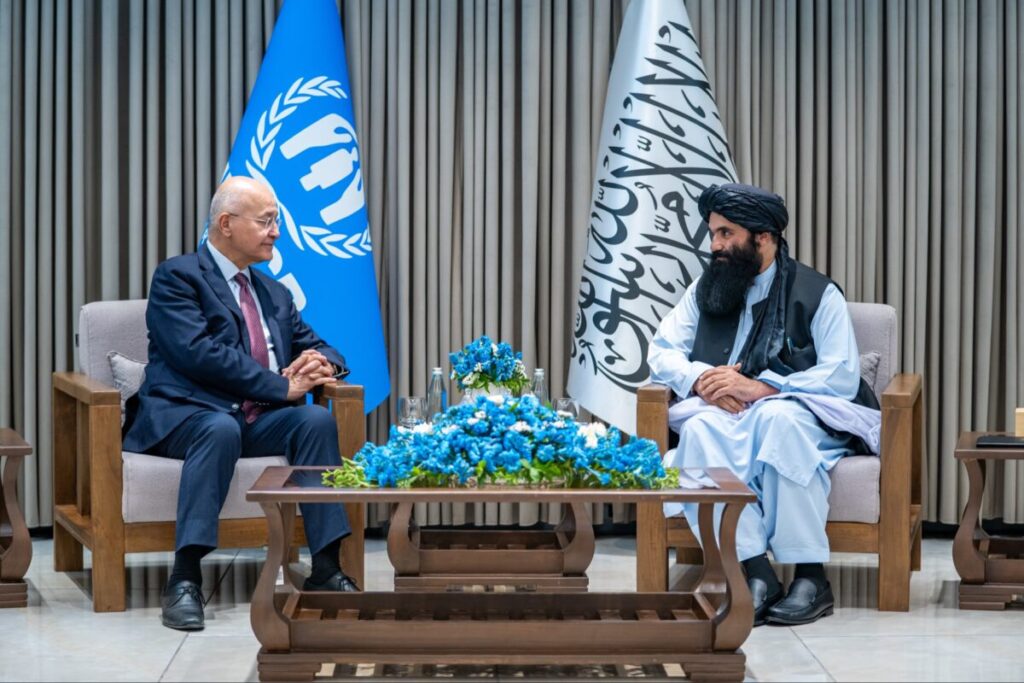
Alexander De Croo, the administrator of the United Nations Development Program, and Barham Salih, the UN high commissioner for refugees, raised the issue during meetings with senior Taliban officials as they concluded a joint visit to Afghanistan on Wednesday.
The two officials called for women and girls to be able to exercise their fundamental rights and said their participation was essential to household resilience, community stability and Afghanistan’s long-term economic recovery.
They also stressed that female humanitarian workers must be able to reach and assist women and girls, including returnees, as the country confronts one of the world’s largest movements of returning refugees and migrants.
Their appeal comes as Afghanistan struggles to absorb millions of people returning from neighboring countries while facing widespread poverty, limited employment opportunities, climate shocks and declining international assistance.
More than six million Afghans have returned to the country since 2023, including about 2.9 million in 2025, according to a joint statement by UNDP and the U.N. refugee agency, UNHCR.
More than 900,000 people have returned so far in 2026, the agencies said, and another 2.5 million are expected by the end of the year.
The two U.N. officials warned international donors against turning away from Afghanistan, saying aid cuts and declining international attention risk deepening poverty, driving further displacement and undermining fragile gains made by communities struggling to absorb returnees.
“Nearly half the population requires humanitarian aid, and with millions more Afghans expected to return, local communities are under great pressure,” Salih said. “People need our support now.”
But Salih said emergency assistance alone would not be sufficient.
“Afghanistan’s long-term recovery depends on all Afghans having the opportunity to contribute to their country’s future,” he said. “Protection, opportunity and dignity must go hand in hand, particularly for women and girls.”
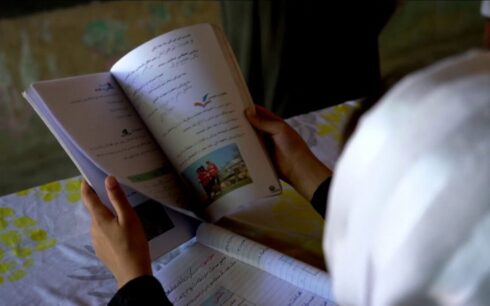
The Taliban have imposed sweeping restrictions on women and girls since returning to power in August 2021, barring girls from secondary schools and universities and restricting women from many forms of employment and public life.
Those restrictions have also complicated humanitarian operations. The United Nations has repeatedly said that female aid workers are essential for reaching Afghan women, particularly in communities where social practices restrict contact between women and unrelated men.
Millions return to a fragile economy
The scale of returns has intensified pressure on Afghanistan’s already weak economy and basic services.
According to the U.N. agencies, 92 percent of recent returnees are unable to meet their basic needs. In provinces receiving large numbers of returnees, only 3 percent have formal employment, while 78 percent rely on casual labor.
Many returnees arrive with limited resources and significant protection needs. Some have lived outside Afghanistan for years or decades, while many children returning with their families were born abroad.
The lack of documentation presents an additional challenge. Fewer than half of returning Afghans possess identity documents linking them to Afghanistan, according to the U.N. agencies.
Without such documentation, returnees can face difficulties accessing services, finding formal employment and establishing themselves in the communities where they settle.
De Croo and Salih said their agencies were expanding joint efforts to improve access to legal identity documents while supporting returnees with protection services, livelihoods programs, psychosocial assistance, basic community services and access to financing for small businesses.
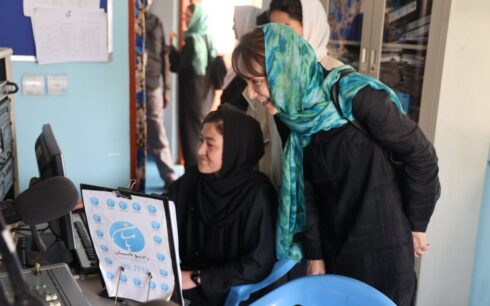
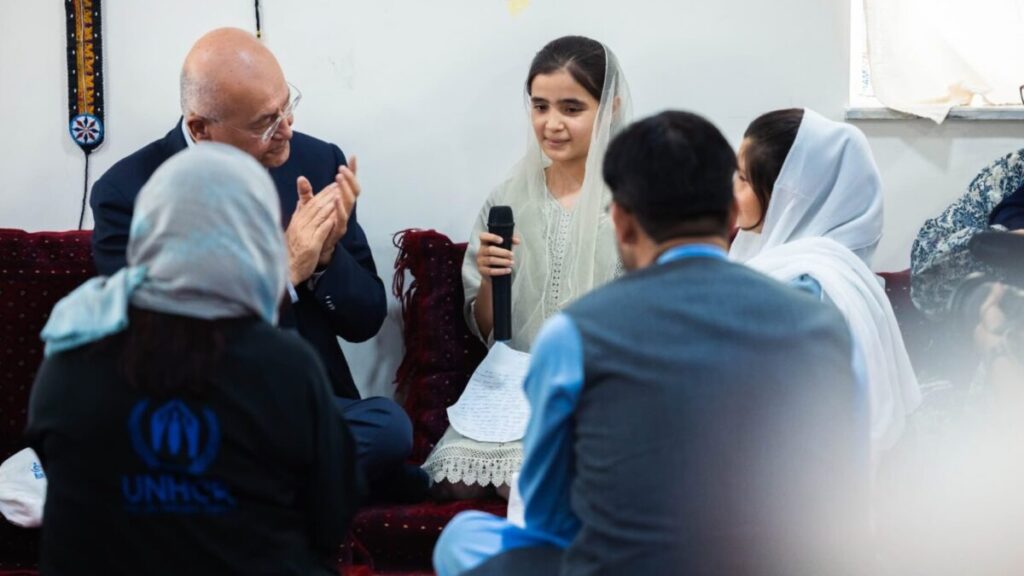
The two officials visited U.N.-supported programs in Mazar-e-Sharif during their trip, where they assessed the pressure on communities receiving returnees and projects intended to create employment and support longer-term reintegration.
“While the needs across Afghanistan remain enormous, we have a critical window of opportunity to support communities to forge a path beyond crisis,” De Croo said.
“For people who are now returning, this is not the end of a journey; it is the beginning of one,” he added. “People need jobs. They need access to basic services. They need the opportunity to rebuild their lives.”
Warning against international disengagement
Afghanistan remains one of the world’s most fragile economies and is heavily dependent on agriculture, leaving much of the population particularly vulnerable to drought, flooding and other effects of climate change.
The arrival of millions of returnees has added pressure on communities already struggling with shortages of housing, water, health care, education and employment.
The two U.N. officials said sustained international investment was needed not only to meet immediate humanitarian needs but also to support livelihoods, small businesses, essential services and economic recovery.
They warned that a decline in international assistance could deepen the crisis and contribute to further displacement, creating another cycle in which people who have returned to Afghanistan are again forced to leave.
UNDP and UNHCR said their work was intended to support returnees from their arrival at border reception points through longer-term reintegration in the communities where they settle.
Salih said UNHCR would continue working with Afghanistan and neighboring countries to promote conditions for returns that are safe, voluntary and dignified.
But with another 2.5 million Afghans expected to return by the end of 2026, the agencies warned that pressure on already vulnerable communities was likely to grow.
The challenge, the officials said, extends beyond receiving people at Afghanistan’s borders.
According to the statement, the officials said the country must find ways to provide millions of returnees with jobs, documentation and basic services while ensuring that women — half of the population — are able to participate in rebuilding the economy and their communities.