An Amu TV investigation has found that Pakistani aircraft dropped at least three bombs on the Omid Addiction Treatment Center in the east of Kabul, striking the main hangar and nearby container housing units. Based on Amu’s findings, about 200 people were killed and hundreds more wounded in the attack.
The investigation also shows that three Taliban military compounds are located immediately north of the facility, including the Baheer Center, which sources say functions as a drone production hub.
Camp Omid
The Omid rehabilitation center — part of the former Camp Phoenix complex — was established during Afghanistan’s previous government. It was initially operated by the Ministry of Labor and Social Affairs to provide vocational training for recovering drug users.
Under Taliban administration, it was transferred to the Interior Ministry’s deputy office for counter-narcotics.
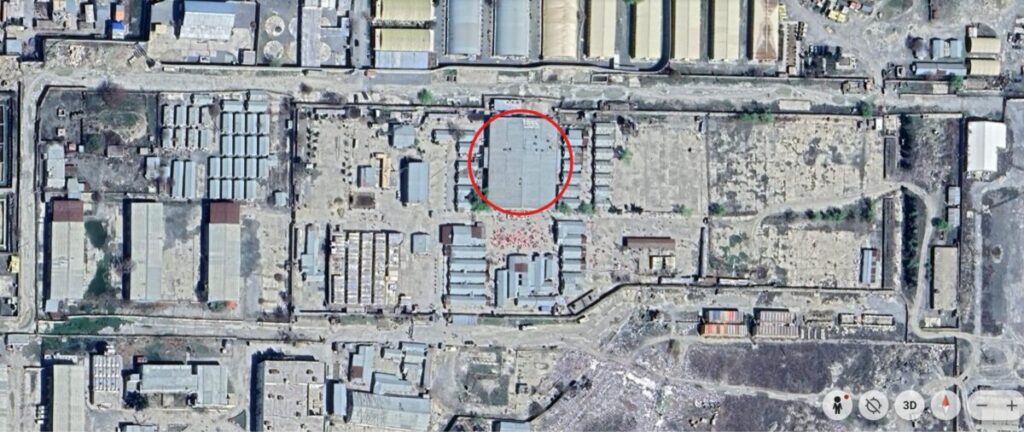
The facility has a capacity of 2,000 beds and is divided into multiple sections, including a large hangar, known as detox center, for short-term patients, container housing units for long-term addicts, a teenage ward for younger patients, a security unit compound staffed by Taliban guards, and support areas, including a communications and internet hub.
The deadly strike
According to extensive interviews conducted by Amu with eyewitnesses and informed sources, the attack took place at around 9 pm Monday, March 16.
At the time, about 500 patients were inside the main hangar, known as the detox center.
Witnesses said Pakistani aircraft dropped three bombs on the compound.
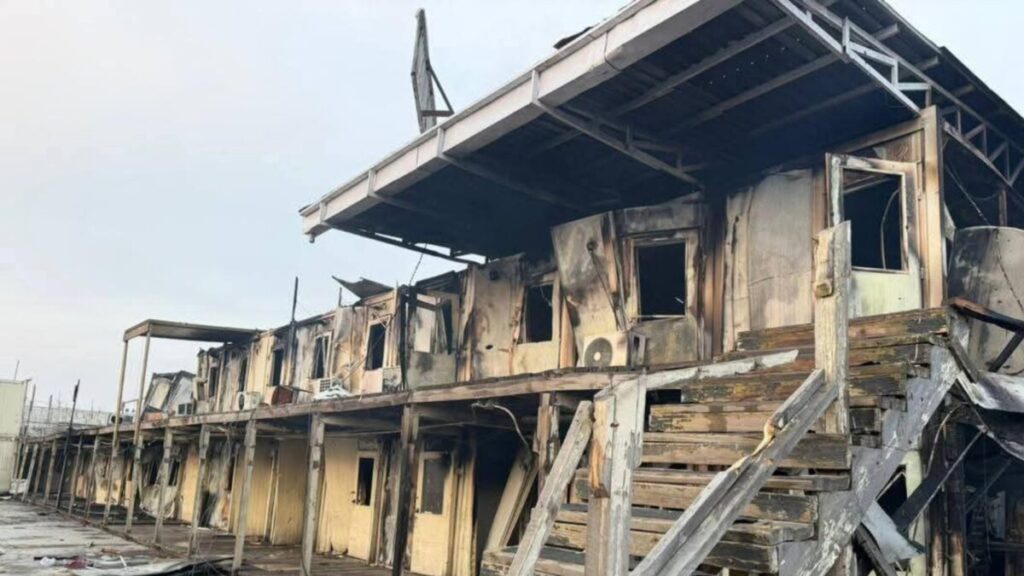
One bomb struck the detox hangar, while two others hit container housing units along the southern perimeter.
The detox center housed short-term patients — individuals in the early stages of addiction — who were typically kept there for one to 10 days. An eyewitness said approximately 500 people were inside at the time of the strike.
Another witness said the impact triggered a fire that rapidly engulfed the structure and caused the roof to collapse.
The source, who entered the site minutes after the strike, described flames spreading across the hangar and a strong smell of burning.
Both sources said the majority of casualties occurred inside this structure.
Container housing units
Sources said around 100 container housing units (Conex units) were positioned along the southern edge of the compound.
Most were not in active use, but a section was still occupied.
According to sources, about 400 patients had been scheduled for discharge that day after completing treatment.
However, about 50 remained due to administrative delays and were expected to leave the following day.

All of those who remained in the container units are believed to have been killed.
Witnesses said voices could be heard calling for help from inside the containers after the explosions, but the intensity of the fire and lack of equipment prevented rescue.
While two bombs struck a separate cluster of container units that were largely empty, the containers adjacent to the main hangar — where patients were housed — sustained damage and casualties from the blast.
Witnesses said the most intense fires were concentrated in the container areas.
Teenage ward
The teenage ward, located adjacent to the main hangar and consisting of smaller treatment rooms, housed approximately 40 to 50 young patients.
Sources said the entire section was destroyed by fire, and there were no indications of survivors.
Casualty figures
The center has a capacity of 2,000 beds, but on the day of the strike, about 800 to 850 people were present. Of these, most of them were either at the main hunger or on the housing units located on the two sides of the hunger.
According to figures obtained by Amu, around 90 to 100 people were killed in the container housing and discharge areas, about 100 others were killed in the detox hangar.
One witness said they saw 80 bodies recovered from the rubble the next morning.
Additional bodies had been removed overnight, but recovery efforts were delayed due to heavy debris and lack of lifting equipment.
Internal structures and damage
Two additional structures inside the compound were also affected, including a Taliban security unit building, responsible for guarding the facility and a former technical operations building dating from the US presence.
The security building sustained significant fire damage, but no Taliban personnel were killed. Three were lightly wounded.
To the southwest, the Ibn Sina Hospital, a large addiction treatment facility, was not directly struck.
Adjacent military compounds
Directly north of the rehabilitation center, across a road approximately 40 meters wide, are three Taliban military compounds.
Baheer Center (drone production hub)
According to sources, the Baheer Center is involved in the production of small unmanned aerial vehicles.
A witness familiar with the area said small drones had been observed taking off and landing from the site in recent months.
The compound is heavily fortified, with high perimeter walls and strict security.
The witness said that on the night of the strike, the Baheer Center was unlit, while the rehabilitation center remained illuminated.
They also reported gunfire directed toward aircraft from that area.
Other military sites
Adjacent to the Baheer Center are a Taliban police recruitment center and several hangars used by Taliban special forces units.
None of these facilities appeared to have been damaged in the strike.
To the east of the compound lies a former US drone operations center, along with a drone flight area, both now believed to be inactive.
Conflicting claims
Pakistan says it targeted militant infrastructure, including sites linked to the Tehrik-e-Taliban Pakistan (TTP).
Taliban say the rehabilitation center was directly struck and have reported more than 400 deaths and about 250 wounded.
The United Nations has said the facility was “impacted” and reported dozens of casualties, without confirming whether it was directly targeted.
Witnesses interviewed by Amu said they did not observe damage to nearby military compounds.
It remains unclear whether the intended target of the strike was the adjacent military facilities or the rehabilitation center itself.
What is clear is that civilians — including patients undergoing treatment — were the primary victims of the attack.