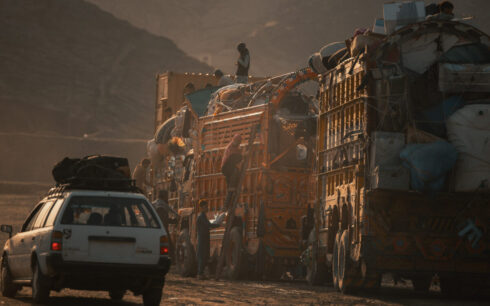
As the number of migrants returning from Iran and Pakistan continues to rise, some families who have resettled in Daman district in southern Afghanistan’s Kandahar province say they are struggling to survive without adequate shelter, health care or access to education.
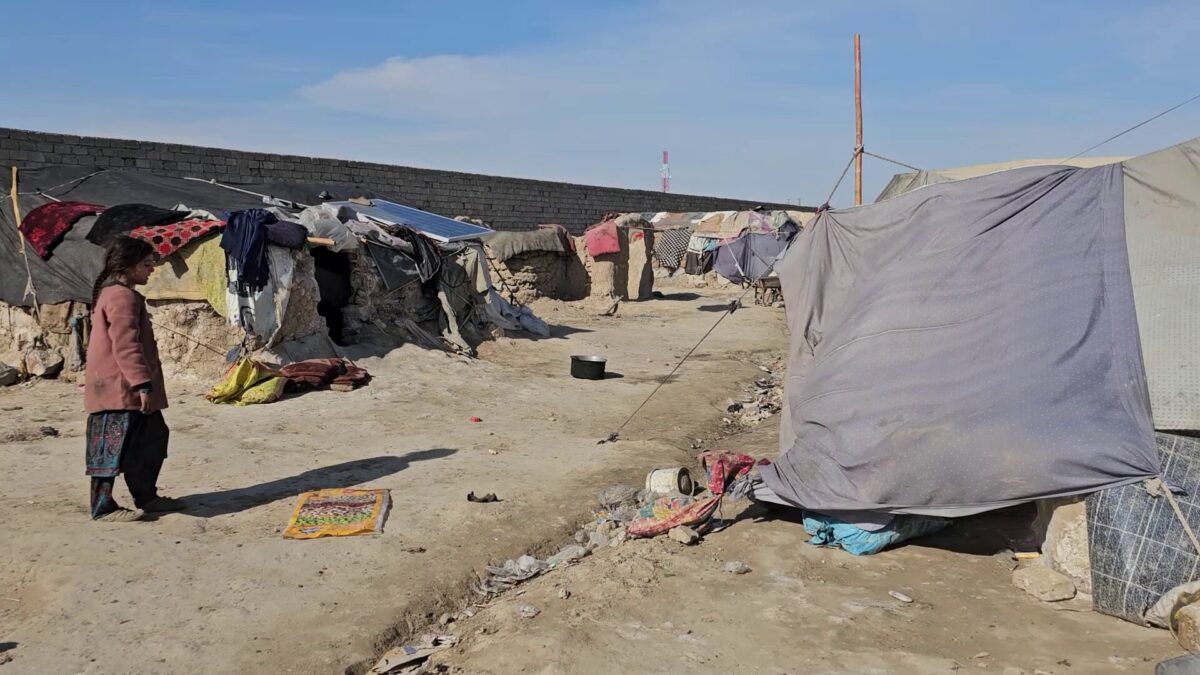
In makeshift encampments scattered across Daman, families live in torn tents pitched on borrowed land. Many say they have received little sustained assistance since crossing back into Afghanistan, and that daily life has grown increasingly precarious — especially with the arrival of Ramadan.
“There is no land of our own,” said Mohammad Jan, a returnee from Pakistan, standing beside a frayed canvas shelter his family erected themselves. “These torn tents we put up ourselves. No help has been given to us. When we first arrived, they gave us 12,000 Afghanis, and that was all.”
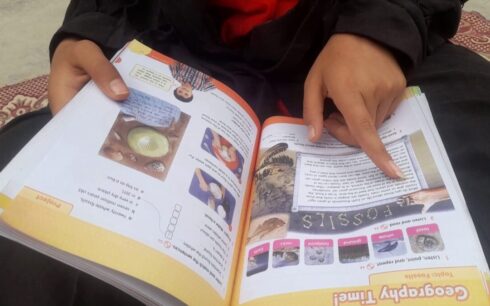
Returnees say there are no functioning health centers nearby and no proper schools for their children. With limited job opportunities and few resources, many families are unable to secure even the most basic necessities.
“We face many problems,” said Gul Jan, another returnee. “It rains, and the tents are torn. Our clothes and belongings get wet. We don’t even know how we will get bread for the night. We need help.”
The hardships have deepened as Ramadan begins, a month traditionally marked by shared meals and reflection. For many here, the focus is not on observance, but on survival.
“We ask the authorities to help us in any way they can,” said Khan Mohammad, a father who recently returned. “Ramadan has arrived, and we have nothing. We are in difficulty.”
Afghanistan has seen a renewed influx of returnees in recent months, as neighboring countries have tightened policies toward undocumented Afghan migrants. Aid agencies have warned that many of those returning arrive with few belongings, limited savings and no established support networks.
In districts like Daman, the lack of housing, health services and steady income has left families dependent on sporadic assistance. With food prices rising nationwide and humanitarian funding under strain, the gap between urgent needs and available support appears to be widening.
For the families here, Ramadan has brought not only spiritual observance, but renewed uncertainty over how they will secure the next meal — or where they will live once the fragile tents can no longer withstand the elements.