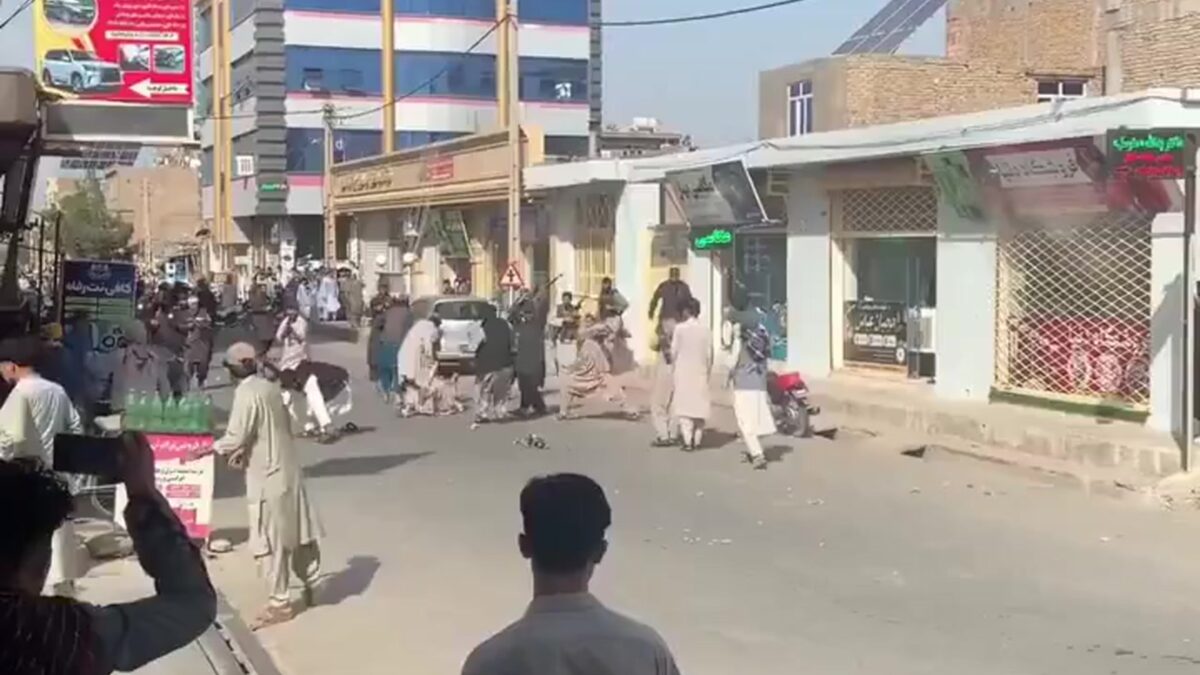
A group of United Nations human rights experts has expressed deep concern over the Taliban’s response to protests in Herat, calling on them to investigate the use of force against demonstrators and release women detained over alleged dress-code violations.
In a statement issued Thursday, the experts said reports that Taliban opened fire on protesters and beat demonstrators following the detention of dozens of women in Herat raised serious human rights concerns.
“Use of force in law enforcement is strictly restricted under international law,” the experts said. “It is permitted only when it is legal, necessary and proportionate to the threat posed.”
The statement was signed by Richard Bennett, the UN special rapporteur on human rights in Afghanistan, along with several other independent experts appointed by the UN Human Rights Council.
The experts said residents gathered in Herat on June 9 to protest what they described as increasingly restrictive measures against women and the detention of dozens of women accused of violating Taliban dress requirements.
According to the statement, Taliban opened fire on protesters — including men, women and children — and beat demonstrators.
The experts said at least two people, including a boy, were reported killed and more than 20 others injured.
The statement follows findings by the United Nations Assistance Mission in Afghanistan (UNAMA), which has confirmed the death of an 11-year-old boy during the protest and said it is investigating reports of a second fatality.
UNAMA has also reported that at least 30 women were detained in Herat between June 6 and June 7 by enforcers from the Taliban’s Ministry for the Promotion of Virtue and Prevention of Vice and Taliban police for allegedly violating dress-code requirements.
The women were later released, but UN officials have warned that such detentions can have lasting social consequences.
Concerns over arbitrary detention
The experts said the reported arrests of women could amount to arbitrary and unlawful detention because they appeared to punish women for exercising their rights to freedom of expression and equality.
“Allegations that women were detained for dress code violations are deeply concerning and may constitute arbitrary and unlawful detention,” the statement said.
Residents of Herat previously told Amu TV that Taliban morality police had intensified enforcement of dress requirements in the city, leading to the detention of dozens of women, including healthcare workers.
The arrests sparked public anger and led to demonstrations in the predominantly Hazara neighborhood of Jebrail, where protesters chanted slogans including “Work, Education and Freedom.”
The experts urged Taliban to launch a prompt, independent and transparent investigation into the use of force against protesters.
They said any inquiry should determine whether lethal force was strictly necessary and proportionate and should ensure accountability not only for those directly responsible but also for commanders who ordered or authorized the actions.
The experts noted reports that some protesters threw stones but said such actions would not justify the use of lethal force under international standards.
“Equality, peaceful assembly, freedom of expression and movement, and protection from arbitrary detention are fundamental rights,” they said.
The experts also called on Taliban to immediately release anyone detained for participating in the protests, end searches of private homes and ensure that injured people can access medical treatment without fear of arrest or intimidation.
Growing international criticism
The statement adds to growing international criticism of the Taliban’s handling of the Herat protests.
On Thursday, Human Rights Watch said Taliban forces used excessive force against demonstrators and accused authorities of escalating repression of free expression.
Richard Bennett had previously described the arrests of women in Herat as arbitrary and called for their immediate release.
The Herat crackdown has become one of the most prominent confrontations between Taliban and residents in recent months, highlighting growing tensions over the enforcement of restrictions on women and girls.
Since returning to power in 2021, the Taliban have imposed sweeping limits on women’s education, employment, movement and participation in public life, measures that UN experts and human rights organizations say violate Afghanistan’s international obligations.