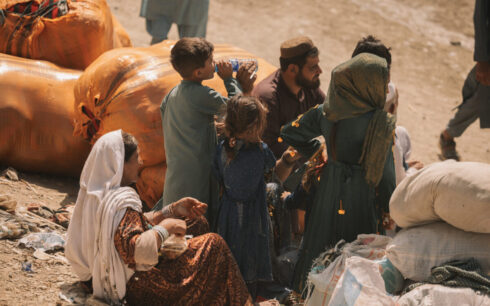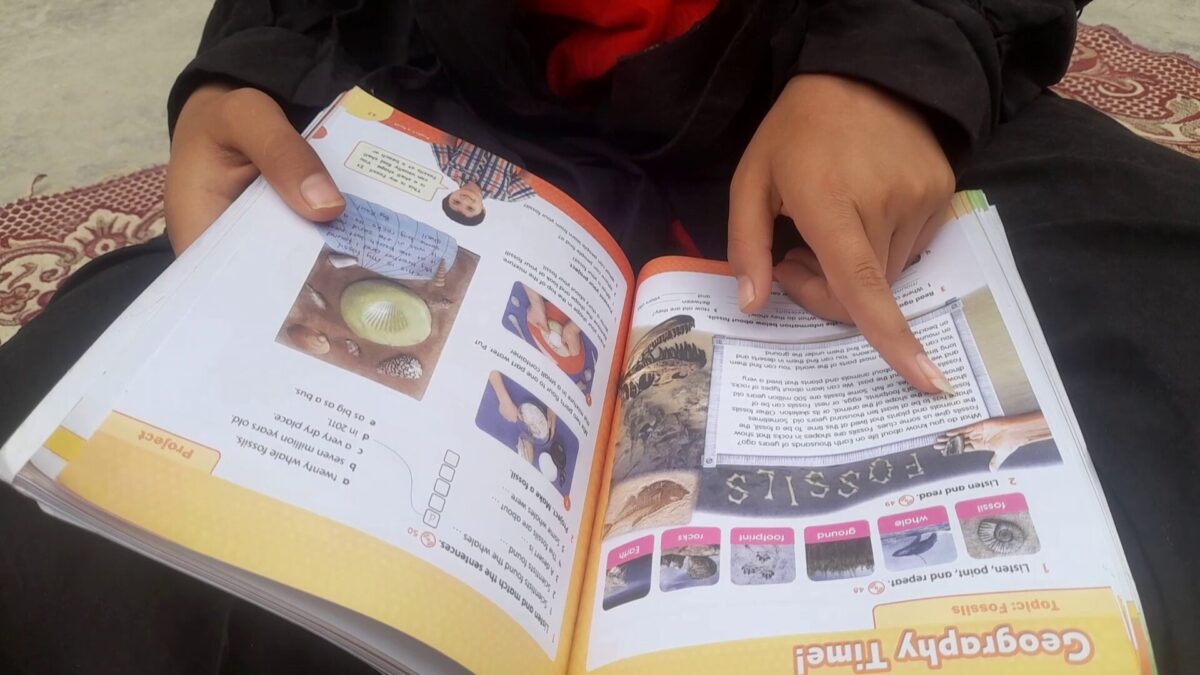
Thousands of school-age children living in settlements for returnees and internally displaced people in the western province of Farah lack access to education, according to an Amu TV field report.
The report found that many migrant and displacement settlements do not have functioning public schools, leaving children with limited access to formal education. Families interviewed by Amu TV said long distances to schools and severe economic hardship have forced many children to work instead of attending classes.
Abdul Hamid, who recently returned from Pakistan and now lives on the outskirts of Farah city, said he worries about the future of his children.
“A school is urgently needed here,” he said. “My two sons do not study. They spend their time playing because there is no school nearby. We also cannot afford to pay someone to teach them.”
Other returnees from Iran and Pakistan warned that the lack of educational opportunities could have lasting consequences for children growing up in the settlements.
“Without a doubt, it will have a negative impact on these children’s lives,” said Mohammad Amin, a resident of Farah Province. “There is no school and no education. They are forced to spend their time on things that do not benefit them.”
Children interviewed by Amu TV said they want to attend school but are unable to do so because of poverty and the absence of educational facilities where they live.
“My father does not have enough money for me to go to school and study,” said Ahmad Wali, a child living in one of the settlements.
Another child, Ezzatullah, said he dreams of continuing his education.
“I want to study, go to school, become a successful person and play sports in the future,” he said.
The findings come as Afghanistan experiences a growing influx of returnees from neighboring countries, particularly Iran and Pakistan, which have accelerated deportations of undocumented Afghans in recent months.
Humanitarian organizations have warned that many returning families arrive with limited resources and face difficulties accessing basic services, including education, health care and housing.
The lack of schools in returnee and displacement settlements has raised concerns that a growing number of children could be left behind educationally, deepening the challenges facing families already struggling with poverty, displacement and economic hardship.