Afghanistan’s trade and transit through Pakistan’s ports have been halted for nearly two months. Taliban have urged traders to shift to alternative corridors. This report compares the feasibility of using Pakistan’s Karachi port with Iran’s Chabahar port and the Lapis Lazuli Corridor.
Afghanistan, one of 44 landlocked countries worldwide, faces chronic logistical and economic challenges in moving goods to sea. For decades, Pakistani ports — especially Karachi — have been the primary transit point for Afghan imports and exports.
According to the Afghanistan Chamber of Commerce and Investment (ACCI), Karachi has long been the most practical route: roughly 1,400 km from Kabul, 3–4 days of travel time, and an average cost of $2,000 for a 40-foot container. The corridor, however, has repeatedly faced politically driven closures, particularly during Afghanistan’s fruit export season.
With Pakistan’s major crossings — including Torkham and Spin Boldak — closed amid escalating tensions, the flow of goods has stopped entirely. ACCI estimates 11,500 containers from Afghan traders, worth $6–6.5 billion, are stranded in Pakistan.
Chabahar: A costlier but politically attractive option
Taliban officials are now promoting Iran’s Chabahar port as a substitute. The route from Kabul spans roughly 1,840 km, takes 7–8 days, and costs about $4,000 per container — double the Karachi rate.
India has invested heavily in the corridor, including a 10-year agreement signed in 2024 to operate Chabahar and earlier construction of the 218-km Delaram–Zaranj highway, a project that saw more than 100 Afghans and Indian engineers killed in Taliban attacks during the 2000s.
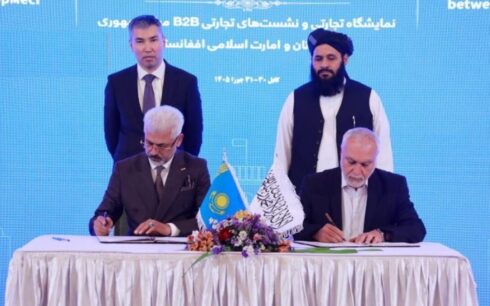
Taliban commerce minister Nooruddin Azizi said during a recent visit to India that Chabahar could become “fully operational” for Afghanistan with New Delhi’s support as tensions with Pakistan deepen.
Lapis Lazuli: Long, expensive and rarely used
Another proposed alternative is the Lapis Lazuli Corridor, linking Afghanistan to Turkey and the Black Sea via Turkmenistan, Azerbaijan and Georgia. At over 2,200 km and involving multiple customs jurisdictions, ACCI says the corridor is currently “uneconomical” for traders.
Northern routes: Historically important, but slow and expensive
Another option is an overland trade route from Kabul toward Russia and the Black Sea, following the historic northern and Caspian–Caucasus corridors that for centuries connected Afghanistan with Eurasia.
This route runs from Kabul through the Salang Pass to Mazar-e-Sharif and Hairatan, then links to Uzbekistan’s rail network and onward through Kazakhstan to Russia.
A parallel western branch overlaps with part of the Lapis Lazuli corridor: from Kabul to Herat, then into Turkmenistan’s rail system, across the Caspian Sea to Azerbaijan, and finally by train to Black Sea ports in Georgia.
Distances along these routes vary depending on the exact path, but overland transport from Kabul to Russia typically spans several thousand kilometers, while the full journey from Kabul to the Black Sea — combining road, rail and a short Caspian Sea crossing — is estimated at 2,200 to 2,500 km.
Historically, these were Afghanistan’s main northern transit routes before Pakistan’s ports rose to dominance in the 20th century. Today, however, their use is limited by customs hurdles, security issues and higher costs. Overall distances run 3,500 to 4,000 km.
Shipping cargo from Kabul to Russia via these overland corridors generally takes 15 to 25 days, depending on route selection, border congestion and whether the route involves mixed road–rail transit or maritime segments across Central Asia or the Caspian–Caucasus corridor.
Costs also vary by company and service level, but recent commercial rates estimate about $4,500 to transport a 20-foot container and $6,800–7,200 for a 40-foot container. Prices fluctuate with transshipment fees, customs delays and seasonal logistics conditions.
Air corridors remain limited
Afghanistan also has an air corridor program, launched in 2017 under former President Ashraf Ghani as a political and economic response to Pakistan’s repeated border closures and transit restrictions.
The first air corridor connected Kabul to New Delhi, enabling exports of saffron, pomegranates, dried fruit and carpets without crossing Pakistan. Routes were later expanded to China, Turkey, Saudi Arabia, Kazakhstan, Russia and several European markets.
But air corridors have always been costly and unable to match the high-volume capacity of Pakistan’s ports. Air freight costs several times more per kilo than land–sea transport, making it viable only for high-value goods.
Consumers bear the brunt
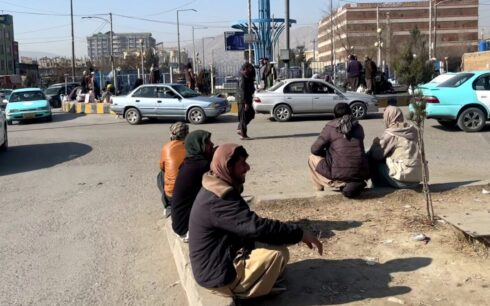
While the Taliban push traders toward new routes, Afghan consumers are already facing inflation. Kabul shopkeepers report price increases since the border closures.
They have reported increases of 450 afghanis (about $6.20) per sack of rice, 500 afghanis (around $6.90) per sack of flour, and 20 afghanis (roughly $0.27) per litre of cooking oil.
Traders warn that unless Pakistan reopens its crossings, supply chain disruptions will worsen — because despite political tensions, Karachi remains Afghanistan’s fastest and cheapest trade route.