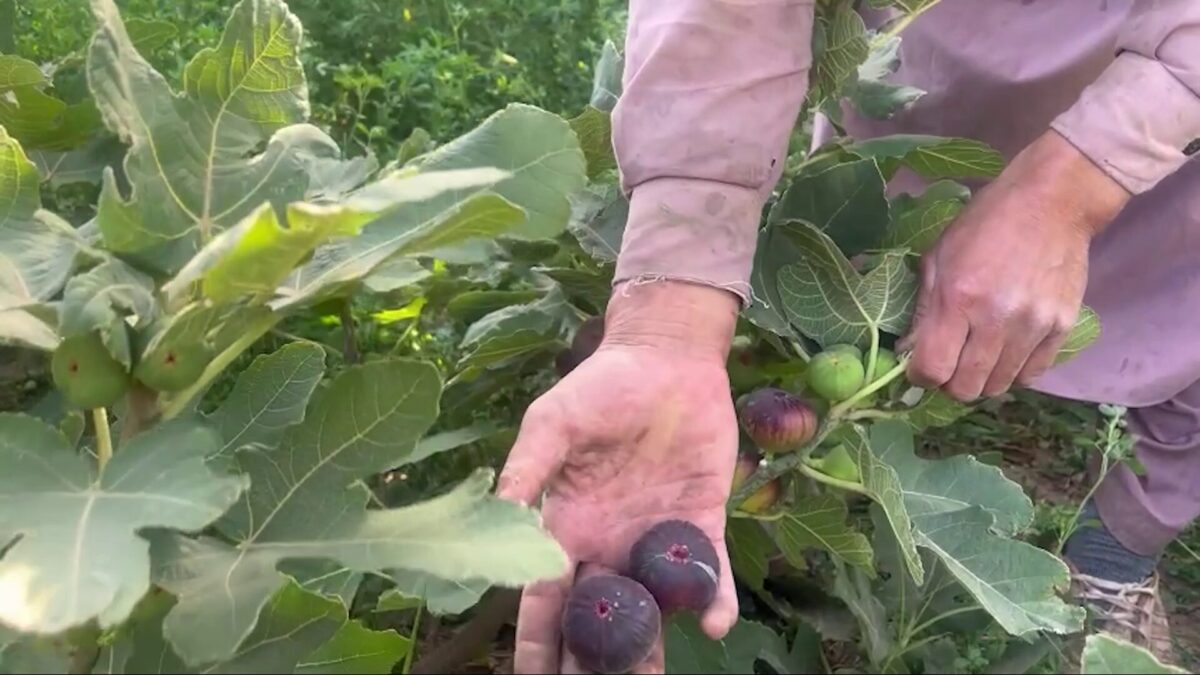
As the annual fig harvest gets underway in western Afghanistan, farmers in Herat province say inadequate cold storage and processing facilities are limiting their ability to sell one of the region’s most prized agricultural products abroad.
Farmers in Zenda Jan district, one of Herat’s main fig-producing areas, say the province’s figs are known for their quality and shelf life but continue to struggle to reach regional and international markets because of a lack of investment in storage, packaging and export infrastructure.
“We can confidently say these figs have the capacity to reach markets in Dubai and even Germany,” said Naqibullah, a fig grower in Zenda Jan. “But that requires cold storage facilities and proper packaging. Without those, we cannot compete in export markets.”
The concerns come as Afghanistan seeks to expand agricultural exports and reduce its reliance on imports, while farmers face mounting economic pressures and limited government support.
Farmers say the cost of cultivating figs has risen sharply in recent years. Expenses for improved saplings, fertilizers, pesticides and solar-powered irrigation systems have increased, while market prices often remain too low to cover production costs.
“If these figs were grown in a neighboring country, they would already be reaching foreign markets,” said Ehsanullah, another farmer in the district. “We spend heavily on land, irrigation and agricultural inputs, but many farmers still struggle to make a profit.”
The fig harvest in Herat typically begins in late June and continues through July, with most orchards in Zenda Jan reaching peak production during this period.
Agricultural specialists say the challenge is not production but post-harvest infrastructure.
Fresh figs are highly perishable, making access to cold storage critical for preserving quality and extending shelf life. Experts say investments in refrigeration, processing centers and drying facilities could significantly reduce losses, increase exports and improve farmers’ incomes.
Herat is one of Afghanistan’s most important agricultural provinces, producing a range of export-oriented crops, including grapes, saffron, pomegranates and figs. However, decades of conflict, underinvestment and limited access to international markets have hindered the development of value-added industries and modern supply chains.
The issue has become increasingly important as Afghan exporters face growing logistical challenges and higher transportation costs. Business groups have repeatedly called for greater investment in agricultural processing and storage facilities, arguing that improved infrastructure could help farmers access higher-value markets in the Gulf, Central Asia and beyond.
For growers in Zenda Jan, the hope is that Herat’s figs can eventually become a recognized export product rather than a crop sold primarily in local markets.
“Demand exists,” Naqibullah said. “What is missing are the facilities that would allow us to get our product there.”