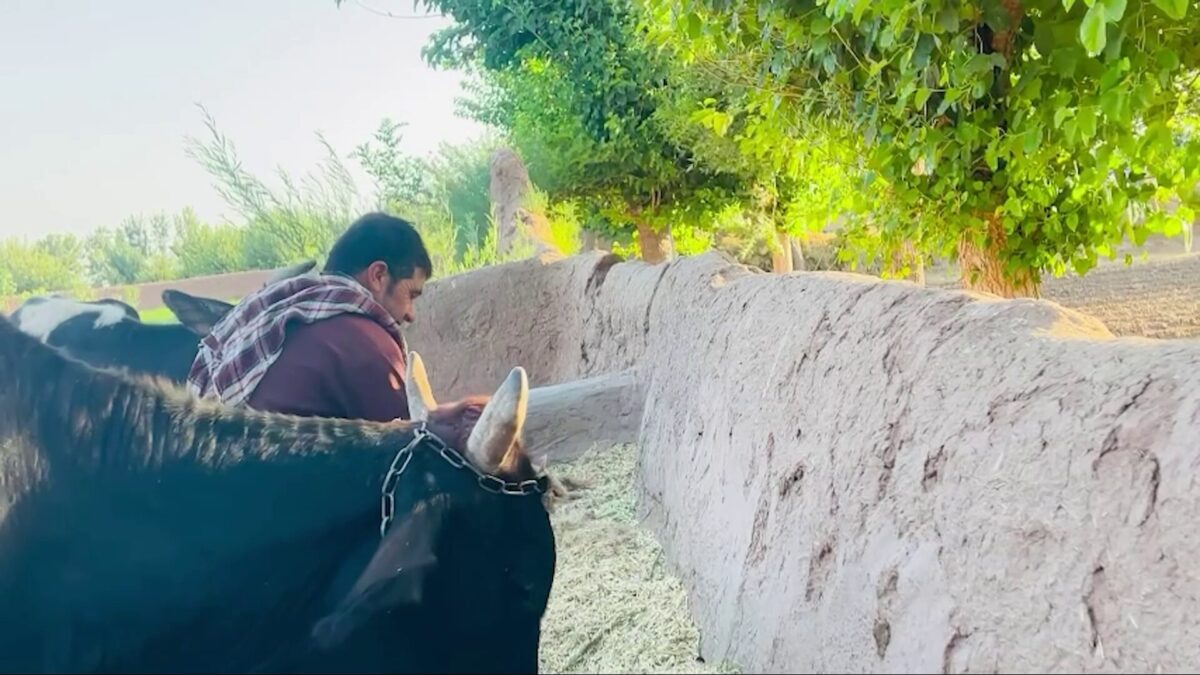
Dairy farmers in western Afghanistan say soaring feed costs, low prices for dairy products and a lack of government support are threatening their livelihoods, forcing many to question whether cattle farming remains economically viable.
Mohammad Qurban, who has operated a dairy farm in Herat’s Guzara district for more than a decade, said the business has become increasingly difficult to sustain.
“The costs are overwhelming,” he said. “Hay is expensive, oilseed cake is expensive and wheat bran is expensive. In the end, buyers pay us only 60 afghanis for a container of yogurt. Dairy farming is no longer profitable.”
Other farmers echoed those concerns, saying the price of livestock feed has risen sharply while income from milk and other dairy products has remained largely unchanged.
“A sack of wheat bran used to cost 600 afghanis. Now it costs 1,200,” said Abdul Jabbar, another cattle farmer. “And even then, the quality is poor.”
Mohammad Nasser, another dairy producer, said rising production costs have not been matched by higher market prices.
“The price of every type of animal feed has increased,” he said. “Oilseed cake is more expensive, wheat bran is more expensive, but dairy products remain cheap. No institution is supporting us.”
Farmers said the combination of higher feed and veterinary costs, weak consumer demand and the absence of financial or technical assistance has placed increasing pressure on livestock producers.
They called on the Taliban authorities and agricultural support organizations to provide assistance, warning that without sustained support, many livestock farmers may struggle to continue operating.
Livestock farming is a major source of income for thousands of rural Afghan families. But the sector has come under growing pressure in recent years from economic instability, rising production costs and reduced purchasing power among consumers, leaving many producers facing increasingly narrow profit margins.