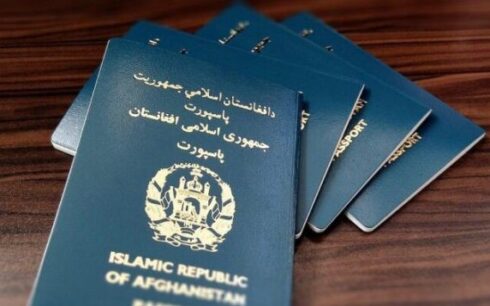
Richard Bennett, the United Nations special rapporteur on human rights in Afghanistan, on Tuesday urged the EU and its member states not to deport Afghan nationals to Afghanistan, warning that torture and other serious human rights violations remain a genuine risk under Taliban rule.
In a statement posted on X, Bennett said the principle of non-refoulement — which prohibits returning individuals to countries where they face a risk of persecution, torture or other serious harm — is “absolute and non-derogable.”
“No exceptions allowed, no assurances from de facto authorities can neutralize this risk,” Bennett wrote. “Torture remains a genuine risk in Afghanistan. I urge the EU and its member states not to return Afghans to danger.”
His remarks come as European governments increasingly explore ways to deport Afghan migrants, particularly those convicted of crimes or deemed security threats. The issue has gained renewed attention following plans for talks between European officials and a Taliban delegation in Brussels on the return and readmission of Afghan nationals without legal residency rights in the European Union.
Bennett cited General Comment No. 4 of the UN Committee Against Torture, which states that diplomatic assurances from a receiving state should not be used to circumvent the prohibition on returning individuals to places where they face a substantial risk of torture.
“The Committee considers that diplomatic assurances … should not be used as a loophole to undermine the principle of non-refoulement,” the guidance states.
Bennett also stressed that any deportation decision must be based on an individualized assessment of risk rather than broad assumptions about conditions in a country.
The comments add to growing criticism of recent European efforts to expand deportations to Afghanistan. On Saturday, Volker Turk, the UN High Commissioner for Human Rights, expressed regret over a new European Union regulation designed to accelerate the return of migrants and asylum seekers.
Turk warned that no one should be returned to a country where they face a risk of serious human rights violations, emphasizing that the principle of non-refoulement remains a cornerstone of international human rights and refugee law.
Human rights organizations, including Human Rights Watch and Amnesty International, have also criticized plans for direct engagement with Taliban authorities on deportation arrangements, arguing that Afghanistan remains unsafe for many returnees.
The United Nations has repeatedly documented widespread restrictions on women and girls, arbitrary arrests, torture, enforced disappearances and other abuses since the Taliban returned to power in August 2021. UN experts have also warned that Afghanistan’s justice system lacks the safeguards necessary to protect fundamental rights.