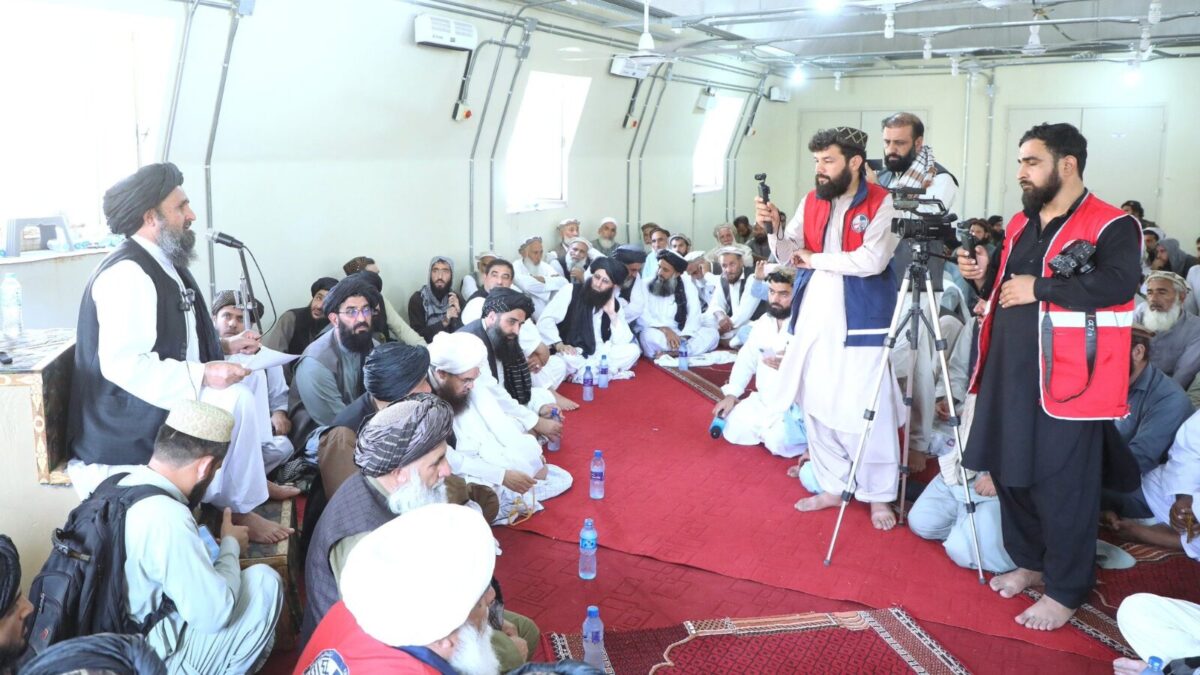
Taliban deputy chief minister Abdul Ghani Baradar visited earthquake-hit Kunar Province on Friday, pledging aid to survivors of last month’s disaster, but sources said local journalists were barred from covering the meetings.
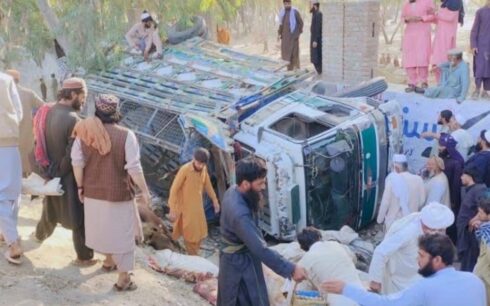
The Aug. 31 earthquake killed more than 2,200 people and injured over 3,600.
Baradar, accompanied by the Taliban governors of Kunar and Nangarhar, Red Crescent chief Sheikh Shahabuddin Delawar and disaster response head Nooruddin Turabi, offered prayers for the dead and pledged support for survivors. He said the Taliban government had responded “in a timely manner” despite limited resources, and urged Afghan businessmen, investors and charities to continue sending aid.
“This is the third time in four years that our country has suffered devastating earthquakes,” Baradar said, according to a statement. He promised reconstruction of destroyed homes and long-term measures to mitigate natural disasters.
Baradar also called on the international community to lift sanctions on Afghanistan, arguing that restrictions hinder the delivery of aid and efforts to address the country’s economic crisis.
But the visit drew criticism from local journalists. Reporters in Kunar said they were barred from covering Baradar’s meetings, which were limited to Taliban state media outlets such as National TV and Bakhtar News Agency. Private Afghan outlets were excluded, despite requests to attend.
Some journalists said the restrictions disrupted their reporting, as their editors in Kabul had asked for coverage of Baradar’s trip. One local source said Baradar did not visit the hardest-hit villages but confined his meetings to the provincial governor’s compound.
The Aug. 31 quake, measured at magnitude 6.0, destroyed or badly damaged at least 6,700 homes across Kunar and neighboring Nangarhar, affecting more than 84,000 people, according to the United Nations. Aid worth over $25 million has been pledged by countries and organizations, but survivors say relief has been slow to reach remote mountain communities, where many remain without shelter.