Secretary of State Marco Rubio told lawmakers on Tuesday that the United States is continuing discussions with several countries to resettle more than 1,000 Afghans stranded in Qatar, as the Trump administration maintains restrictions on refugee admissions from Afghanistan.
Testifying before Congress during a budget hearing, Rubio said US officials were engaging daily with foreign governments to find destinations for Afghans who assisted the American war effort and have been waiting in Qatar for more than a year.
“We’re obviously operating right now under a directive that prohibits the entry of Afghans into the United States,” Rubio said. He added that several countries had already indicated a willingness to accept some of those awaiting resettlement.
The remarks come amid growing criticism from advocates and Democratic lawmakers, who have questioned why Afghans who worked alongside US forces remain unable to enter the United States despite undergoing extensive security vetting before refugee admissions were suspended in early 2025.
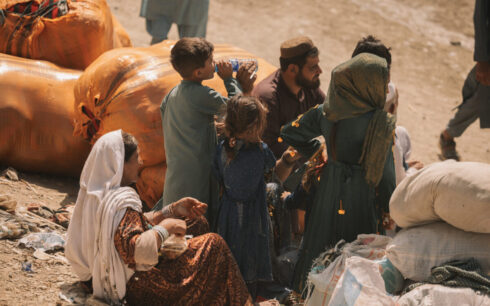
The group includes roughly 1,100 Afghans and relatives of US service members who were evacuated from Afghanistan and are currently housed in Qatar.
Representative Grace Meng, a Democrat from New York, urged the administration not to send the Afghans to countries facing instability, warning that some of the individuals had served as interpreters or alongside US Special Operations forces.
She also criticized reports that the United States had considered relocating some Afghans to the Democratic Republic of Congo, saying such a move would amount to “a death sentence.”
Rubio said he did not believe any of the countries under consideration were conflict zones and emphasized that discussions were focused on finding destinations willing to accept manageable numbers of people.
“I don’t think there’s one country that’s going to take all 1,000,” Rubio said. “It has to be countries that are willing to assume some of this responsibility.”
Advocates say negotiations have included countries such as Botswana and Malaysia.
Shawn VanDiver, a Navy veteran who leads the advocacy group AfghanEvac, accused the administration of abandoning Afghans who supported US military operations during America’s two-decade war in Afghanistan.
“These are not strangers,” VanDiver said in a statement. “They are the spouses, the children and the parents of men and women wearing our uniform right now.”
The hearing also focused on the administration’s decision to admit white South Africans, known as Afrikaners, through the refugee program while Afghan admissions remain largely suspended.
Rubio defended the policy, arguing that refugee admissions should serve US national interests.
“It is in our national interest, if we are allowing people to enter our country, that they be people who can quickly assimilate into society and be successful,” he said.
Meng pushed back, noting that Afghan communities in the United States had successfully integrated and contributed to local economies.
The debate comes nearly five years after the Taliban returned to power in Afghanistan, leaving thousands of former US allies seeking permanent resettlement abroad amid fears of retaliation if they return home.