Spain’s foreign minister, José Manuel Albares, pledged continued support for Afghan women on Tuesday, telling a major international conference in Madrid that their voices would always be heard despite efforts by the Taliban to silence them.
“This will always be your home,” Albares said, addressing Afghan women during the opening of the Fifth Ministerial Conference on Feminist Foreign Policy. “The voices of Afghan women will always be heard from this ministry, no matter how much the Taliban may criminally seek to silence them.”
Albares said the Spanish Foreign Ministry hosts an annual conference called HearUs, which brings together Afghan women’s organizations and associations in exile to advocate for freedom and gender justice.
He also noted that a space inside the ministry has been designated as the “Hall of Afghan Women,” marked by a commemorative plaque intended to ensure that Afghan women’s voices continue to be recognized.
“The voice and actions of Afghan women are also present at this conference,” he said.
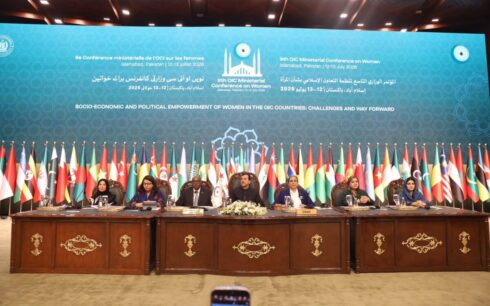
The two-day conference, held under the theme “Building Peace and Democracy,” has brought together government officials, international organizations, civil society representatives and women’s rights advocates from about 60 countries.
More than 140 civil society organizations and feminist groups are participating in the gathering, which focuses on the role of feminist foreign policy in advancing gender equality, defending women’s rights and promoting peace and democratic values.
Afghanistan emerged as one of the conference’s central topics, with participants highlighting the continued exclusion of women and girls from education, employment and public life under Taliban rule.
Conference organizers said two sessions were specifically dedicated to Afghanistan: one examining what participants described as “gender apartheid” and another focused on the role of women in peacebuilding and the future of democracy in the country.
Among the speakers was Fawzia Koofi, the former Afghan lawmaker and women’s rights advocate, who criticized what she described as a policy of accommodation toward the Taliban by some governments.
Koofi said that both women and men in Afghanistan are living under increasingly difficult conditions and argued that international engagement with the Taliban has often failed to produce meaningful improvements in human rights.
She also warned European countries against legitimizing Taliban policies in efforts to facilitate the deportation of Afghan migrants.
France’s minister delegate for international partnerships and French citizens abroad, Éléonore Caroit, also cited Afghanistan while discussing the need to protect the rights of women and girls affected by conflict and crisis.
The conference comes as Afghanistan remains the only country in the world where girls are barred from secondary and higher education. Since returning to power in 2021, the Taliban have imposed sweeping restrictions on women’s employment, movement and participation in public life, drawing widespread condemnation from the United Nations, human rights organizations and foreign governments.
Participants and organizers said lasting peace and democracy cannot be achieved without the meaningful participation of women and stressed that support for Afghan women and girls should remain a central part of international efforts to advance human rights, gender equality and peace.