Nearly 120 people were killed and dozens more injured in traffic accidents across Afghanistan over the past week, underscoring what many describe as a “silent tsunami” of road fatalities that continues to claim lives with little response from relevant institutions.
According to data compiled by Amu TV from local sources, at least nine major accidents were recorded in seven provinces between Aug. 19 and Aug. 27, resulting in devastating human losses. Despite the recurring nature of these incidents, no large-scale or systematic safety reforms have been introduced by Taliban authorities since their return to power.
Major incidents reported:
Herat (Aug. 19): A catastrophic crash on the Herat–Islam Qala highway killed 81 people and injured one.
Baghlan (Aug. 22): A passenger bus collided with a cargo truck, injuring 24 people.
Ghazni (Aug. 25): Two separate accidents in Ghazni city and Ab Band district left two dead and 12 injured.
Badakhshan (Aug. 25): Five were killed and three injured in a crash along the Baharak–Fayzabad road.
Balkh (Aug. 25): A traffic incident on the Hairatan–Mazar-e-Sharif highway resulted in three deaths and four injuries.
Nimroz (Aug. 25): A family of three died after their vehicle collided with a freight truck.
Kabul (Aug. 27): One of the deadliest crashes this week occurred on the Kabul–Kandahar highway, where 26 people died and 27 were injured.
University lecturer Basir Ahmad Danishyar told Amu that the rise in fatal crashes is largely due to poor oversight. “The lack of regulation and government monitoring under the current authorities has led to widespread casualties,” he said. “This poses serious risks for the Afghan population.”
Citizens across the country have expressed growing alarm over the continued rise in accidents and called for immediate, effective measures to address the crisis.
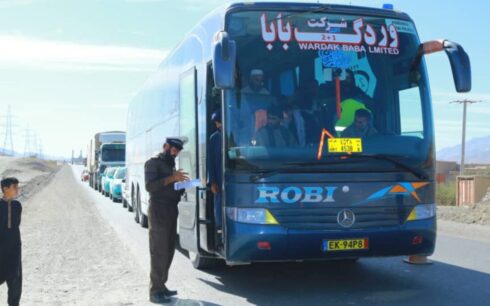
They cite a range of contributing factors: reckless driving, substandard roads, lack of transport safety infrastructure, and the unregulated issuance of driver’s licenses, especially for cargo truck and passenger bus operators.
A resident of Farah province, who asked not to be named, said unsafe road conditions and driver behavior leave passengers with few options. “We can’t afford to fly, so we’re forced to travel by road,” he said. “The drivers speed dangerously, and some use drugs to stay awake. If passengers protest, they’re shouted down.”
“We urge authorities to take highway safety seriously. Speeding is a major cause of these tragedies,” said Ahmad, a Herat resident.
Despite the rising death toll, the Taliban have yet to implement broad or structural road safety measures. In most cases, their response is limited to issuing post-incident statements or summoning transport company managers.
On Wednesday, the Taliban’s Ministry of Interior announced it held an emergency meeting to address road safety. However, residents say they are looking for practical and lasting solutions — not just rhetoric.