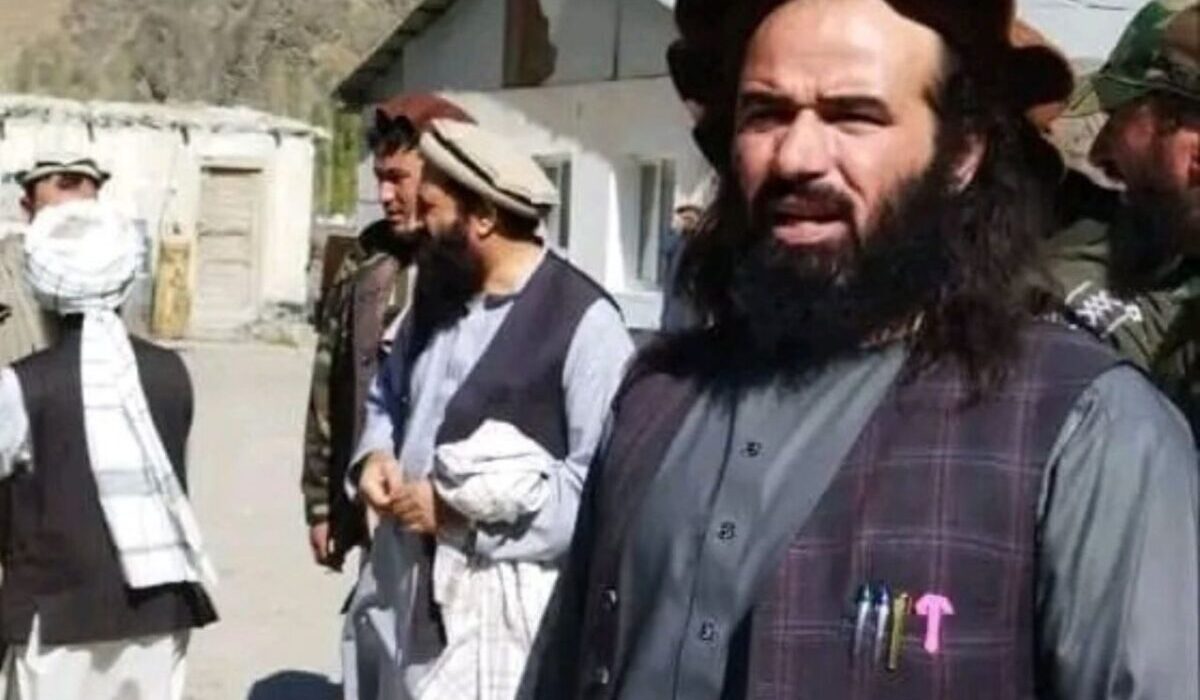
Taliban have removed Juma Khan Fateh, their powerful commander from northeastern Afghanistan and their deputy governor of Zabul province, amid a deepening dispute with the Taliban’s leadership over influence and control in the mineral-rich province of Badakhshan.
In a statement on Monday, Taliban spokesman Zabihullah Mujahid announced that Faizullah Tamim, head of the Taliban’s General Directorate of Standards and Quality, had been appointed deputy governor of Zabul under a decree issued by Taliban leader Hibatullah Akhundzada.
Taliban did not explain Fateh’s removal.
The decision follows weeks of reported tensions between Fateh and the Taliban leadership in Kandahar. Local sources previously told Amu TV that negotiations between Fateh and senior Taliban officials had failed, prompting Taliban leaders to seek his replacement and raising concerns about a possible confrontation between forces loyal to the leadership and armed supporters of the commander.
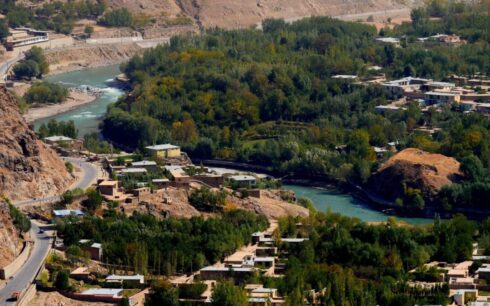
Sources familiar with the dispute said Taliban officials had discussed replacing Fateh as the dominant figure in the Darwaz region of Badakhshan, where he has long wielded considerable influence despite serving in government posts elsewhere.
Fateh is widely regarded as one of the Taliban’s most powerful commanders in northeastern Afghanistan. Before becoming deputy governor of Zabul, he served as the Taliban district governor of Nusay in Badakhshan. In late 2024, he was appointed by the Taliban leadership to oversee the Taliban’s campaign against poppy cultivation in the province.
Although he was later transferred to Zabul, sources say he retained significant authority in Badakhshan, particularly in the Darwaz districts, where he is viewed as a key power broker. Local residents and Taliban members often refer to him as the “General Commander of Darwaz,” an informal title reflecting his influence rather than an official government position.
According to sources, Taliban have proposed Ghulamullah, a Taliban brigade commander in Faryab province, as Fateh’s successor in the region.
The dispute reportedly centers on control of gold mining operations in Badakhshan, home to some of Afghanistan’s most valuable mineral deposits. Sources said several rounds of talks involving senior Taliban officials, including Fasihuddin Fitrat, the Taliban army chief of staff, failed to resolve the standoff.
Fitrat and Amanuddin, the Taliban governor of Helmand, were reportedly dispatched to Faizabad, the capital of Badakhshan, as part of efforts to defuse the crisis and implement decisions issued by the Taliban leadership.
Sources told Amu that discussions with Fateh in Nusay district yielded no breakthrough.
The disagreement underscores broader tensions surrounding the management of Afghanistan’s mining sector, which has become an increasingly important source of revenue for the Taliban. Since returning to power in 2021, the Taliban leadership has sought to tighten control over provincial power centers and natural resources, occasionally bringing it into conflict with influential local commanders.
Badakhshan has been a particular flashpoint. The province has experienced recurring disputes involving Taliban commanders, mining interests and local communities over access to gold mines and the distribution of mining revenues. Anti-Taliban protests have periodically erupted in parts of the province over mining policies and taxation.
Sources previously told Amu that Fateh had warned Taliban he could mobilize a “popular uprising” if efforts to sideline him continued. They also said Taliban leaders had considered arresting him if negotiations failed.