Three-quarters of Afghanistan’s population cannot meet their basic needs, a senior United Nations official said during a visit to the country, warning that Afghans are facing overlapping economic, humanitarian and climate-related pressures.
Alexander De Croo, the administrator of the UN Development Program, said Afghanistan’s crises rarely occur in isolation and argued that emergency assistance, while essential, must be accompanied by longer-term development efforts.
“Emergency aid saves lives, but development gives people their future back,” De Croo wrote in a post on X.
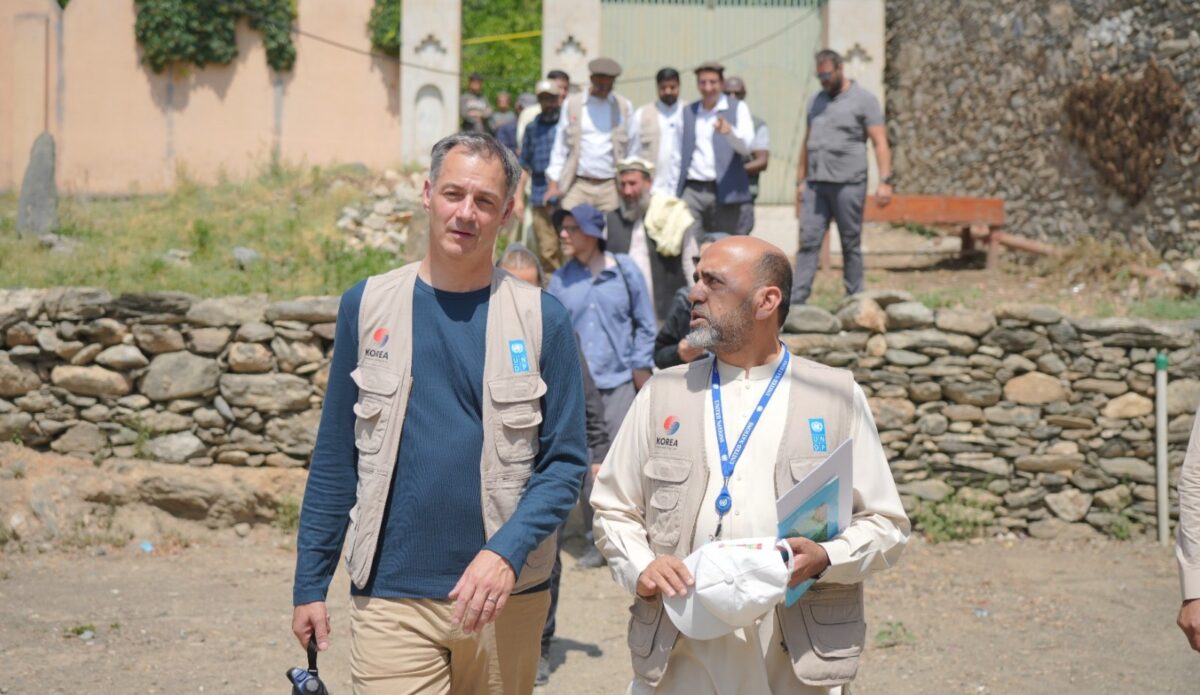
De Croo visited Sutan village in Dara-e-Noor district of eastern Nangarhar province to examine projects supported by the UN development agency and assess how communities are recovering from recent crises.
He said residents had feared that their village would be lost after last year’s earthquake, but assistance to rebuild homes, restore basic services and revive livelihoods had allowed the community to recover.
De Croo said climate change was already a tangible reality in Afghanistan, with communities experiencing its effects directly.
He pointed to a flood-protection and irrigation project in Sutan that he said had helped reduce disaster risks, protect agricultural land and create income opportunities for local residents. Both women and men participated in the project, he said.
The visit comes as Afghanistan faces pressure from a weak economy, recurring natural disasters and the large-scale return of Afghans from neighboring countries.
De Croo traveled to Afghanistan alongside Barham Salih, the United Nations high commissioner for refugees. According to UNDP, the two officials are meeting returnee communities, aid partners and Taliban authorities during their joint visit, with a focus on resilience and longer-term solutions.
Last year, earthquakes in eastern Afghanistan, particularly in Nangarhar and Kunar provinces, killed dozens of people and destroyed numerous homes, adding to the pressures facing communities already struggling with poverty and limited access to basic services.