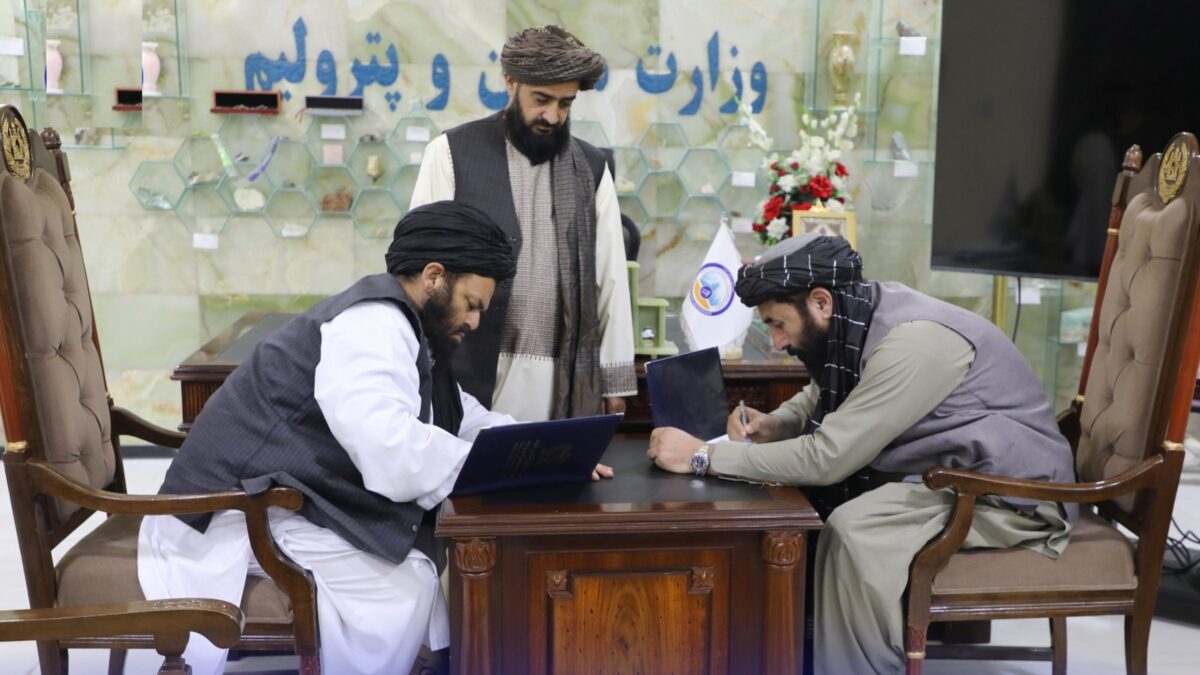
The Taliban mines ministry has signed a $5.49 million contract to develop a salt mine in western Afghanistan, according to a statement released on Wednesday.
The agreement, signed between Taliban mines minister Hedayatullah Badri and Abdul Hamid Faizi Mining and Processing Company, includes the development of the fourth block of the Namaksar salt deposit in Ghorian district of Herat province.
The ministry said the project covers 9.58 square kilometers and will run for 15 years.
Under the agreement, the company will pay a royalty of 1,500 Afghanis per ton of extracted salt and will conduct mining operations in accordance with Afghanistan’s mining law and regulations, the ministry said.
The company has also committed to spending $350,000 on community development projects and is expected to create about 115 direct and indirect jobs, according to the ministry.
The agreement is part of the Taliban’s broader strategy to expand mining, one of the country’s few sectors capable of attracting large-scale private investment.
In recent years, the Taliban have signed several contracts covering the extraction of minerals including gold, copper, lead, zinc, iron ore, chromite, marble and gemstones, while repeatedly calling on domestic and foreign investors to invest in Afghanistan’s largely untapped mineral resources.
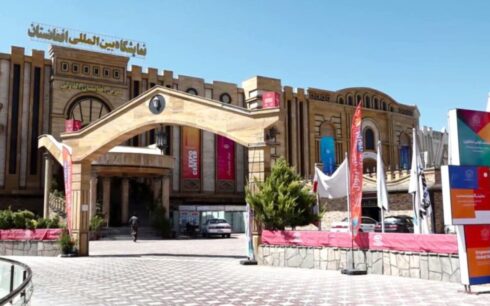
At the opening of the Fifth International Industry and Mining Week Exhibition in Kabul on Wednesday, July 1, Taliban officials again promoted investment in the mining sector. Ahmad Nabi Zada, head of the Afghanistan Chamber of Industries and Mines, urged investors to finance mineral processing projects, saying Afghanistan should move beyond exporting raw materials.
Taliban have increasingly presented mining as a pillar of economic development and a key source of government revenue following the sharp decline in international aid after their return to power in 2021.
However, analysts have cautioned that lack of transparency in awarding of contracts remain a major concern when it comes to the use of incomes from mineral resources in the country’s development.