Afghanistan’s economy is continuing to recover nearly five years after the Taliban returned to power, but the pace of growth remains too weak to improve living standards as rapid population growth and the return of millions of migrants continue to strain the country’s fragile economy, the World Bank said in a new report.
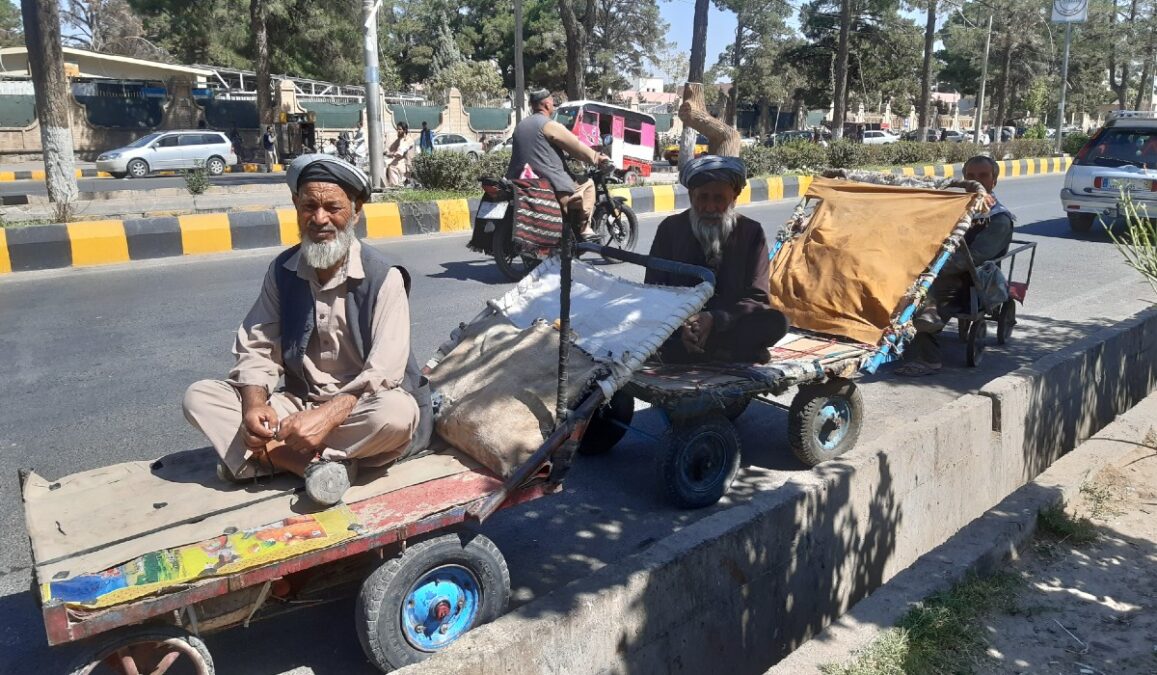
The World Bank’s Afghanistan Economic Monitor, released Monday, says modest economic growth has been supported by stronger domestic demand, relatively stable prices and improved government revenue collection. Yet those gains have been outweighed by demographic pressures, with per capita incomes falling by 5.6 percent, underscoring that economic expansion is failing to keep pace with the country’s growing population.
The report paints a mixed picture of Afghanistan’s economy: inflation is easing, the national currency has strengthened and public revenues remain resilient, but exports, imports and investment have weakened as border closures with Pakistan and instability in the Middle East continue to disrupt trade.
Consumer prices declined by 1.2 percent in May from the previous month, helped by improved food supplies and the arrival of the domestic harvest season, according to the report. Annual inflation also slowed to 8 percent, down from 8.6 percent in April, the report says.
According to the report, food prices fell by 2.1 percent during the month, led by a 15.4 percent decline in vegetable prices, while prices for oils, fats and meat also dropped.
However, not all households experienced relief. Housing costs increased by 1.2 percent, largely because of growing demand linked to the return of Afghan migrants, while healthcare costs rose 0.6 percent, driven by higher pharmaceutical prices. The World Bank said those pressures continue to weigh on household budgets despite broader improvements in inflation.
Currency strengthens despite regional turmoil
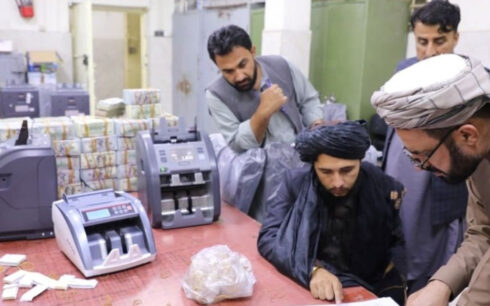
The report says that the Afghan currency continued to appreciate in May, strengthening to 63.9 afghanis per US dollar, a gain of 1.2 percent from the previous month and 8.3 percent compared with a year earlier. The World Bank attributed the appreciation to tight domestic liquidity and sustained demand for the local currency.
Although the currency strengthened in nominal terms, Afghanistan’s real exchange rate weakened because inflation remained lower than in neighboring Iran and Pakistan, making Afghan goods relatively more competitive in regional markets.
Trade weakens as regional disruptions continue
The report says that external trade remained one of the economy’s weakest areas.
According to the report, Afghanistan’s exports fell to $79.2 million in May, a decline of 17 percent from April and 14 percent compared with the same month last year. Imports also declined, dropping to approximately $970 million, down 11 percent from April and 16 percent year over year.
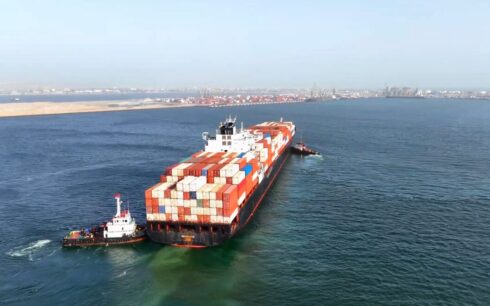
The World Bank attributed much of the slowdown to the continued closure of key border crossings with Pakistan, as well as conflict and instability across the Middle East, which have disrupted traditional transit routes, increased transportation costs and complicated regional trade.
The report warned that Afghanistan’s export sector remains highly vulnerable because it relies on a narrow range of products and limited export markets.
Food exports totaled $52.8 million, accounting for 67 percent of all exports, up from 62 percent a year earlier. Textile exports, however, grew 48.3 percent compared with last year after exporters increasingly rerouted shipments to China through Central Asia, the report says.
The World Bank says that coal exports remained negligible following the closure of Pakistan’s border crossings, highlighting Afghanistan’s continued dependence on a handful of regional transit routes.
India remained Afghanistan’s largest export destination, receiving 33.7 percent of exports, followed by Iran with 11.3 percent and China with 10.9 percent.
Imports signal slowing investment
Imports also reflected growing economic pressures, the report says.
It says that while food imports increased 20 percent from a year earlier because of drought-related cereal shortages, imports of machinery, transport equipment and other investment goods declined sharply.
According to the report, capital goods imports fell 41 percent year over year, transport equipment dropped 49 percent, machinery imports declined 16 percent, textiles 43 percent, and mineral products 28 percent, suggesting businesses remain cautious about new investment amid continuing uncertainty.
Consumer goods accounted for roughly 43 percent of all imports, while intermediate goods represented 46 percent and capital goods just 10 percent, reflecting limited investment activity.
Dependence on Iran grows
The report also highlighted Afghanistan’s increasing dependence on Iran for trade.
It says that despite modest declines in shipments, goods imported directly from or transiting through Iran accounted for 56 percent of Afghanistan’s imports in May, while Central Asian routes handled another 41 percent.
Iran alone supplied 31.6 percent of Afghanistan’s imports during the current fiscal year, followed by the United Arab Emirates (12.1 percent), China (11.9 percent) and Uzbekistan (8.6 percent), the report says.
The World Bank warned that the growing reliance on Iranian transit corridors leaves Afghanistan increasingly exposed to geopolitical tensions, border closures and logistical disruptions across the region.
Revenues remain resilient despite falling customs income
The Taliban administration’s revenue remained relatively stable despite weaker trade, the report says.
Domestic revenue collections reached 22 billion afghanis (about $344 million) in May, increasing 12 percent from April, although they were 5 percent lower than a year earlier.
The report said stronger tax administration and improved compliance helped offset the effects of regional trade disruptions.
Customs revenue, however, suffered the sharpest decline, falling 30 percent from April and 45 percent compared with May 2025 to 3.5 billion afghanis, reflecting reduced trade volumes and lower imports of higher-value goods.
At the same time, non-tax revenue increased 45 percent from April and 21 percent year over year to 9.4 billion afghanis, driven by higher collections from road tolls, passport and overflight fees, railway operations and telecommunications services, the report says.
Spending rebounds after delayed budget
Public spending rose sharply in May after delays in approving the government’s budget earlier this year.
Total expenditures reached 26.4 billion afghanis, an increase of 89 percent from April and 80 percent from a year earlier. Most of the increase came from salary payments that had been postponed while the budget awaited approval.
Government spending on wages and salaries rose 86 percent from the previous month, while spending on goods and services increased 43 percent. Capital spending also increased from a low base but remained modest overall.
Despite the increase in expenditures, the World Bank said Afghanistan’s public finances remain vulnerable because of their dependence on trade-related revenues, which continue to be affected by border closures and regional instability.
The report concludes that although Afghanistan’s macroeconomic situation has improved since the collapse that followed the Taliban’s return to power in 2021, the recovery remains fragile. Continued trade disruptions, weak investment, dependence on a limited number of export products and transit routes, and rapid population growth continue to limit improvements in household welfare, leaving millions of Afghans with declining living standards despite broader economic stabilization.