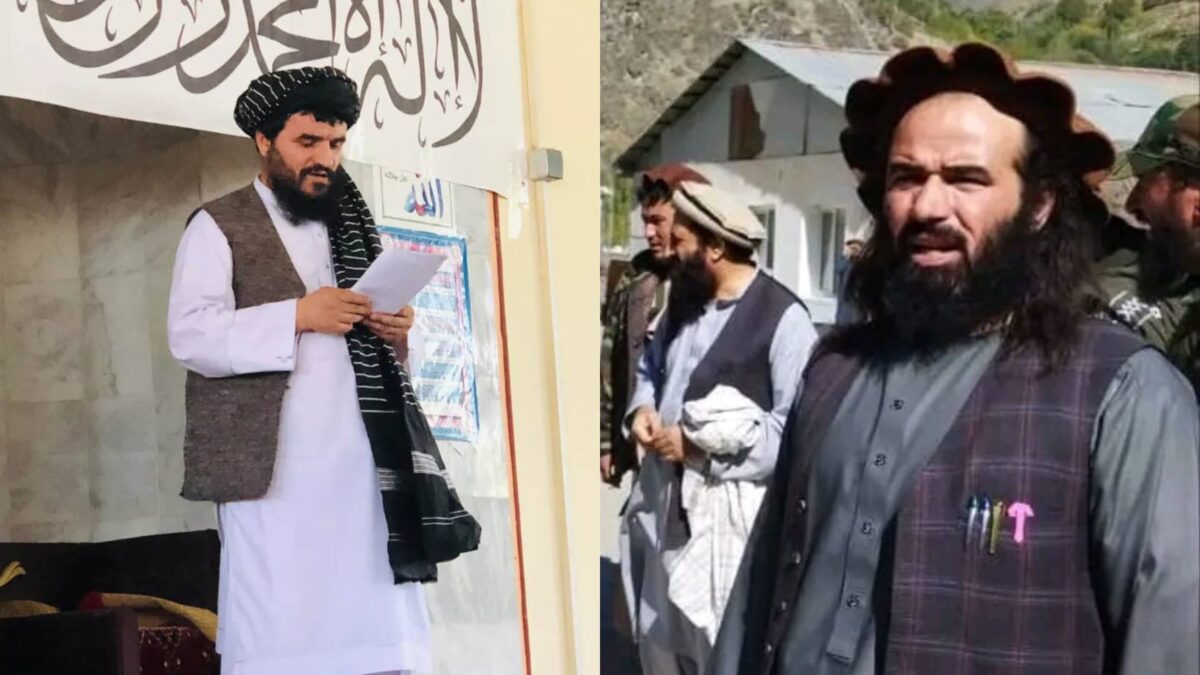
Taliban are seeking to replace Juma Khan Fateh, one of their powerful commanders in the northeastern province of Badakhshan, following a deepening dispute between him and the Taliban leadership, local sources told Amu on Thursday.
Fateh is also the Taliban’s deputy governor in Zabul province in the south of the country. Ahead of this position, he was Taliban’s district governor in Nusai district of Badakhshan. In late 2024, he was appointed by Taliban leader to lead the commission that handled the campaign against poppy cultivation in the province.
Although he has been shifted to another duty in Zabul, but he has kept his influence in Badakhshan, sources said.
According to the sources, Ghulamullah, a Taliban brigade commander in Faryab province, has been proposed as Fateh’s successor in the Darwaz region of Badakhshan.
The move comes as senior Taliban officials have traveled to Badakhshan in an effort to manage the standoff and carry out an order for Fateh’s arrest, the sources said.
According to the sources, Fasihuddin Fitrat, the Taliban’s chief of army staff, and Amanuddin, the Taliban governor of Helmand province, have arrived in Faizabad, the provincial capital, as part of efforts to resolve the crisis.
Negotiations with Fateh in Nusay district of Darwaz have so far failed to produce a breakthrough, the sources said.
Fateh, one of the Taliban’s most influential commanders in Badakhshan, was recently appointed deputy governor of Zabul province. Despite the appointment, he has maintained significant influence in the Darwaz region, where he has long been regarded as a key power broker.
Sources told Amu that the title “General Commander of Darwaz” is not an official position within the Taliban administration but rather an informal designation reflecting Fateh’s influence and authority in the region.
The dispute is rooted in control of gold mining operations in Badakhshan, according to the sources.
Badakhshan, home to some of Afghanistan’s most valuable mineral resources, has repeatedly been the scene of tensions between local Taliban commanders and officials appointed by their central leadership.
The province has experienced recurring unrest in recent years over the management of natural resources, particularly gold mines. Residents and local sources have reported disputes involving Taliban commanders, mining interests and local communities, while anti-Taliban demonstrations have periodically erupted over mining policies and taxation.
Fateh has been widely viewed as a central figure in the province’s gold-mining sector. In recent remarks, he claimed at a gathering in Badakhshan to command about 10,000 armed men, underscoring his influence in the region.
The reported effort to sideline Fateh comes as the Taliban leadership has sought to consolidate control over provincial power centers and strategic economic assets, including Afghanistan’s mining industry, which has become an increasingly important source of revenue for the Taliban.