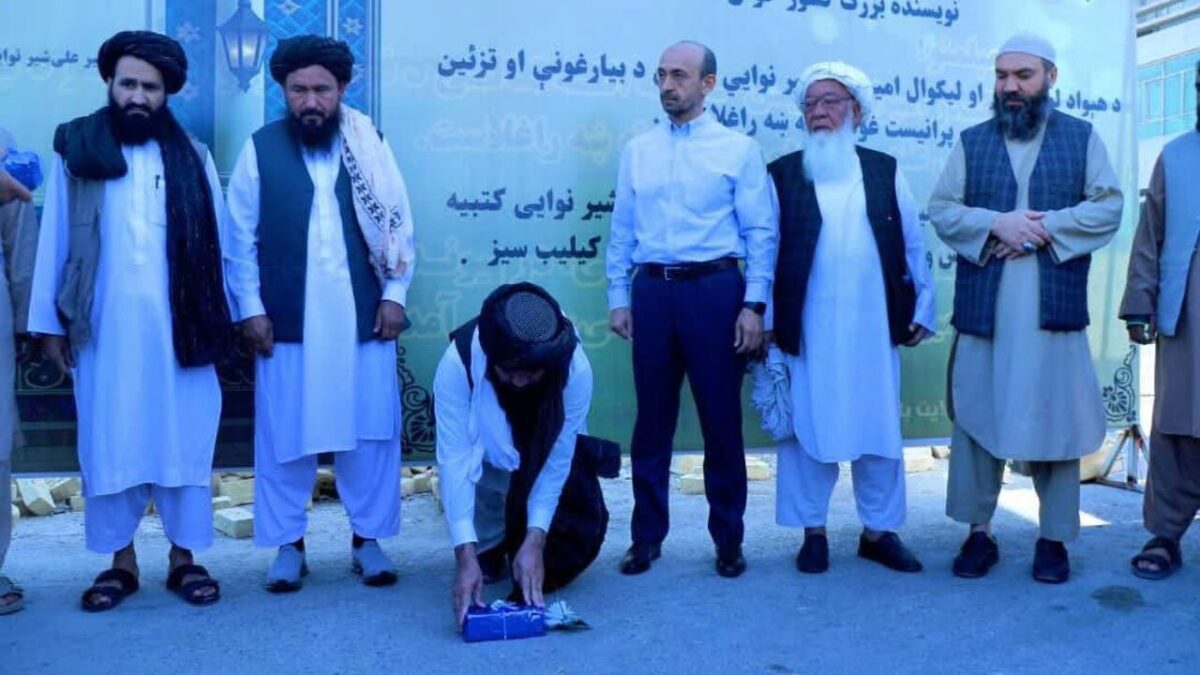
Taliban have begun rebuilding the monument of Ali-Shir Nawa’i, a famed 15th-century poet and scholar, in the city of Mazar-e-Sharif, Balkh province, after its demolition drew strong criticism from cultural figures and Uzbekistan’s government.
The monument, located in Mazar-e-Sharif, was torn down this week, prompting outrage from local communities, Afghan civil society groups, and officials in Uzbekistan. Nawa’i, a statesman, linguist and poet in the Timurid era, is regarded as one of the most influential figures in Turkic literature and a cultural icon for Uzbeks.
Uzbekistan’s Foreign Ministry said Wednesday that it had contacted Taliban authorities immediately after learning of the demolition. “The Ministry of Foreign Affairs of Uzbekistan promptly reached out to Taliban officials to seek official clarification,” ministry spokesman Akhror Burkhanov said.
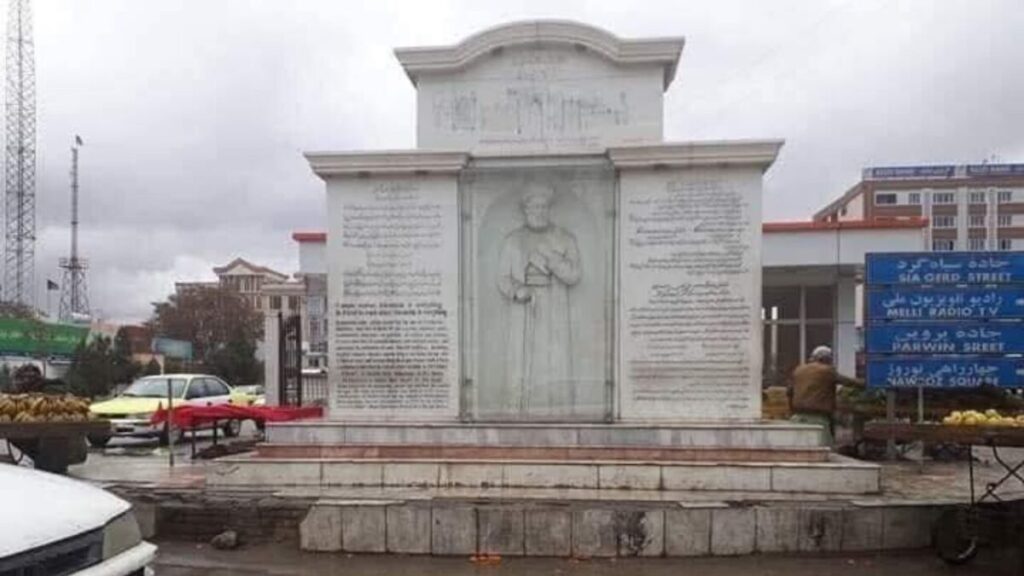
In response, Taliban officials in Balkh announced the project to rebuild the monument. Abdul Rahman Hemmat, the Taliban-appointed mayor of Mazar-e-Sharif, said the new memorial will be constructed in the city’s third district and will include “an inscription, a memorial minaret, green space and fencing.” He said the work is expected to cost about 1.5 million Afghanis (around $20,000) and be completed within a month.
“The project is being implemented with a new design and with the financial support of some Balkh residents,” Hemmat added.
The demolition had sparked sharp backlash across Afghan Turkic communities. Civic and social associations representing ethnic Uzbeks issued a statement condemning the act as “anti-cultural” and an assault on the collective identity of the people.
Cultural activists said the episode highlights growing concerns about the Taliban’s approach to Afghanistan’s diverse heritage. “Ali-Shir Nawa’i is not only a poet for Uzbeks but a figure of unity for all Central Asia. To destroy his monument is to erase part of our shared history,” one activist in Mazar-e-Sharif told Amu, requesting anonymity out of fear of reprisals.
Taliban have not explained why the original monument was demolished, but the quick announcement of a reconstruction project is widely seen as an attempt to ease tensions with Uzbekistan, one of the few neighbors maintaining regular engagement with the Taliban rule.