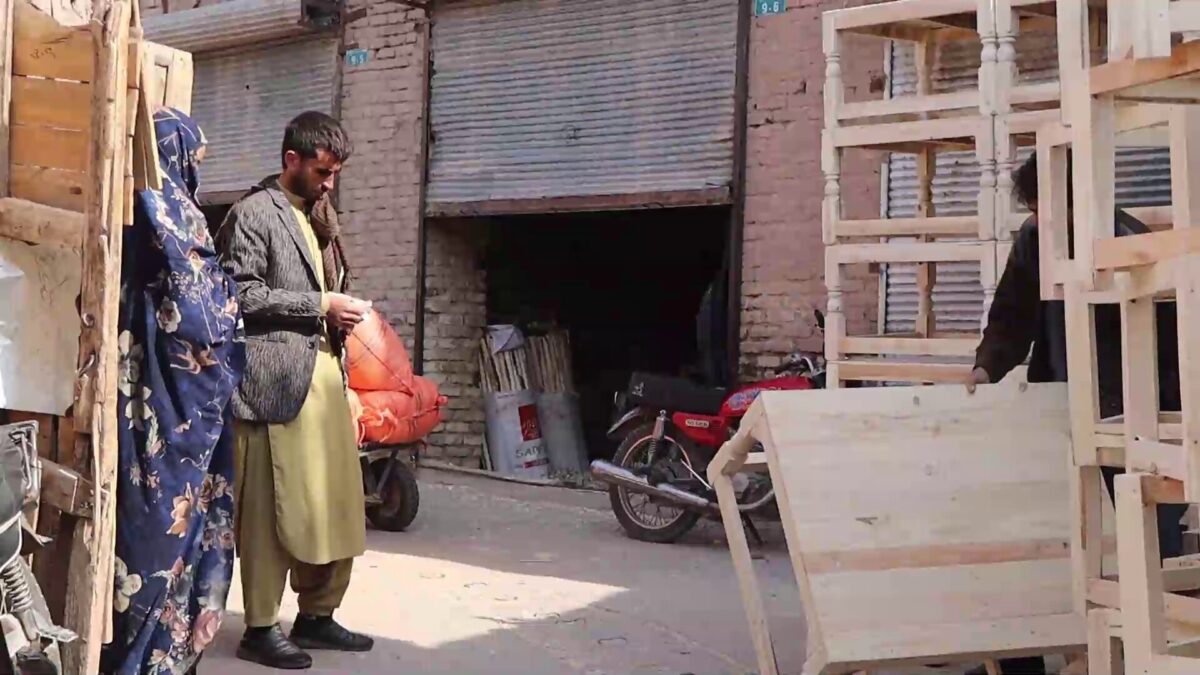
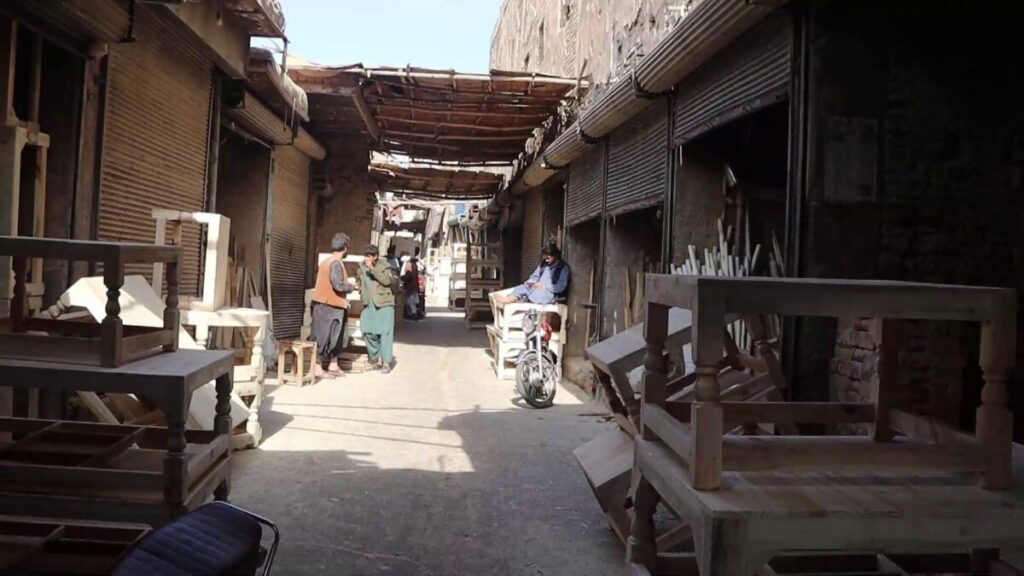
Along a narrow stretch known locally as Carpenter Street, the scent of fresh-cut wood and the rasp of hand saws still evoke a different era — one in which winter warmth came not from modern heating systems, but from a low wooden table called a Sandali.
Despite changes in how households in Afghanistan heat their homes, the Sandali, or Korsi, as it is called in some provinces, — a table placed over a charcoal brazier and covered with heavy quilts — remains a cultural fixture, symbolizing family closeness during long winter nights.
In Herat, craftsmen say that tradition endures, but their trade is fading.
Inside small workshops lining the street, carpenters produce not only Sandalis but also intricately carved wooden doors, windows and cradles. Each item, they say, reflects both skill and a deep connection to everyday life.
“Some specialize in making korsis, others build doors or cradles,” said Bismillah, a local carpenter. “Each person works according to their craft and what customers ask for.”
But demand for locally made woodwork has declined sharply in recent years. Carpenters attribute the downturn to an influx of cheaper imported doors and windows, as well as shifting consumer preferences.
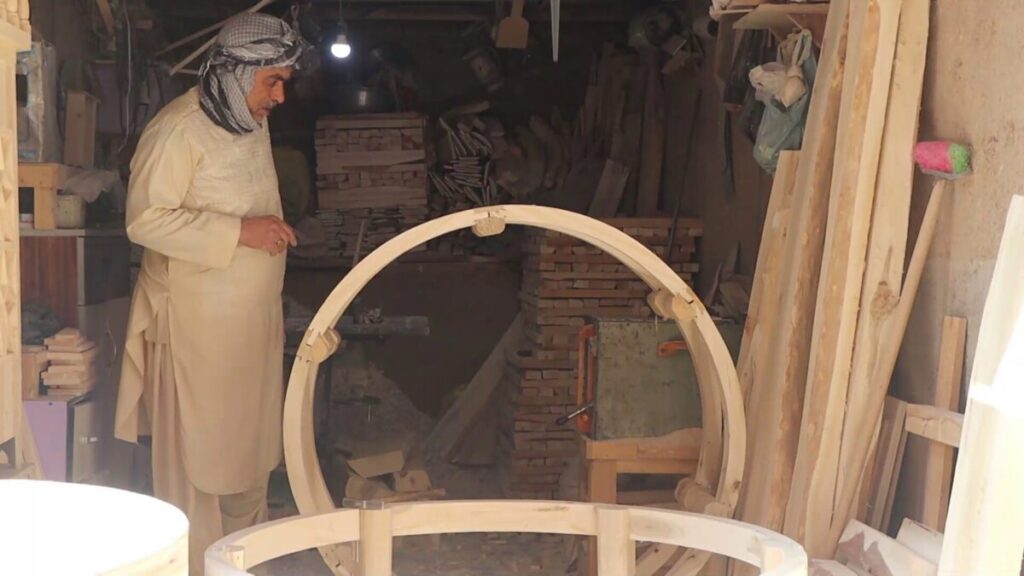
“For seven or eight years I made wooden doors and windows,” said Nisar Ahmad, another craftsman. “But with new styles and cheaper materials coming from abroad, people no longer order wooden ones. There is no restriction on imports, and our business has weakened.”
The impact is felt across colder regions of Afghanistan, where Sandali has long been a winter staple. Traditionally, families gather around it, placing a charcoal heater beneath the table and draping it with thick blankets to trap warmth — a practice that blends utility with social ritual.
For many residents, Sandali remains tied to memory as much as necessity.
“We have used Sandali for 30 years,” said Noorullah, a resident of Herat. “We transfer heat from the stove to it.”
Another resident, Faqir Ahmad, described it as central to family life in winter. “It creates a very special feeling,” he said. “In the cold season, sitting with tea and sharing stories with family — it’s the best atmosphere.”
Even as spring arrives and modern heating options become more common, Sandali endures in Afghan homes — less as a primary source of warmth than as a symbol of togetherness, tradition and the shared rhythms of family life.