The United Nations in a new report has said it has documented “serious human rights violations” against returning migrants, including cases of “torture, arbitrary detentions, and threats to personal security by the Taliban”.
The joint report, released Thursday by the UN Assistance Mission in Afghanistan (UNAMA) and the Office of the UN High Commissioner for Human Rights, is based on interviews conducted in 2024 with 49 returnees. The report focuses on particularly vulnerable groups, including women and girls, former government employees and security personnel, journalists, and civil society activists.
“Nobody should be sent back to a country where they face risk of persecution on account of their identity or personal history,” said Volker Türk, the UN High Commissioner for Human Rights. “In Afghanistan, this is even more pronounced for women and girls, who are subjected to a range of measures that amount to persecution on the basis of their gender alone.”
Among the testimonies included in the report is that of a former television journalist who said she has lived in de facto house arrest since being forced to return to Afghanistan. She described an environment where there is no work, no education beyond grade six for girls, and no freedom of movement.
A former government official, also interviewed, described being detained and severely tortured after returning in 2023. According to his account, he was beaten with cables, sticks, and wooden rods, waterboarded, subjected to a mock execution, and left with a broken leg.
While the Taliban have repeatedly claimed to uphold a general amnesty for those who worked for the former government, the UN says many of those individuals have been forced into hiding out of fear of retaliation.
The UN warns that forced returns of individuals to situations where they face risk of persecution, torture, or other forms of inhumane treatment violate the principle of non-refoulement, a cornerstone of international law. The report calls on all governments to halt returns of individuals at risk and to conduct thorough individual assessments before deportation.
States are also urged to expand access to legal and safe pathways for Afghans at risk and to allow them to remain in host countries without the threat of deportation.
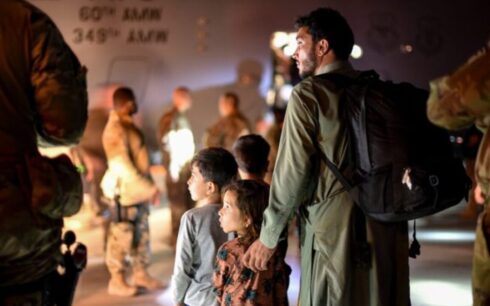
Hundreds of thousands of Afghans have been forcibly returned from Pakistan and Iran since 2023, placing growing strain on Afghanistan’s already limited resources. While the Taliban administration has responded in a “coordinated manner,” the report says more is needed to ensure returned individuals are safely reintegrated and their rights protected.
“The participation of all Afghans in the social, political and economic life of the country is critical to the development and prosperity of the nation,” said Roza Otunbayeva, the UN Secretary-General’s Special Representative for Afghanistan. “I urge the de facto authorities to uphold their obligations under international law and their responsibilities to the Afghan people.”