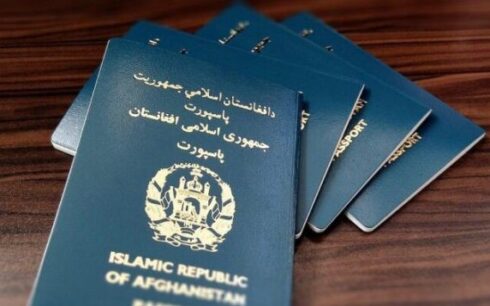
Thousands of Afghans with pending immigration applications in the United States could see their cases move forward after a federal court invalidated a series of Trump administration policies that had suspended or delayed immigration benefits for nationals of Afghanistan and dozens of other countries.
The US Citizenship and Immigration Services (USCIS) announced on Friday that it would comply with a June 5 ruling by the US District Court for the District of Rhode Island that vacated three agency policies tied to enhanced screening and vetting requirements. The court entered final judgment on June 11, making the ruling effective immediately.
In a statement, USCIS said the court-ordered vacatur applies agency-wide and that the three policies — known as PM 602-0192, PM 602-0194 and PA 2025-26 — “should be treated as if they are not in effect.”
The agency said it “strongly disagrees” with the court’s decision but would comply with its terms pending possible further judicial review.
The case is particularly significant for Afghan nationals because Afghanistan was among the countries affected by the policies. The measures had delayed or suspended decisions on a range of immigration benefits, including asylum applications, employment authorization requests, adjustment of status applications and naturalization cases.
The lawsuit, Dorcas International Institute of Rhode Island v. USCIS, was brought by nonprofit organizations and labor unions representing millions of immigrants whose applications had been placed on hold under the challenged policies.
According to court filings, applicants from affected countries often completed all required steps — including submitting applications, providing biometric information, paying fees and attending interviews — only to see their cases remain pending indefinitely because of additional nationality-based reviews.
The policies were implemented following presidential proclamations issued in 2025 that cited national security concerns and imposed entry restrictions on nationals of dozens of countries, including Afghanistan.
USCIS said the policies were originally adopted to address what it described as shortcomings in screening and vetting procedures and concerns related to national security and public safety.
The court, however, found that USCIS lacked authority to impose broad freezes on immigration benefits through internal policy directives.
For Afghans already in the United States, the ruling could remove a significant obstacle to obtaining immigration benefits that had been delayed under the challenged policies.
The decision does not eliminate broader travel restrictions or automatically grant immigration benefits. Nor does it directly affect refugee processing or visa issuance abroad. However, immigration advocates say it could allow long-stalled cases involving Afghan applicants to move forward.
The ruling comes as many Afghans continue to seek permanent legal status in the United States following the Taliban’s return to power in August 2021. Thousands entered the country through evacuation and humanitarian parole programs and later applied for asylum, permanent residency, work authorization and other immigration benefits.
USCIS said it will issue updated guidance in the coming weeks as the case continues through the courts. An appeal is expected.