Iran is deporting tens of thousands of Afghans each day, sending back families who had fled hunger and joblessness, many of them now returning with no belongings, no support and no clear future.
Taliban officials say between 20,000 and 30,000 people are arriving daily at the Islam Qala border crossing, where aid organizations are struggling to manage the flow. The United Nations has warned that forced deportations from Iran have surged to nearly 50,000 people per day, raising concerns of a deepening humanitarian crisis along Afghanistan’s western frontier.
These are families who left amid economic collapse, fleeing food insecurity and joblessness. Now, they are returning to a country still gripped by poverty and political uncertainty—where many say they no longer feel they belong.
“We weren’t involved in politics,” said Ahmadullah, a laborer deported with his family. “We were farmers and workers. There are ten people in my household. We went to Iran because we were hungry.”
Iran has long served as a destination for Afghans seeking refuge from economic despair. But as Iranian authorities escalate deportations, many returnees say they were expelled without notice, and in some cases, without being paid wages owed to them.
“We rented a home in Iran,” said Mohammad Rasool, another deportee. “The landlord withheld our 200 million tomans. He promised to pay, but we were given just four days to leave. What are we supposed to do now?”
“Five million tomans of wages were never paid,” added Farhad, who worked in construction. “The landlord kept our rent, and whatever cash we had was taken from us before we were forced out.”
The United Nations reported this week that forced deportations from Iran have surged to nearly 50,000 people per day—a scale that humanitarian organizations have described as “alarming.” The UN High Commissioner for Refugees (UNHCR) warned that many returnees arrive to find no shelter, no food, and no formal support.
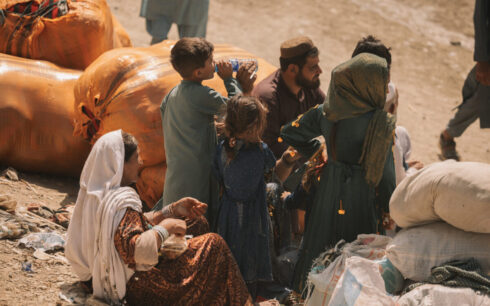
Children who once crossed into Iran with hopes of safety now return in silence, unsure of what lies ahead. Many cling to parents who themselves have no answers.
Some returnees also criticized the Taliban-led government, accusing it of providing little to no support for those newly expelled.
The Islam Qala crossing—once a route to opportunity for thousands of desperate Afghans—has become a stark symbol of a deepening humanitarian emergency on both sides of the border.