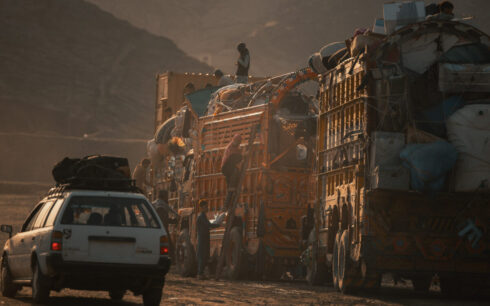
Iran has expelled more than 17,000 migrant families over a five-day period in early July, according to data reviewed by Amu TV, citing figures published by Taliban-run Bakhtar News Agency.
Between July 4 and July 8, a total of 17,577 families were returned — 17,149 from Iran and 428 from Pakistan — through what Taliban described as both forced and voluntary returns.
According to the figures, 181 families entered through the Torkham border crossing, 246 via Spin Boldak in Kandahar Province, and one family through the Angoor Adda border in Paktika Province. In western Afghanistan, 5,448 families returned through the Silk Bridge crossing in Nimroz, and 11,701 through Islam Qala, the main border point in Herat Province.
The wave of returns comes amid mounting criticism of regional deportation policies.
In a recent statement, Hannah Neumann, a member of the European Parliament, condemned Iran’s mass deportation of Afghan nationals, describing it as a “collective failure” and “a crime unfolding in real time.” In a series of posts on X, Neumann wrote, “This is not migration; it’s expulsion by force, scale, and terror. No legal review. No access to asylum. No due process.”
She criticized the European Union’s past assurances that Afghan refugees would be safe in Iran, calling them “hypocritical,” and said Iran’s actions constitute “collective and unlawful expulsion.” Neumann emphasized that what is happening is “not just post-war chaos — it is deliberate state policy.”
Iran is a signatory to international refugee conventions, and its handling of Afghan migrants has drawn sharp criticism from human rights organizations and lawmakers. Many of those deported have lived in Iran for years, and some were born there.
Meanwhile, Pakistan has also continued mass deportations of Afghan nationals, a policy that has faced both domestic and international backlash, particularly over its treatment of vulnerable returnees, including former government employees and women.
The United Nations has repeatedly warned that returnees face significant humanitarian challenges, including lack of shelter, food, and legal protection upon arrival in Afghanistan.