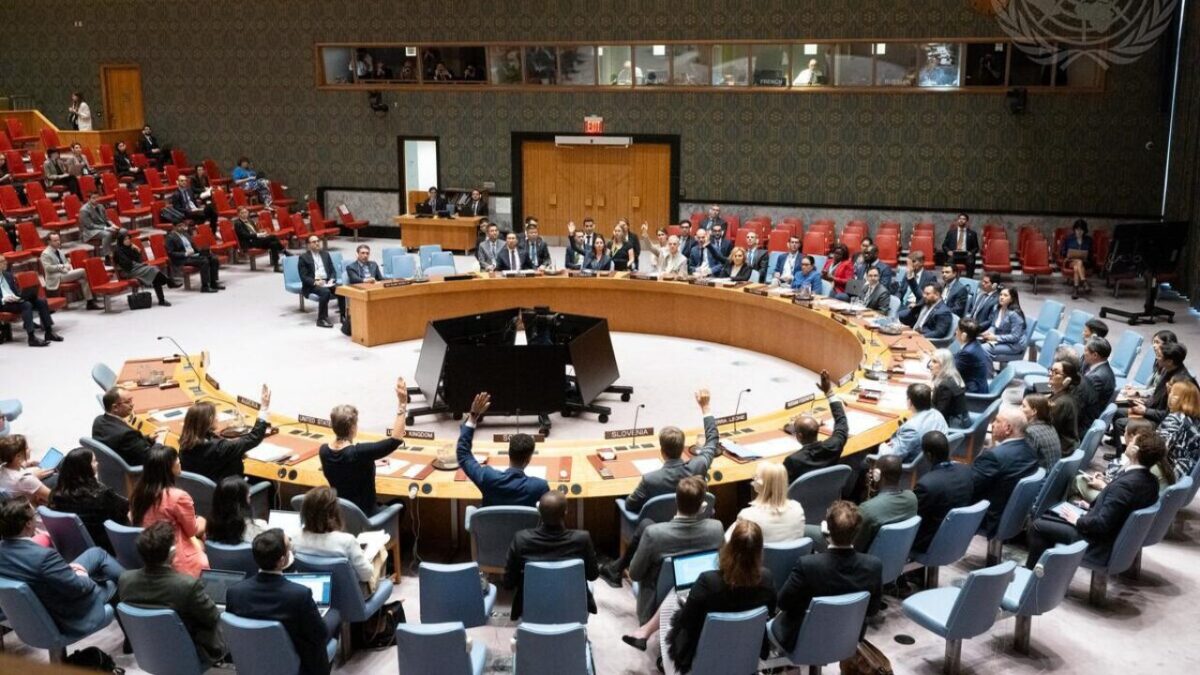
The United Nations Security Council is expected to vote Monday on renewing the mandate of the UN Assistance Mission in Afghanistan (UNAMA) for another year, according to Security Council Report, a New York-based nonprofit organization that monitors and analyzes the work of the Security Council.
The proposed resolution would extend UNAMA’s mandate until June 17, 2027, restoring the mission’s customary one-year mandate after the Council approved only a three-month extension in March while seeking a review of the mission’s role and priorities in Afghanistan.
In March, the Council departed from its usual practice of annual renewals and extended UNAMA’s mandate for only three months amid calls by some member states, particularly the United States, for a reassessment of the mission’s structure, effectiveness and ability to carry out its mandate under current conditions in Afghanistan.
According to Security Council Report, one of the most closely debated aspects of the new resolution is a request for Secretary-General António Guterres to conduct a strategic review of UNAMA and submit recommendations aimed at improving the mission’s effectiveness.
The United States had advocated for a broader assessment of whether UNAMA’s mandate remains realistic, appropriately prioritized and fully implementable, and whether some of its responsibilities should be streamlined or adjusted.
While several Council members were receptive to the proposal, others expressed concern that such a review could create uncertainty about the mission’s future. Russia reportedly questioned the need for the exercise and opposed language that could be interpreted as reopening discussions about the mission’s long-term viability.
The compromise language retained in the draft requests a strategic review “with a view to supporting the effective implementation” of UNAMA’s mandate.
Negotiations also revealed divisions over the international community’s approach to Afghanistan.
According to Security Council Report, several Western members sought to preserve references to the UN-led Doha Process, which remains the primary framework for international engagement on Afghanistan. Russia, however, advocated greater recognition of regional diplomatic initiatives and questioned the prominence given to the Doha format. Some disputed language was ultimately removed after members failed to reach agreement.
Council members also disagreed over terminology used to describe Taliban. According to Security Council Report, the United States, Britain and France objected to the phrase “de facto authorities,” arguing that it could imply legitimacy. The final draft instead refers to Afghanistan’s “relevant authorities.”
Human rights issues, particularly the rights of women and girls, remained a central focus during negotiations. The draft resolution calls on UNAMA to continue documenting the human rights situation in Afghanistan, including the rights of women and children, and retains references to sexual and gender-based violence.
Established in 2002, UNAMA remains the United Nations’ principal political mission in Afghanistan. Since the Taliban returned to power in August 2021, the mission has played a key role in humanitarian coordination, human rights monitoring and facilitating engagement between Afghanistan and the international community.
If adopted, the resolution would renew UNAMA’s mandate through June 2027 while launching the first broad review of the mission’s work and priorities in several years.