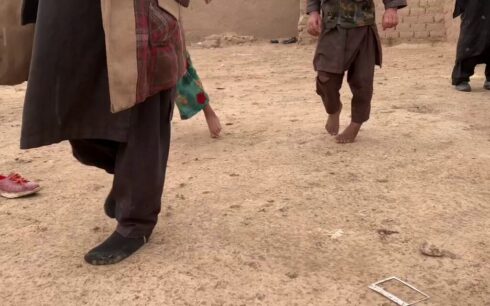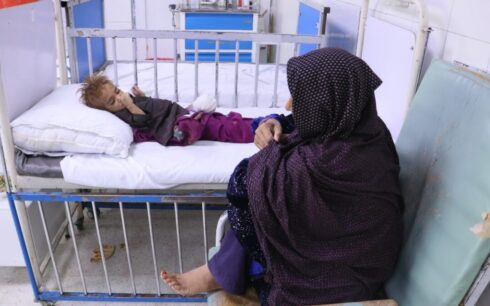
Residents of Bala Murghab district in Afghanistan’s western Badghis province say inadequate healthcare services and poor road access are contributing to preventable deaths, particularly among women and children.
Several residents told Amu TV that the district lacks basic health facilities, trained medical staff and reliable transportation, forcing many patients to travel long distances for treatment. They said some die before reaching a clinic or hospital.
The district lies about 115 kilometers from Qala-e-Naw, the capital of Badghis, and roughly 550 kilometers northwest of Kabul.
Kamaluddin, a resident of Miranzi village who works as a brickmaker, said he has witnessed the consequences firsthand.
“I have seen more than 20 people buried in our cemetery, most of them women and children,” he said. “We have no midwife, no qualified doctor and no clinic.”
Another resident, Gulabuddin, said the long distances between villages and the district center, combined with poor roads, make it difficult to transport critically ill patients.
“We don’t have a clinic or a doctor, and no one hears our voices,” he said. “Our patients die on the way to medical facilities. Our living conditions are very difficult.”
Sharifa, a resident who said she is ill, described the lack of access to healthcare as an everyday struggle.
“My children and I are very sick, and our living conditions are extremely difficult,” she said. “No one pays attention to us.”
Bala Murghab is one of Badghis’s most remote districts, where many villages have little or no access to basic healthcare. Residents say they have repeatedly appealed for more clinics, qualified doctors and nurses, and improved roads to connect isolated communities with medical services.
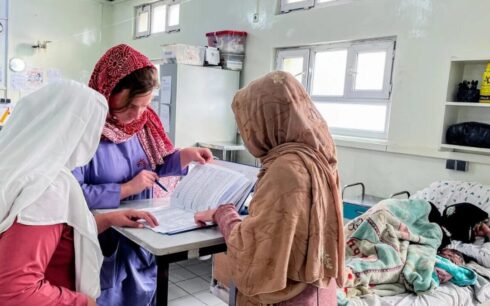
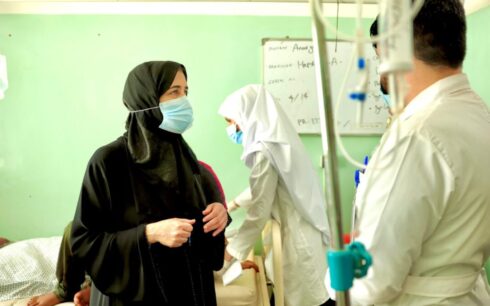
Afghanistan’s healthcare system has come under growing strain since the Taliban returned to power in 2021. Aid agencies say more than 400 health centers have closed because of funding shortages, leaving millions with reduced access to medical care. Restrictions imposed by the Taliban, including limits on women’s employment and education, have also deepened staffing shortages by reducing the number of female health workers and restricting women’s access to healthcare in many parts of the country.