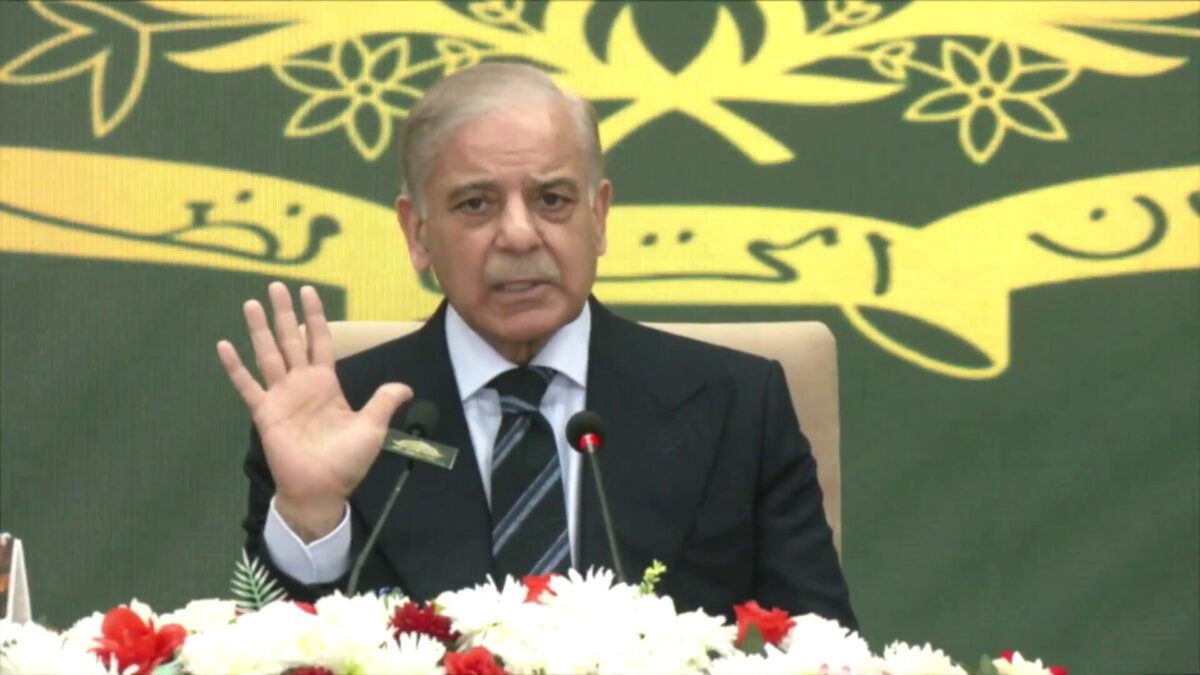
Pakistan has deported more than 2.4 million Afghans since launching its repatriation drive in 2023, Prime Minister Shehbaz Sharif said Friday, defending a campaign that UN agencies and rights groups say has placed growing pressure on Afghanistan’s humanitarian crisis.
In a message marking World Refugee Day, Sharif defended his migration policy saying that the Afghan nationals had returned through what he described as a “phased, orderly and dignified repatriation process.”
“By June 2026, more than 2.4 million Afghan nationals had returned to their homeland,” Sharif said. “These figures represent far more than statistics; they reflect the stories of millions of individuals who found safety, shelter and sustenance on Pakistani soil during some of the most challenging periods of their lives.”
Sharif said Pakistan had hosted millions of Afghans for decades after successive waves of conflict in Afghanistan, beginning with the Soviet invasion in 1979. He described the country’s refugee policy as a humanitarian commitment that had continued despite economic and security challenges.
Pakistan launched the Illegal Foreigners Repatriation Plan in late 2023, initially targeting undocumented Afghans and later expanding the campaign to include holders of Afghan Citizen Cards. Pakistani authorities have argued that the policy is necessary for security and migration management.
The deportation campaign has triggered one of the largest movements of Afghans in recent years.
The International Organization for Migration (IOM) and other aid agencies have reported hundreds of thousands of Afghans returning from Pakistan and Iran in recent months, many arriving with limited resources and uncertain prospects inside Afghanistan.
According to the United Nations Development Program (UNDP), more than 6 million Afghans have returned since 2023, placing additional strain on communities already struggling with poverty, unemployment and limited public services. The agency says more than 738,000 Afghans have returned in 2026 alone, largely from neighboring countries.
The UN refugee agency (UNHCR) has repeatedly called for returns to be voluntary, safe and dignified, while human rights organizations have raised concerns about forced deportations of Afghans who may face protection risks upon return.
Aid groups warn that many returnees struggle to find housing, employment and access to healthcare and education after arriving in Afghanistan. Women and girls often face additional barriers because of Taliban restrictions on education, employment and public life.
The deportations come as Afghanistan remains in the grip of a severe humanitarian crisis. According to UN estimates, more than 21 million people require humanitarian assistance, while humanitarian agencies have warned that the influx of returnees is increasing pressure on already overstretched services and local communities.
Sharif acknowledged that Pakistan had faced economic, social, environmental and security costs while hosting Afghan refugees and called on the international community to share responsibility for supporting both refugees and host countries.
“Hosting and facilitating the return of millions of refugees is a shared global responsibility,” he said. “A peaceful, stable and economically resilient Afghanistan is essential for the dignified return and sustainable reintegration of Afghan nationals.”
Pakistan remains one of the largest host countries for Afghans, although the number of Afghans living there has fallen sharply since the deportation campaign began nearly three years ago. Humanitarian organizations continue to warn that large-scale deportations, coupled with Afghanistan’s economic fragility and humanitarian needs, risk worsening conditions for many of those returning.