The number of migrants returning from Iran to Afghanistan has fallen sharply in recent days, according to Taliban data, after earlier surges linked to heightened tensions in the Middle East.
Data from the Taliban commission for refugees shows that only 30 people entered Afghanistan through the Islam Qala border crossing on Saturday, April 18, a steep decline from previous weeks, when daily returns reached hundreds, and in many cases, thousands.
A UN report published this month shows that over 120,000 Afghan migrants were deported from Iran in the first three months of 2026, accounting for nearly four-fifths of all returns.
The report said a total of 152,100 Afghans had returned from Iran between Jan. 1 and March 31, with deportations making up 79 percent of that figure.
The pace of returns follows a sharp increase in 2025, when more than 1.9 million Afghans returned from Iran — many involuntarily — after Iranian authorities introduced new regulations requiring millions of undocumented Afghans to regularize their status or leave.
Despite a reported 40 percent drop in deportations since late February, the scale of returns remains significant, the report said, placing strain on housing, basic services and livelihoods in Afghanistan.
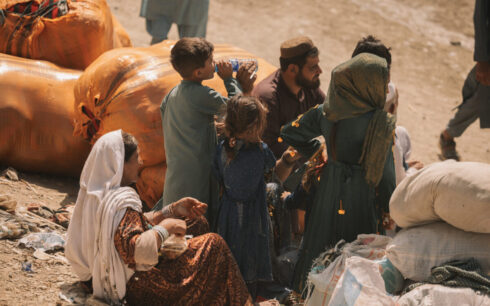
Despite the slowdown, many returnees say conditions in Afghanistan remain difficult. Some families expelled from Iran report facing unemployment and mounting financial pressure upon arrival.
Wali Mohammad, a returnee from Ghor province who supports a family of eight, said he had traveled irregularly through Pakistan and Iran in search of work before being deported.
“There is no work here,” he said. “I am responsible for eight people, and I cannot meet their needs.”
Others described similar struggles. Hesamuddin, a resident of Badghis province who was recently expelled from Iran, said he has been unable to secure stable income since returning.
“Providing for children is very hard,” he said. “There is no work, and we are already in debt.”
Young men gathered in local labor markets in Badghis also said job opportunities are scarce, leaving many dependent on irregular daily work.
Labor migration to Iran — often through irregular routes — has long been a primary source of income for many residents, particularly in western regions. But returnees say the lack of economic opportunities at home is making reintegration increasingly difficult.