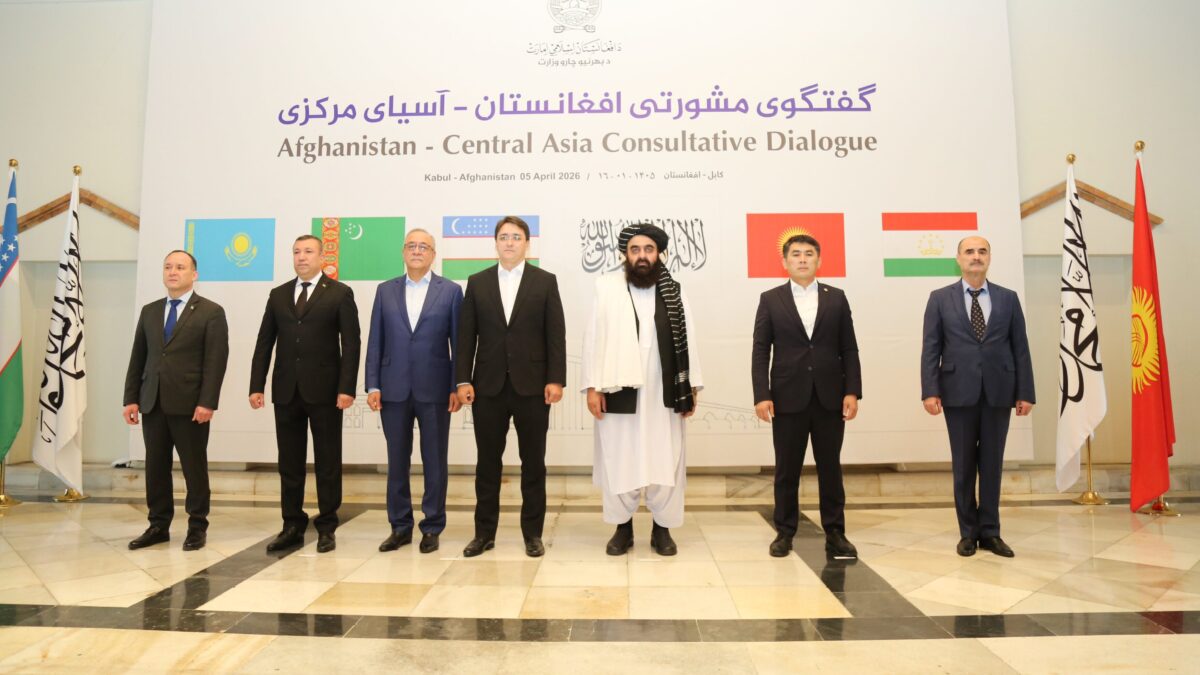
The Taliban’s foreign minister on Sunday called for closer regional security coordination, describing the threat posed by ISIS and drug trafficking as shared concerns, as officials from Central Asia gathered in Kabul for a consultative forum.
Speaking at the Afghanistan–Central Asia Consultative Dialogue, Amir Khan Muttaqi said militant activity, narcotics smuggling — particularly synthetic drugs — irregular migration and cross-border organized crime were key challenges facing both Afghanistan and its northern neighbors.
“These are common concerns for both sides,” he said, adding that Taliban security institutions had taken measures to address such threats. He said Taliban have acted against individuals seeking to undermine relations with Central Asian countries and asserted that “today there are no security problems along our shared borders.”
Muttaqi proposed developing a joint regional security approach, urging discussions on a coordinated framework to address shared risks.
“We believe that, within this roadmap for cooperation and in light of shared security challenges, there should be discussion and exchange of views on a common approach between Afghanistan and Central Asian countries,” he said.
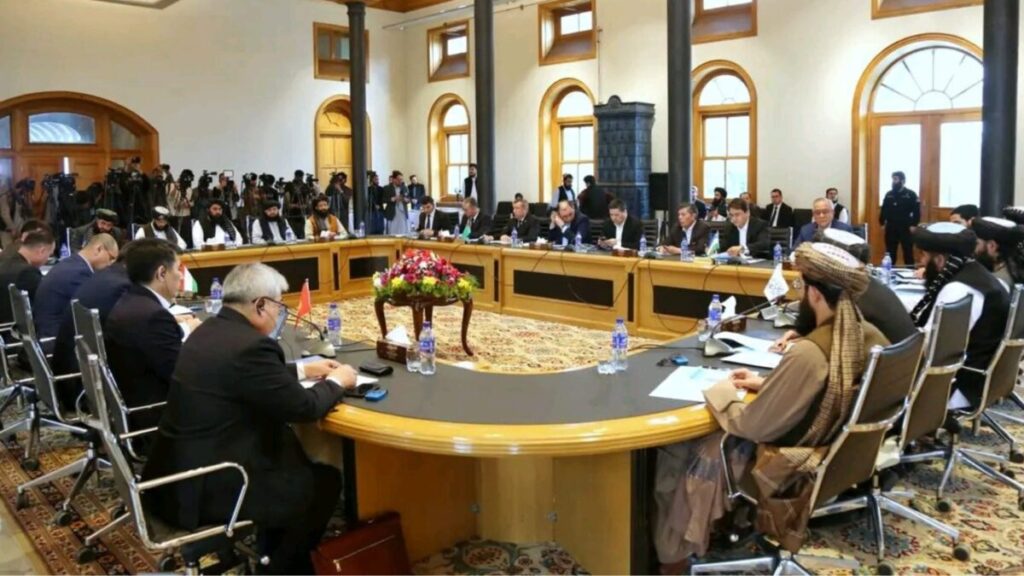
Regional participation
The meeting, hosted by the Taliban’s Foreign Ministry, brought together senior representatives from across Central Asia, including the ambassadors of Kazakhstan, Tajikistan and Turkmenistan, as well as deputy foreign ministers from Kazakhstan, Kyrgyzstan and Uzbekistan, according to Taliban accounts of the meeting.
Muttaqi said the forum was intended to strengthen diplomatic engagement and provide a multilateral platform for consultations on regional developments, while also expanding cooperation in trade, transit and economic connectivity.
He described the dialogue as an effort to identify “practical joint solutions” and deepen ties between their administration and Central Asian countries.
The remarks come despite continued concerns among regional governments — particularly Tajikistan — about the presence of militant groups in northern Afghanistan near shared borders.
While the Taliban have repeatedly said they have maintained security, neighboring states have remained cautious, citing risks of cross-border militancy and trafficking networks.
Talks with Pakistan
Muttaqi also addressed ongoing talks with Pakistan, confirming that negotiations — hosted by China in the city of Urumqi — were continuing.
He said the Taliban were participating “with sincerity and a solution-oriented approach,” emphasizing that they sought to resolve tensions through dialogue.
“Our position is very clear: we seek to resolve issues through understanding, dialogue and relations based on mutual respect,” he said, while adding that Afghanistan reserves the right to defend its territorial integrity.
The talks come as clashes between Taliban forces and Pakistan enter their sixth week, following an escalation that began in late February.
Pakistan has accused the Taliban of failing to act against Tehrik-i-Taliban Pakistan, a militant group responsible for attacks inside Pakistan. The Taliban deny that the group operates from Afghanistan’s territory, although a United Nations monitoring team has estimated it has around 6,000 fighters there.
The Kabul meeting reflects the Taliban’s effort to position themselves as a regional actor capable of engaging neighbors on both security and economic issues, even as tensions persist along key borders.
For Central Asian countries, the dialogue offers a platform to manage security risks while exploring economic opportunities, including trade and transit routes linking the region.
Whether such engagement leads to sustained cooperation remains uncertain, as concerns over militancy, governance and regional stability continue to shape policy toward Afghanistan.