More than 120,000 Afghans have been deported from Iran in the first three months of 2026, accounting for nearly four-fifths of all returns, according to a UN report that warns of mounting pressure on communities inside Afghanistan.
The report, published by the UN refugee agency, UNHCR, and its partners, said a total of 152,100 Afghans had returned from Iran between Jan. 1 and March 31, with deportations making up 79 percent of that figure.
The pace of returns follows a sharp increase in 2025, when more than 1.9 million Afghans returned from Iran — many involuntarily — after Iranian authorities introduced new regulations requiring millions of undocumented Afghans to regularize their status or leave.
Despite a reported 40 percent drop in deportations since late February, the scale of returns remains significant, the report said, placing strain on housing, basic services and livelihoods in Afghanistan.
Families and vulnerable groups
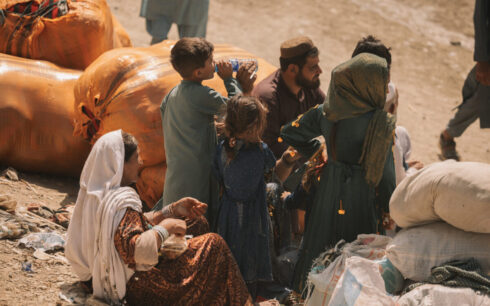
The returnees are predominantly vulnerable. According to the report, 52 percent are women and children, and 58 percent are families.
Among those receiving assistance, 79 percent were women and children, and 43 percent of households were headed by women, underscoring the humanitarian challenges facing returning populations.
Many arrive with limited education and skills. About 67 percent of household heads had no formal education, and more than half reported having no specific job skills, the report said.
Routes and destinations
Most returnees crossed into Afghanistan through two main border points: Dogharoun–Islam Qala in Herat province and Milak–Zaranj in Nimroz province, which together accounted for all recorded crossings in 2026.
The largest numbers of returnees were headed to Herat, Kabul and Farah provinces, with Herat alone accounting for about 22 percent of destinations, according to data compiled from border monitoring interviews.
Drivers of return
Interviews conducted by UNHCR indicate that deportation and fear of arrest remain the primary drivers of return. In March 2026, 54 percent of respondents cited fear of arrest or deportation, while 62 percent pointed to economic hardship and 67 percent to conflict or insecurity.
The report also highlights broader regional instability. Since late February, escalating tensions across parts of the Middle East and Asia have displaced millions within Iran, adding pressure on one of the region’s largest refugee-hosting countries.
Humanitarian response under strain
Aid agencies have scaled up assistance at border crossings, providing cash support, food and emergency supplies. Since late February, more than 45,000 returnees have received aid, including over 9,000 who were given cash assistance and more than 5,000 who received counseling services.
Still, humanitarian needs are growing. An interagency response plan launched in late March seeks $80 million to support 2.8 million people affected by displacement and returns over a three-month period.
With limited resources and ongoing instability, the report warns that large-scale returns could deepen economic hardship and increase the risk of further displacement.