A comprehensive UN legal review has found that a sweeping set of policies imposed by the Taliban since 2021 violate Afghanistan’s obligations under the Convention on the Elimination of All Forms of Discrimination against Women, one of the core international human rights treaties.
The report, published jointly by the Office of the United Nations High Commissioner for Human Rights and UN Women, examines 16 key Taliban directives and laws affecting women and girls and concludes that many constitute direct and systemic discrimination under international law.
The analysis maps each measure — introduced between 2021 and 2025 — against specific provisions of the convention, known as CEDAW, which Afghanistan ratified in 2003 without reservations. The review says the country remains bound by those obligations regardless of the current governing authority.
Sixteen measures under scrutiny
The report identifies and analyzes 16 Taliban policies and edicts, including:
A ban on women using parks, gyms and public baths (Nov. 10, 2022)
Restrictions on women traveling beyond 78 kilometers without a male guardian (Dec. 31, 2021)
A nationwide hijab directive mandating dress and face covering (May 7, 2022)
A sweeping “law on the promotion of virtue and prevention of vice” (Aug. 21, 2024)
A ban on girls’ education beyond sixth grade (March 23, 2022)
A ban on higher education for women (Dec. 20, 2022)
A ban on women attending medical institutes (Dec. 2, 2024)
A prohibition on most women civil servants returning to work (Aug. 24, 2021)
A ban on women working with nongovernmental organizations and the United Nations (Dec. 24, 2022; extended April 2023)
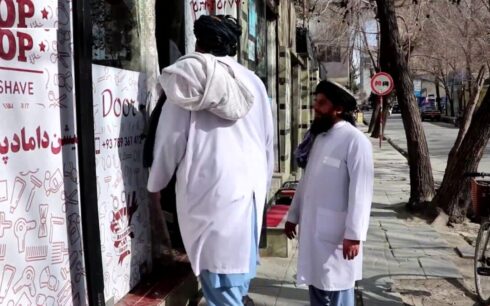
The closure of women’s beauty salons (June 25, 2023)
A directive standardizing women civil servants’ salaries at the lowest level (June 2, 2024)
Additional decrees affecting legal procedures, marriage practices and women’s participation in public life
Across these measures, the report finds consistent violations of core CEDAW principles, including non-discrimination, equality before the law and the obligation of states to eliminate discriminatory practices.
Education as a ‘gateway right’
Among the most consequential findings are those related to education. The Taliban’s ban on girls’ schooling beyond sixth grade and exclusion of women from universities are described as clear violations that “nullify” the right to education.
The report emphasizes that education is a “gateway right,” meaning its denial has cascading effects — limiting employment, economic independence and participation in public life.
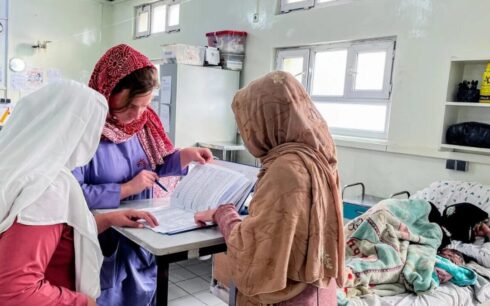
The prohibition on women attending medical institutes, introduced in 2024, is singled out for its long-term impact. The review warns that restricting women’s medical training could reduce the number of female health professionals, undermining access to care and increasing risks such as maternal mortality.
Restrictions across work and public life
The report documents extensive limits on women’s employment, including bans on working in the civil service, nongovernmental organizations and international agencies.
These measures, it says, violate women’s right to work and economic participation, while also reducing access to services that depend on female staff, particularly in health care and humanitarian assistance.
The closure of women’s beauty salons and the reduction of salaries for female civil servants are cited as further examples of economic exclusion.
In some cases, Taliban officials have framed restrictions as protective. The review rejects that justification, stating that it shifts responsibility for safety onto women rather than addressing structural risks.
Movement, expression and daily life
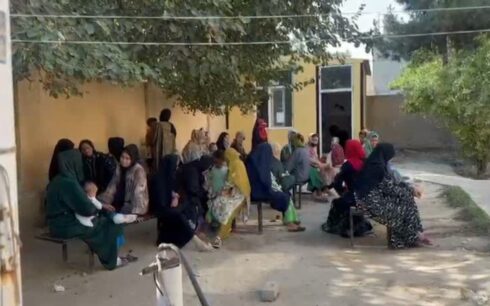
The analysis also details restrictions on movement and personal freedoms, including requirements for women to travel with a male guardian and bans on accessing public spaces.
Dress codes and behavior rules are described as particularly intrusive. A 2022 hijab directive mandates face covering and allows enforcement through male family members, while a 2024 morality law expands restrictions to include limits on women’s voices in public.
The report concludes that such measures violate rights to freedom of movement, expression and participation in public life, while reinforcing gender stereotypes and limiting women’s autonomy.
A system of institutionalized discrimination
Taken together, the 16 measures form what the report describes as a system of institutionalized discrimination.
Restrictions in one area reinforce others, creating a “continuum” of rights violations. Limits on education, for example, reduce employment prospects, which in turn restrict economic independence and access to health care.
CEDAW requires states to eliminate discrimination across political, economic, social and cultural life and to ensure equality before the law. The review concludes that many Taliban policies are incompatible with these obligations and, in some cases, have been codified into law, further entrenching discrimination.
A baseline for accountability
UN officials said the review is intended as a resource for governments and international actors assessing Afghanistan’s compliance with international law.
It establishes a baseline for measuring future progress — or deterioration — particularly as diplomatic engagement with the Taliban continues.
The Taliban have consistently defended their policies as aligned with their interpretation of Islamic law.