The new school year in Afghanistan kicked off on Monday but without girls above the sixth grade for the fifth consecutive year as the Taliban ban on secondary education continues.
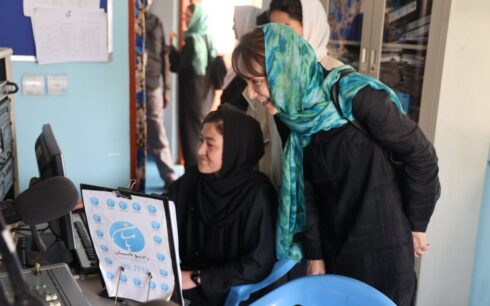
Many female students have described the past four years “nightmare and challenging,” saying they have spent each and every minute with the hope that the schools will reopen for them in the new academic year. But that wish remained unfulfilled.
They also urged the international community to increase pressure to ensure access to education for girls.
“No one can feel what has happened to us over the past four years. We want to go back to school,” said Arzoo, a student in Kabul who was in the sixth year of her school when the ban started.
“I would have been in the 11th year of school if education was not banned for us. I have tried multiple ways to continue gaining knowledge and education, mostly through online programs, but nothing replaces our classes at school,” said Madina, a Kabul resident, who was in sixth grade when schools were closed in March 2022.
Another student, Sonam, said she has been out of school for four years and has begun to give up on her dream of becoming a doctor.
“My dreams were big for my future. I wanted to become a doctor. I would have been in the last year of my school in this new academic year that has began today. Even my parents had big dreams for me. They had expectations. There is no hope now,” said Sonam, also a Kabul resident.
UNICEF has previously estimated that more than 2.2 million girls in Afghanistan have been denied access to education due to the Taliban ban.
Richard Bennett, the UN special rapporteur on human rights in Afghanistan, said the start of the school year alongside continued restrictions was “unacceptable” and called for their immediate removal.
“I note that only in Afghanistan Nowruz marks the beginning of another school year in which girls beyond 6th grade will not be allowed to continue education at school and women will not be able to attend university. Unacceptable and must be reversed,” Bennett wrote on X.
Human rights advocates warn that prolonged limits on girls’ education could lead to broader violations of women’s rights, including increased risk of forced marriage and long-term harm to the country’s development.
The ban dates back to March 2022, when Taliban initially promised to reopen secondary schools for girls but reversed the decision days later, saying conditions needed to align with their interpretation of Islamic law and “Afghan culture.” Taliban have also closed training centers for girls, and female students are not allowed to attend medical exit exam and medical training institutions.
Since then, girls above sixth grade have remained barred from schools, and women have been excluded from universities, despite repeated international calls for the Taliban to reverse the policies.